Pune Ganeshotsav Guide: History, the Five Manache Ganpati, Dagdusheth, Visarjan Procession and Tips for Visiting
Everything about Pune Ganeshotsav: its history, the five Manache Ganpati, Dagdusheth and Bhausaheb Rangari, the 30-hour visarjan procession and tips for visitors.
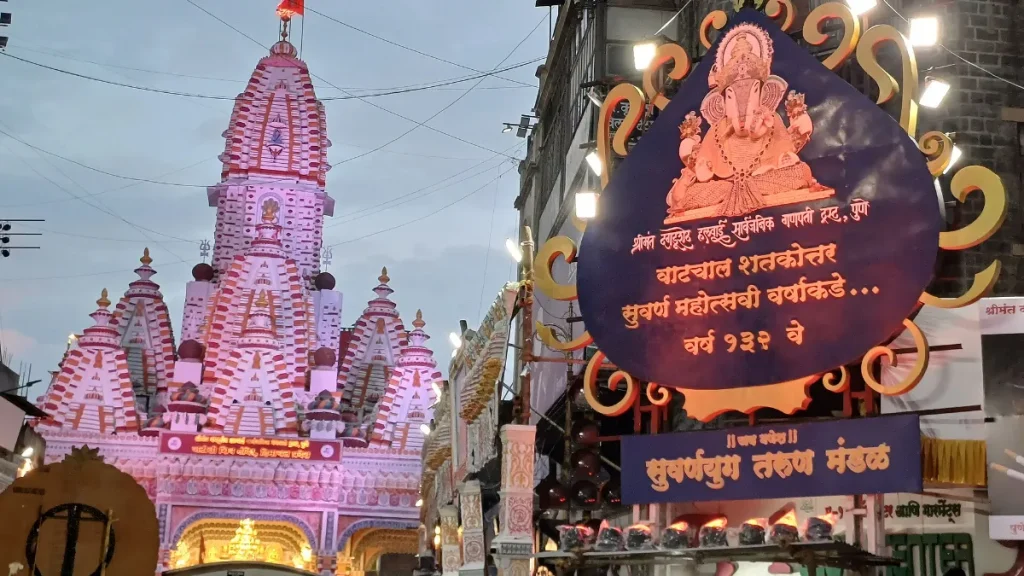
Photo: DesiBoy101 / CC BY-SA 4.0, via Wikimedia Commons
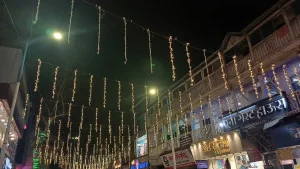
For ten days every year, Pune changes shape. Streets in the old city fill with pandals, dhol-tasha troupes practise for weeks in empty grounds, families queue at midnight for darshan, and the city ends the festival with an immersion procession that runs for more than a day. Ganeshotsav is not just Pune’s biggest festival. It is the festival that Pune gave its modern public form.
This guide explains how the public Ganeshotsav began in Pune, what makes the five Manache Ganpati special, which other mandals draw the biggest crowds, how the visarjan procession works and how to plan a visit safely.
Key takeaways
- Ganeshotsav runs from Ganesh Chaturthi to Anant Chaturdashi. In 2027, Ganesh Chaturthi is on Saturday, 4 September and Anant Chaturdashi on Tuesday, 14 September, according to major panchangs.
- Lokmanya Tilak promoted the public (sarvajanik) Ganeshotsav from 1893 as a way to bring people together under British rule. The Bhausaheb Rangari mandal, established in 1892, is described as the first sarvajanik mandal.
- The five Manache Ganpati, in order, are Kasba, Tambdi Jogeshwari, Guruji Talim, Tulshibaug and Kesariwada. Kasba Ganpati leads the immersion procession.
- The Dagdusheth Halwai Ganpati in Budhwar Peth is the city’s most visited Ganpati.
- The 2026 visarjan procession on Laxmi Road lasted 33 hours and 27 minutes, and more than 6.28 lakh idols were immersed across the city.
In this guide
- How Pune made Ganeshotsav a public festival
- The five Manache Ganpati
- Dagdusheth Halwai Ganpati: the city’s most visited
- Other famous mandals
- Dhol-tasha: the sound of Pune’s Ganeshotsav
- The ten days of Ganeshotsav, step by step
- Etiquette for first-time visitors
- The visarjan procession
- Eco-friendly Ganeshotsav
- Planning your Ganeshotsav visit
- Frequently asked questions
How Pune made Ganeshotsav a public festival
Ganesh worship has deep roots in Maharashtra. Under the Peshwas, Ganesh was the family deity, and the festival was celebrated with great pomp at Shaniwar Wada. But for most families, Ganesh Chaturthi was a private, household festival.
That changed in the 1890s. In 1892, Bhausaheb Laxman Javale, known as Bhau Rangari, set up a public Ganpati in Pune, and his trust describes it as India’s first sarvajanik Ganpati mandal. Its famous idol, showing Ganesh slaying a demon, is often read as a coded message against British rule.
From 1893, Lokmanya Bal Gangadhar Tilak championed the public festival through his newspaper Kesari. Public political meetings were restricted by the British, but religious gatherings were harder to stop. Tilak saw that a ten-day community festival could bring people of different castes and classes together, spread ideas through lectures, songs and plays, and build a sense of shared identity. The idea spread quickly across Maharashtra and later across India.
There has long been a friendly debate in Pune about who should get credit for starting the public festival, Bhau Rangari or Tilak. Most historians agree that both played important roles: Rangari’s mandal was among the first, and Tilak gave the movement its scale and purpose.
The five Manache Ganpati
“Manache” means honoured. Five mandals in the old city hold a special status: they lead the immersion procession in a fixed order, and many families visit all five during the festival.
| Order | Mandal | Area | Notable facts |
|---|---|---|---|
| 1st | Kasba Ganpati | Kasba Peth | Pune’s presiding deity (gramdaivat); temple linked to Jijabai and the young Shivaji Maharaj; leads the visarjan procession |
| 2nd | Tambdi Jogeshwari | Budhwar Peth | Linked to the temple of Jogeshwari, Pune’s gramdevi |
| 3rd | Guruji Talim | Budhwar Peth area | Founded in 1887 by Hindu and Muslim families through a wrestling centre; a symbol of communal harmony |
| 4th | Tulshibaug | Tulshibaug, Budhwar Peth | Established in 1901 in the Tulshibaug Ram temple complex; known for its tall idol and ornaments |
| 5th | Kesariwada | Narayan Peth | Started in 1894 by Tilak’s Kesari Trust; moved to Kesariwada in 1905 |
Kasba Ganpati: the first honour
The Kasba Ganpati temple in Kasba Peth is considered the presiding deity of Pune. Its history is tied to Jijabai, who settled in Pune with the young Shivaji in 1630 and supported building a temple here. During Ganeshotsav, the Kasba Ganpati has the privilege of starting the visarjan procession, a tradition dating back to Tilak’s time.
Tambdi Jogeshwari
Tambdi Jogeshwari is linked to the old Jogeshwari temple in Budhwar Peth, dedicated to the goddess considered the gramdevi of Pune. The festival idol is installed near the temple and is the second to be immersed.
Guruji Talim
Guruji Talim’s origin is one of Pune’s favourite stories. It was founded in 1887 through a talim, or wrestling centre, with Hindu and Muslim families working together, and is still cited as an example of the city’s communal harmony.
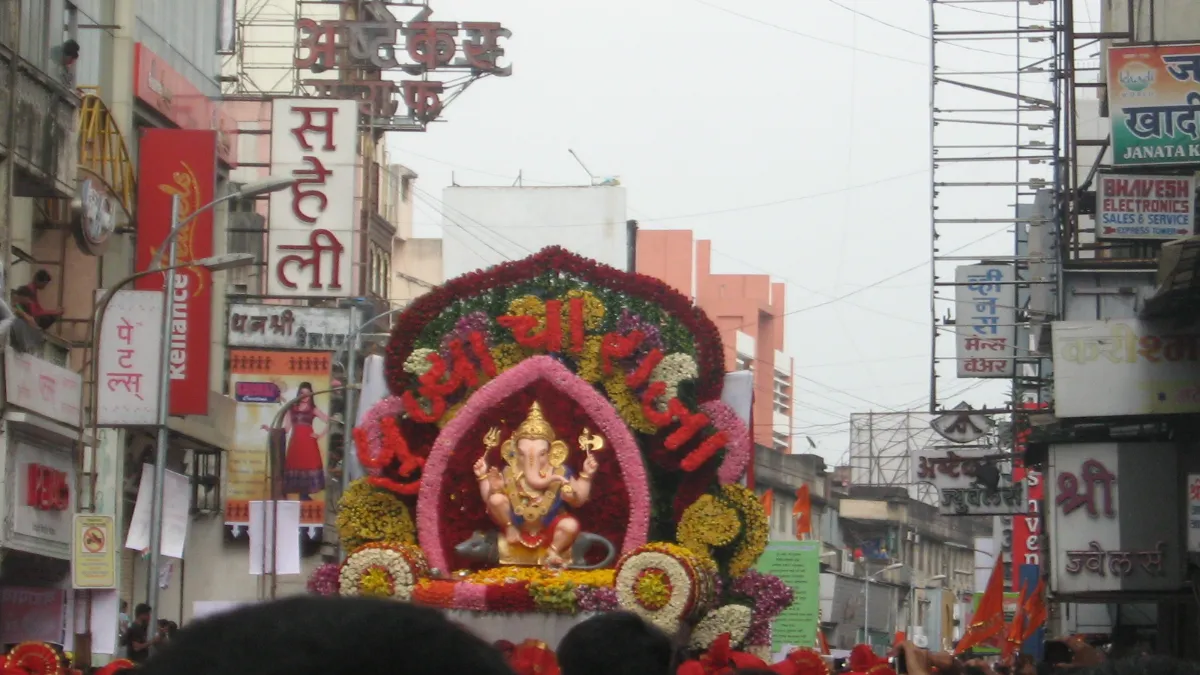
Tulshibaug
The Tulshibaug Ganpati stands in the heart of one of the busiest markets in the Peths, inside the Tulshibaug Ram temple complex. Its tall idol and decoration attract large crowds, and shopping in Tulshibaug is part of many families’ Ganeshotsav visit.
Kesariwada
The Kesariwada Ganpati was started by Tilak’s Kesari Trust in 1894 and is closely linked to Tilak’s legacy and his newspapers. Lectures and cultural programmes are still part of its festival tradition.
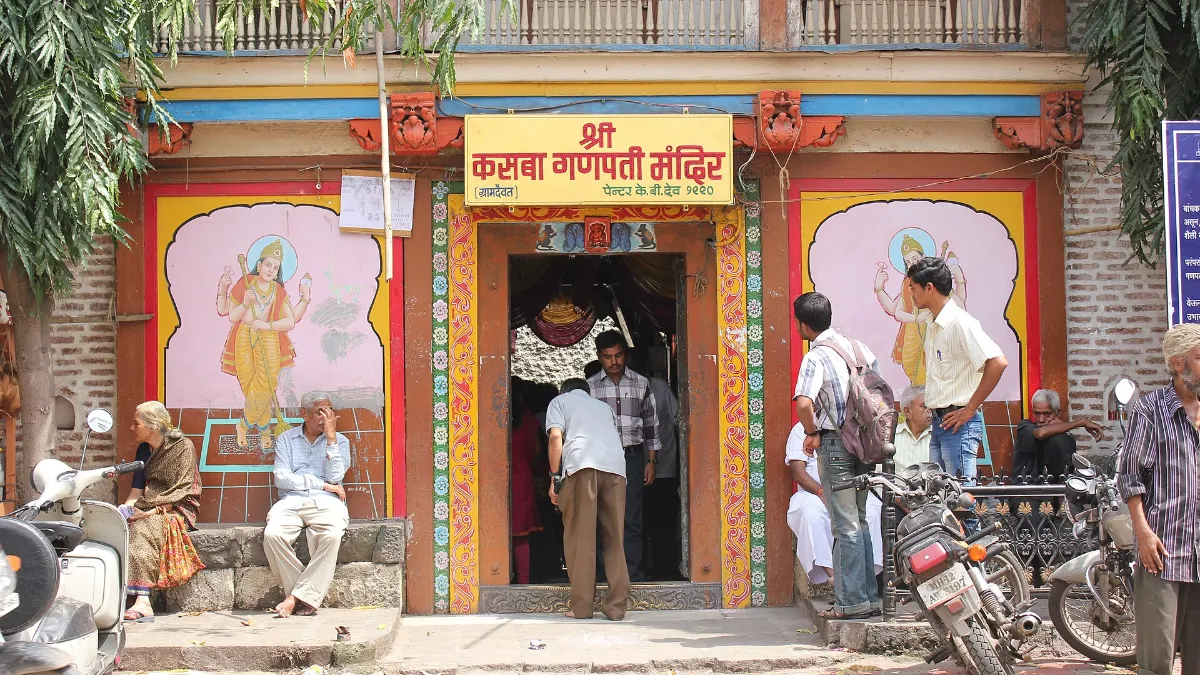
Dagdusheth Halwai Ganpati: the city’s most visited
If you ask visitors from outside Pune which Ganpati they want to see, most will say Dagdusheth. The Shrimant Dagdusheth Halwai Ganpati temple in Budhwar Peth was established by Dagdusheth Gadve, a well-known sweet maker, and his wife Laxmibai, who lost their only son to a plague epidemic in the late 19th century. Today the temple trust runs a range of charitable activities, including support for elderly people, education and health services.
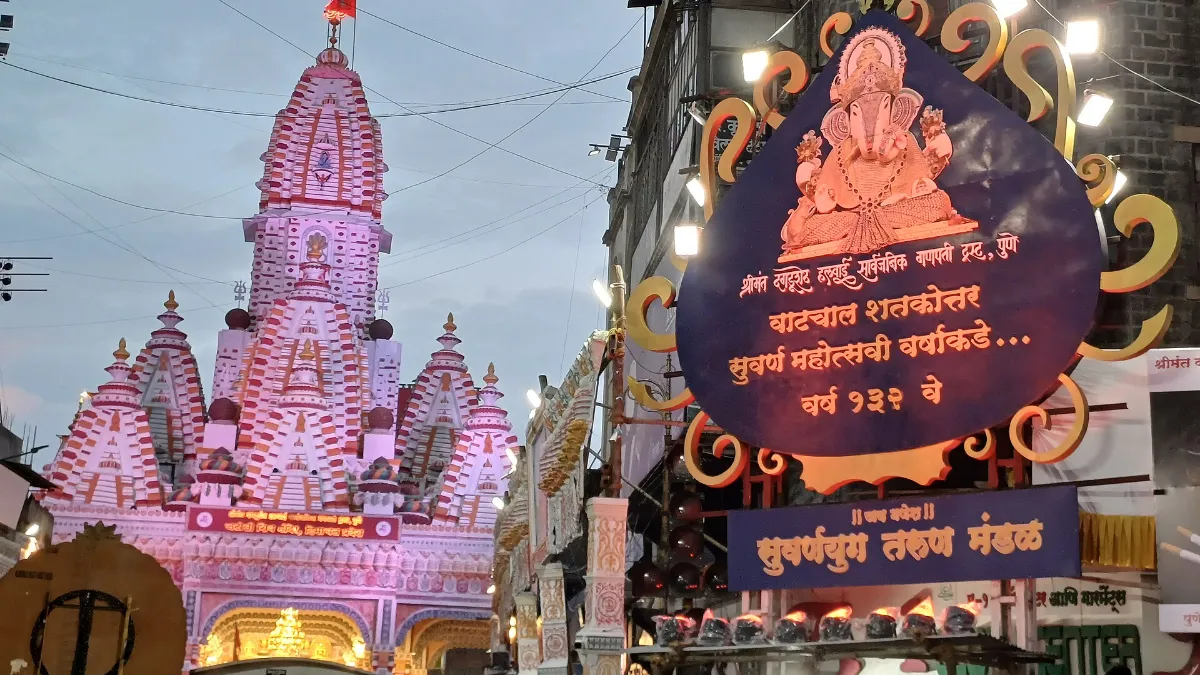
During Ganeshotsav, the Dagdusheth mandal builds a grand decorative replica of a temple or palace each year, lit with thousands of lights, and the queues for darshan run late into the night. The temple itself is open all year, and many Punekars visit on Tuesdays and on Sankashti Chaturthi.
Other famous mandals
- Shrimant Bhausaheb Rangari Ganpati: Budhwar Peth, established in 1892, with its distinctive idol of Ganesh slaying a demon.
- Akhil Mandai Mandal: Near Mahatma Phule Mandai, known for its Sharada-Gajanan idol, showing Ganesh with the goddess Sharada.
- Hutatma Babu Genu Mandal: Named after freedom fighter Babu Genu, known for its large processions.
- Jilbya Maruti Mandal: One of the older mandals in the central market area.
Beyond the old city, large mandals in Kothrud, Sahakarnagar, Bibvewadi, Pimpri-Chinchwad and other areas create elaborate themed decorations, and many housing societies hold their own festivals with cultural programmes.
Dhol-tasha: the sound of Pune’s Ganeshotsav
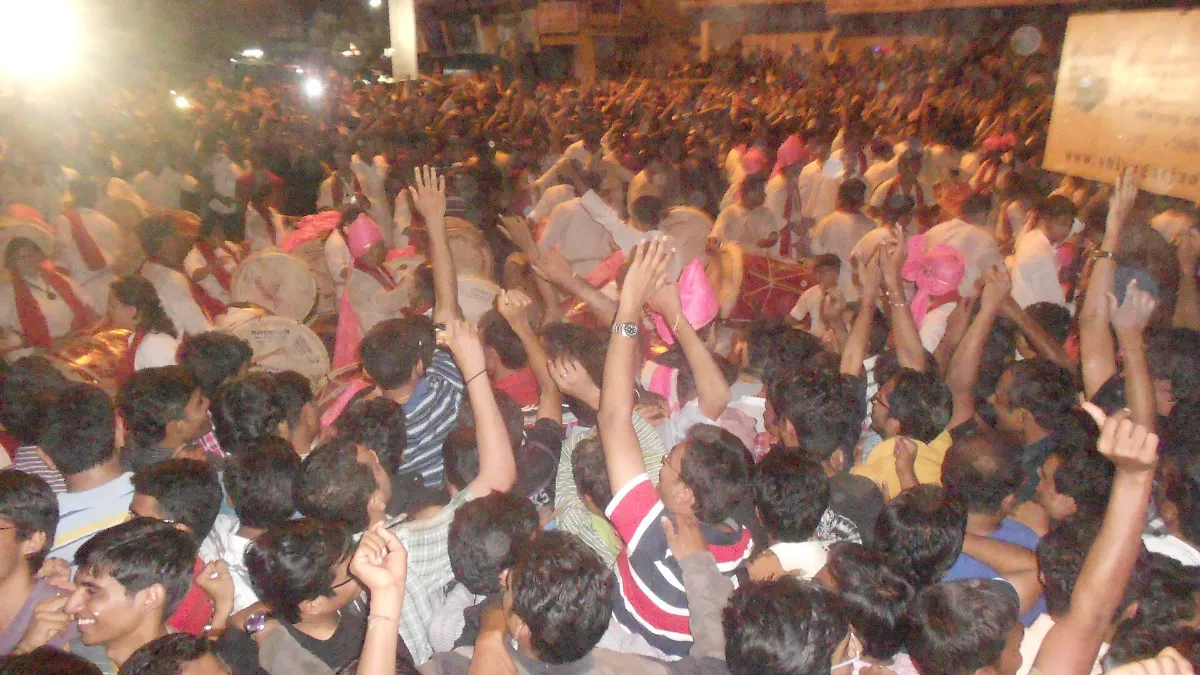
Pune’s dhol-tasha pathaks are as much a part of the festival as the idols. Hundreds of troupes, made up of students, professionals and retirees, practise for months to perform during the arrival (aagman) and immersion processions. Each pathak develops its own rhythms and formations, and new compositions are introduced every year. Watching a large pathak perform on Laxmi Road or Tilak Road is an experience in itself.
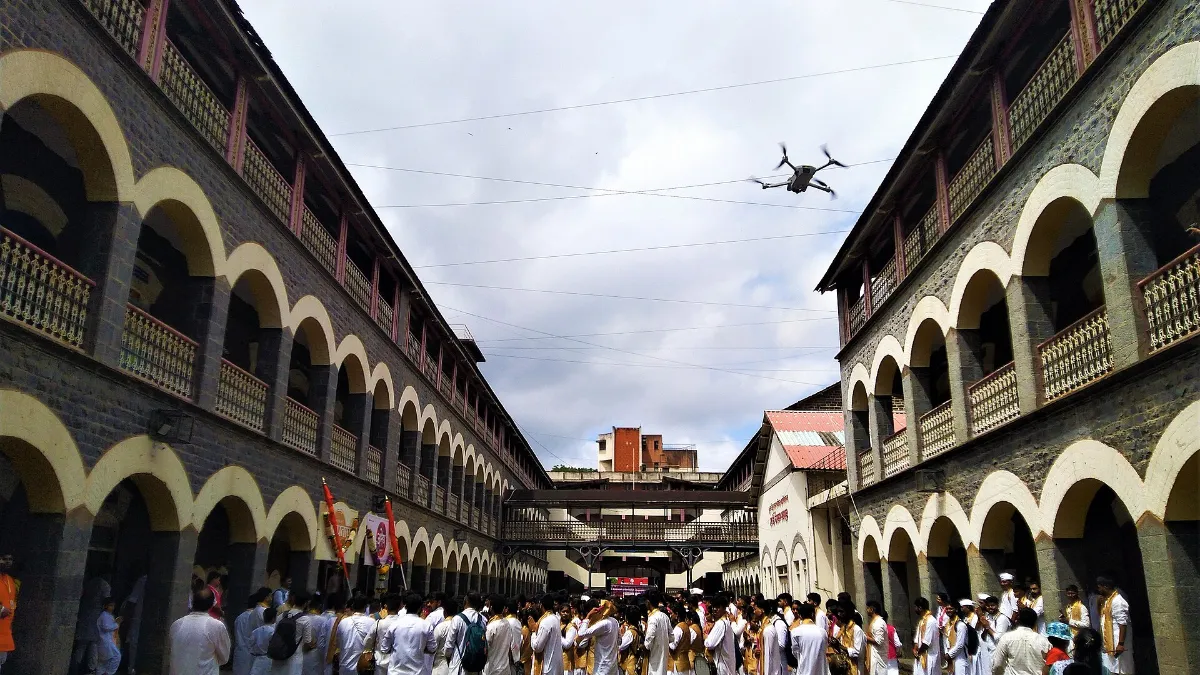
The pathaks follow police rules on timings and the number of players, and in recent years there have been efforts to limit sound levels and the duration each troupe spends at a spot to keep the procession moving.
The ten days of Ganeshotsav, step by step
| Day | What happens |
|---|---|
| Days before Chaturthi | Aagman (arrival) processions bring mandal idols from workshops to pandals, often with dhol-tasha |
| Ganesh Chaturthi (Day 1) | Pranapratishtha: the idol is installed at home and in pandals with puja and modak offerings |
| Day 1.5 or 2 | Many households immerse their Ganpati after one and a half days |
| Around Day 3 to 5 | Gauri avahan and Gauri pujan in many Maharashtrian homes, followed by Gauri and Ganpati visarjan for families that keep the idol for five days |
| Day 7 | Another common day for household immersions |
| Days 1 to 10 | Aarti twice a day, cultural programmes, lectures, competitions and decoration visits across the city |
| Anant Chaturdashi (Day 11) | The main visarjan procession, led by the Kasba Ganpati, which continues through the night and often into the next day |
Etiquette for first-time visitors
- Remove footwear where asked at pandals and temples, and keep it in the designated area.
- Follow queue lines and volunteers’ instructions; queues for popular mandals can take hours in the evening.
- Ask before photographing people performing rituals. Many mandals restrict photography near the idol.
- Donations are voluntary. Give at official counters and take a receipt.
- Keep noise and litter to a minimum, especially in residential lanes late at night.
The visarjan procession
On Anant Chaturdashi, the final day, Pune’s main immersion procession begins on Laxmi Road in the morning with the Kasba Ganpati, followed by the other Manache Ganpati in order. The large mandals, including Dagdusheth and Bhausaheb Rangari, follow later in the day and through the night.
The procession is famous for its length. In 2026, it ran for 33 hours and 27 minutes, ending on the evening of the next day, and police reported that it concluded peacefully. More than 6.28 lakh idols, public and household, were immersed across the city during the festival’s immersion days, at river ghats and in artificial tanks set up by the municipal corporations.
Practical tips for watching the procession
- Arrive early on Laxmi Road, Tilak Road or Kelkar Road if you want a good view. Spots fill up by morning.
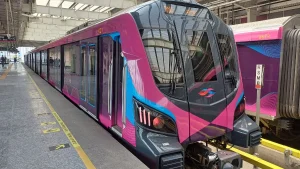
- Use the Metro and walk. Roads in the central city are closed to vehicles during the procession, and Maha Metro typically runs extended services.
- Keep valuables minimal and keep children close. Crowds can be extremely dense.
- Plan an exit route and a meeting point in case your group gets separated.
- Carry water and earplugs; the dhol-tasha volume is high.
Eco-friendly Ganeshotsav
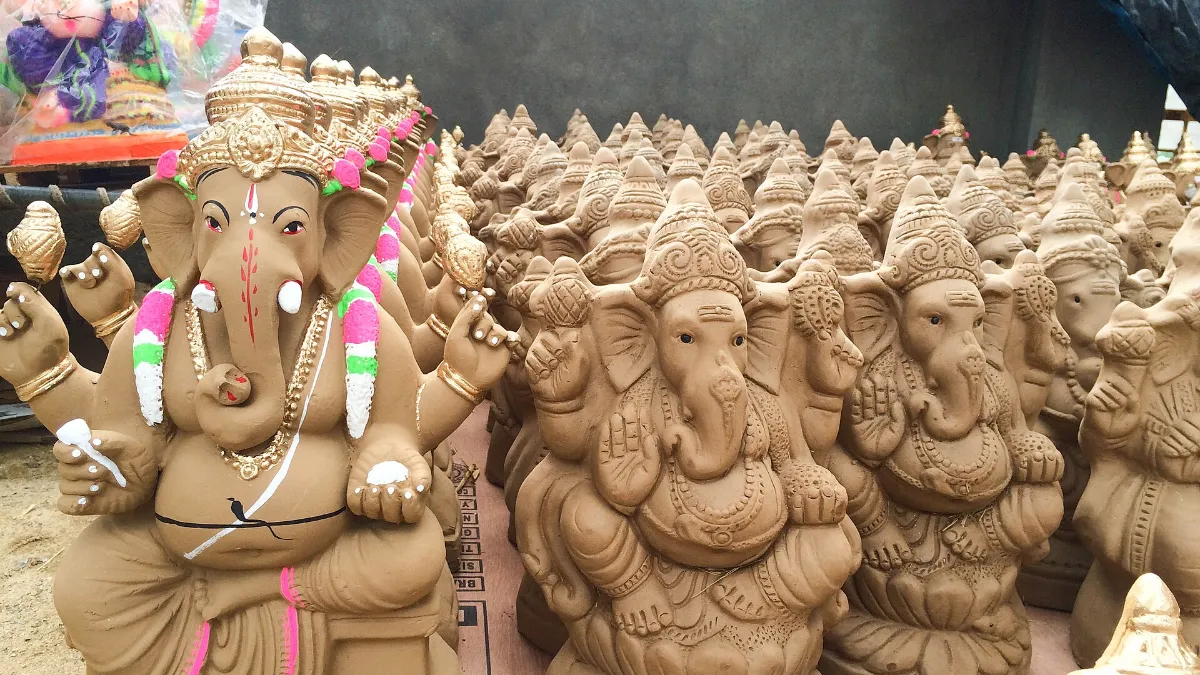
Pune has been at the forefront of efforts to reduce pollution in rivers during the festival. Common measures include:
- Using shadu (clay) idols instead of plaster of Paris.
- Immersing household idols in artificial tanks or at home in a bucket of water, and using the soil later for plants.
- Donating idols at collection centres run by the municipal corporations and voluntary groups.
- Collecting nirmalya (flowers and offerings) separately for composting.
Rules on idol materials and immersion change from time to time based on court orders and government decisions, so check the latest guidelines from PMC, PCMC and the Maharashtra Pollution Control Board before the festival.
Planning your Ganeshotsav visit
Best time to visit pandals
Weekday afternoons in the first half of the festival are the least crowded. Evenings, weekends and the last three days are the busiest. For the five Manache Ganpati and Dagdusheth, many people start early in the morning and walk the old city route in a few hours.
Suggested walking route
Start at Kasba Ganpati, walk to Tambdi Jogeshwari and Guruji Talim, continue to Tulshibaug, then to Dagdusheth and Bhausaheb Rangari, and end at Kesariwada in Narayan Peth. Our guide to Pune’s Peths explains the history of the lanes you will walk through.
Getting there
Use the Metro to Mandai, Kasba Peth, Swargate or District Court stations and walk. Traffic police close several roads in the old city to vehicles during the festival and announce parking areas. See our Pune Metro guide for stations and timings.
Food
Ukadiche modak is the offering of the season, and sweet shops across the city sell them fresh during the festival. For more on the city’s food, read our Pune food guide.
Frequently asked questions
When is Ganeshotsav in 2027?
According to major panchangs, Ganesh Chaturthi falls on Saturday, 4 September 2027, and Anant Chaturdashi, the day of the main visarjan, on Tuesday, 14 September 2027.
What are the five Manache Ganpati of Pune?
The five Manache Ganpati are Kasba Ganpati, Tambdi Jogeshwari, Guruji Talim, Tulshibaug Ganpati and Kesariwada Ganpati. They lead the visarjan procession in this order.
Who started the public Ganeshotsav in Pune?
Lokmanya Tilak promoted the public Ganeshotsav from 1893 to unite people under British rule. The Bhausaheb Rangari mandal, set up in Pune in 1892, is described as the first public Ganpati mandal.
How long is the Pune Ganesh visarjan procession?
The main procession on Laxmi Road usually lasts more than a day. In 2026 it ran for 33 hours and 27 minutes.