Pune Food Guide: Misal, Mastani, Bakarwadi, Bun Maska and the Dishes That Define the City
Our Pune food guide covers misal, mastani, bakarwadi, vada pav, Irani cafe bun maska, Camp bakeries and Maharashtrian thalis, plus where and how locals eat.
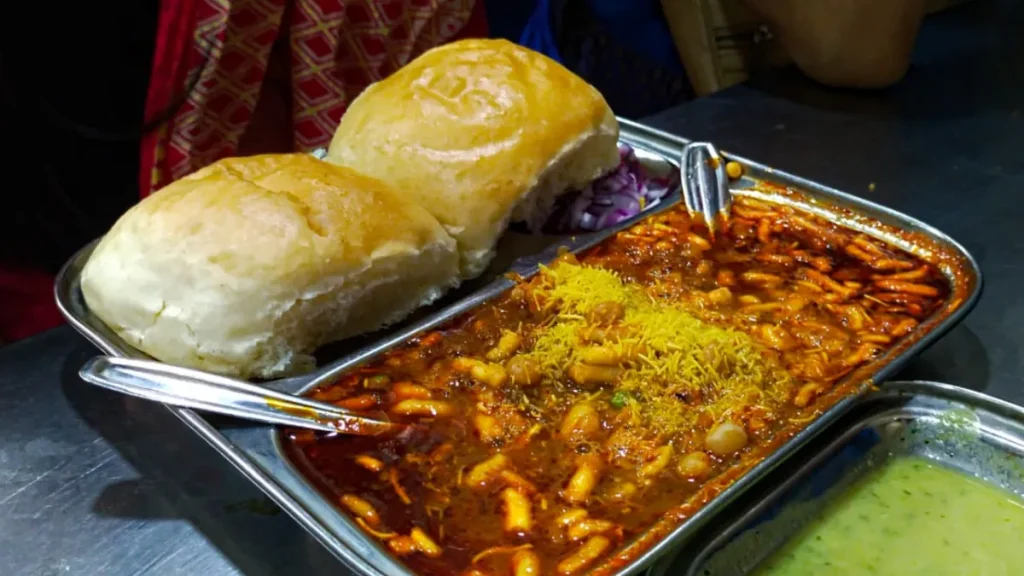
Photo: Ishanya 1507 / CC BY-SA 4.0, via Wikimedia Commons
Ask ten Punekars where to eat and you will get ten arguments, each delivered with total confidence. That is the best introduction to food in Pune. The city has strong opinions, old loyalties and a habit of queueing patiently outside shops that have done one thing well for decades.
Pune’s food has several layers. There is the Brahmin home cooking of the old Peth areas, built around varan bhaat, amti, koshimbir and festival sweets. There is the fiery rustic food of the Sahyadri villages, which gave the city its love for misal and pithla bhakri. There are the Parsi and Irani bakeries and cafes of the Camp and Deccan areas, and the student food culture around Fergusson College Road and the university. And there is the new Pune of Koregaon Park, Baner and Kharadi, with food from everywhere.
This guide focuses on the dishes that are most closely tied to the city, what they are, where they come from and how locals eat them.
Key takeaways
- Misal pav is Pune’s signature breakfast: a spicy sprouted moth bean curry with farsan, onion, lemon and pav, served with a thin fiery gravy called kat or tarri.
- Mastani is a thick milkshake topped with ice cream and dry fruits; the drink as Pune knows it today was popularised from Sadashiv Peth in the late 1960s.
- Bakarwadi is a crisp, spiced spiral snack. Pune’s best-known maker began selling it in 1970.
- Camp’s Irani cafes and Parsi bakeries gave the city bun maska, Irani chai, Shrewsbury biscuits and mawa cake.
- For a full Maharashtrian meal, look for a thali with varan bhaat, amti, usal, bhakri or poli, koshimbir and a sweet such as puran poli or shrikhand.
In this guide
- Misal pav: Pune’s breakfast of champions
- Vada pav and the snack culture
- Mastani: Pune’s own drink
- Bakarwadi, chivda and the namkeen shops
- Irani cafes: bun maska and Irani chai
- Camp’s bakeries: Shrewsbury biscuits and mawa cake
- The Maharashtrian thali
- Rustic food on the highway and the forts
- Where to eat by neighbourhood
- Sweets to try
- A one-day Pune food trail
- Pune’s food calendar through the year
- Tips for eating out in Pune
- Frequently asked questions
Misal pav: Pune’s breakfast of champions
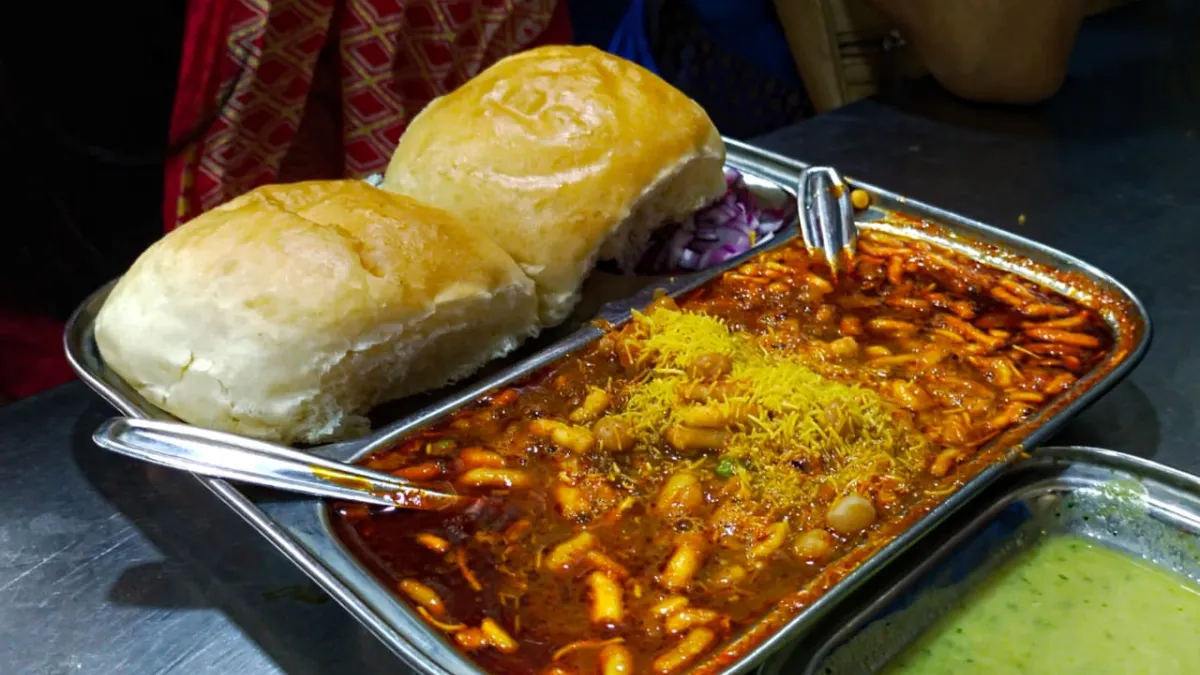
If Pune has a single dish that people travel across the city for, it is misal. A plate usually has three parts. At the base is usal, a curry of sprouted matki (moth beans), sometimes mixed with potato. On top goes a ladle of kat or tarri, a thin, oily, bright red gravy that carries most of the heat. Then come crunchy farsan or chivda, chopped onion, coriander and a squeeze of lemon. It is eaten with soft pav, and many places will refill the tarri as many times as you ask.
Pune misal is often described as slightly milder and sweeter than the famously fiery Kolhapuri misal, and some old Pune places add a touch of jaggery or a cooling side of curd. But every misal joint has its own masala, and loyalties are fierce. Older names such as Bedekar in Narayan Peth and newer favourites spread across Kothrud, Karve Road and Pimpri-Chinchwad all have devoted followers.
How to eat misal like a local
Mix lightly, do not drown the farsan too early, and keep a glass of taak (buttermilk) or a sweet mattha nearby if you are not used to the heat. Most misal places are busiest between 8 am and 11 am on weekends.
Vada pav and the snack culture
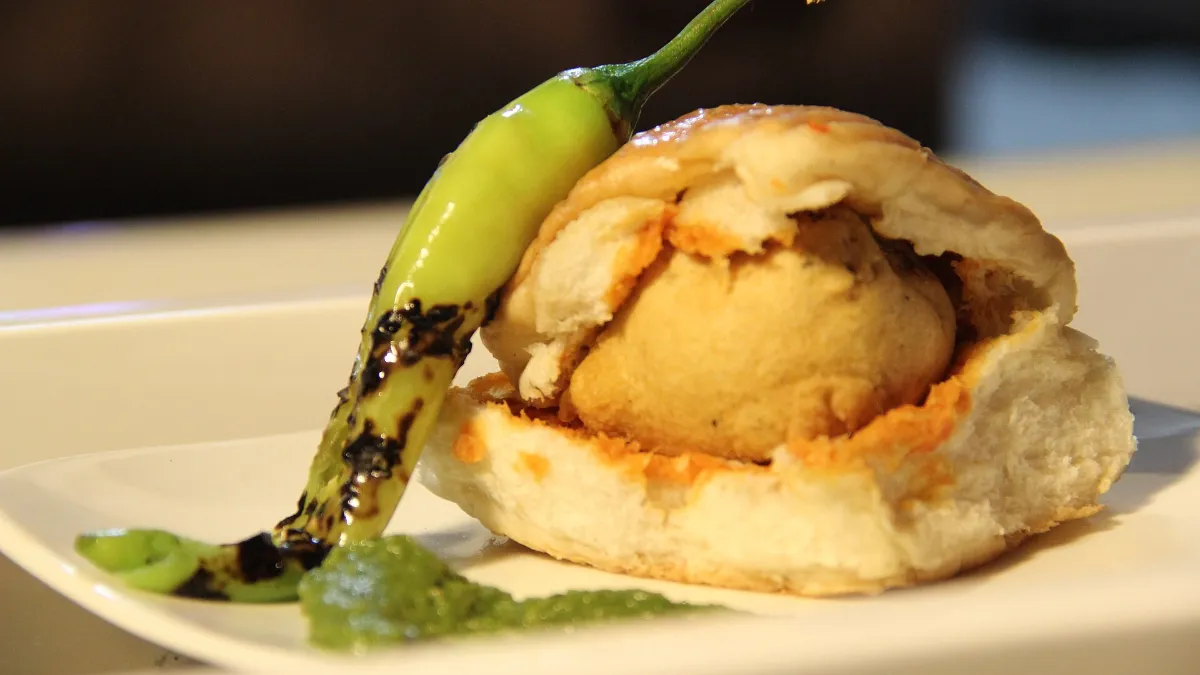
Vada pav was born in Mumbai, but Pune has adopted it completely. A spiced potato filling is dipped in gram flour batter, fried and tucked into pav with dry garlic chutney and a fried green chilli. Pune has well-known vada pav chains as well as countless stalls outside colleges and railway stations, and debates about the best one rival misal debates.
Alongside vada pav, look out for:
- Kanda bhaji: Onion fritters, a monsoon must, especially on the way to Sinhagad or Lonavala.
- Sabudana vada and sabudana khichdi: Sago pearls cooked with peanuts, potato and green chilli. Made for fasting days but eaten every day, often with sweet curd.
- Pohe and upma: The default home breakfast, sold at stalls across the city from early morning.
- Thalipeeth: A multigrain flatbread made from bhajani flour, served with white butter or curd.
Mastani: Pune’s own drink
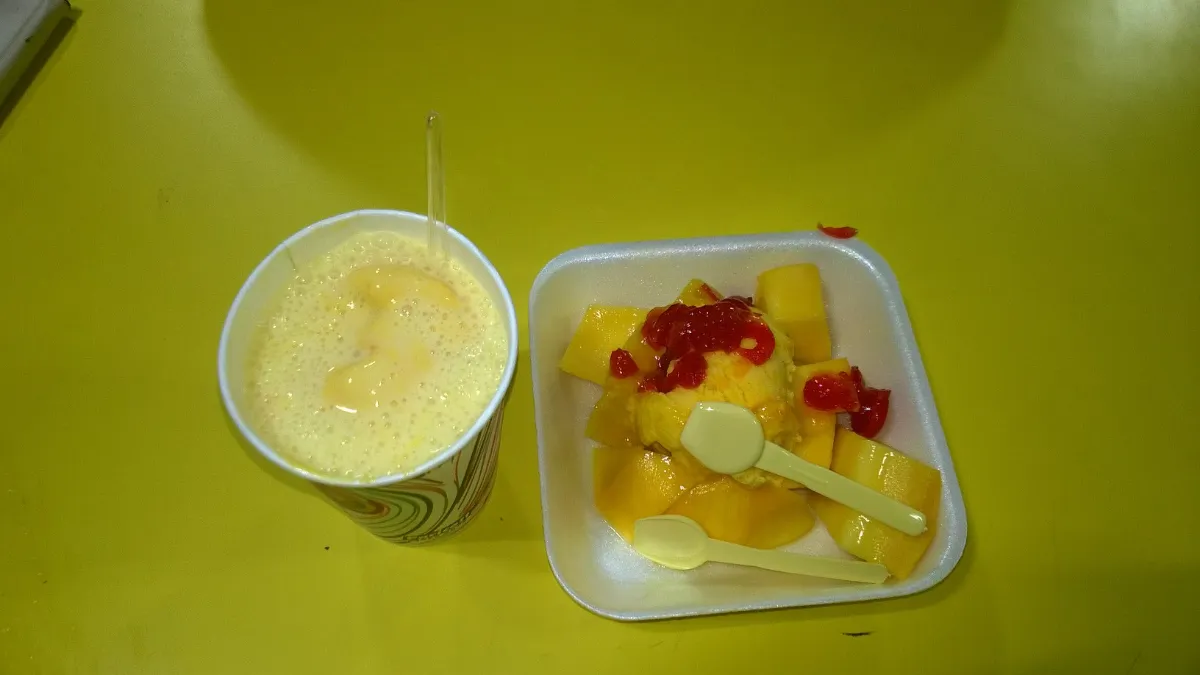
Mastani is a thick milkshake, most often mango, blended with ice cream and topped with a scoop of ice cream and dry fruits. It is closer to a dessert you drink than a shake.
Its exact origin is debated. The best-known story is that of Sujata Mastani, which began selling it in Sadashiv Peth in 1967. According to the family’s account, Sharadrao Kondhalkar changed the recipe by dropping ice cubes and blending ice cream into the milk, which made the drink thicker and colder. Nobody agrees on the name. Some link it to Mastani, the companion of Peshwa Bajirao I, some say it came from customers calling the drink “masta” (Marathi for great), and some say it is just a coincidence.
Mango mastani is the classic order, but rose, pineapple, kesar pista and seasonal sitaphal (custard apple) are popular, and newer shops experiment with chocolate and dry fruit versions.
Bakarwadi, chivda and the namkeen shops
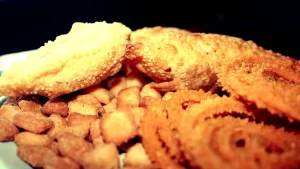
Bakarwadi is a crisp spiral of thin dough filled with a sweet, spicy, tangy mix of coconut, sesame, poppy seeds and spices, cut into small rounds and fried. The snack has Gujarati roots, but in Pune it is closely linked to Chitale Bandhu, the mithai and namkeen shop founded on Bajirao Road in 1950, which began making bakarwadi in 1970. Today it is the snack most visitors pack to take home.
Pune’s namkeen shops also sell several kinds of chivda, from thin poha chivda to spicier versions, along with shev, chakli and laddoos. Around Diwali these shops are packed with people buying faral, the festive snack platter; read our Diwali faral guide for the full spread.
Old Pune shops have a reputation for strict rules, from fixed timings to the famous Puneri patya (sign boards) with blunt instructions. Some older shops still close in the afternoon. Treat it as part of the charm.
Irani cafes: bun maska and Irani chai
In the early and mid-20th century, Iranian immigrants opened cafes across Pune, especially in Camp and around Deccan Gymkhana. These cafes, with bentwood chairs, marble-topped tables and glass jars of biscuits, created some of Pune’s most loved habits.
The essential order is bun maska, a soft bun split and generously buttered, dipped into sweet, milky Irani chai. Other favourites include bun omelette, kheema pav, caramel custard and khari biscuits. A good Irani cafe is a place to sit for an hour with a newspaper, and some of the older cafes near Deccan and in Camp have been doing exactly that for generations.
Camp’s bakeries: Shrewsbury biscuits and mawa cake
The Camp area grew around the British cantonment and is home to some of the city’s oldest bakeries, many run by Parsi and Irani families. Several of them are close to or more than a century old.
Kayani Bakery, set up in 1955 on East Street, is the name most associated with Shrewsbury biscuits, buttery, crumbly round biscuits that Punekars carry to relatives across India and abroad. Queues outside on weekends and before festivals are common, and stock can run out by afternoon. Mawa cake, a dense cake made with reduced milk, is the other Camp classic.
Other old bakeries in Camp are known for broon (crusty bread), khari, nankhatai, jam rolls and plum cake. If you go, carry cash as a backup, go early, and remember many old shops have fixed closing days.
The Maharashtrian thali
To understand what Pune eats at home, order a Maharashtrian thali. A typical vegetarian thali includes:
| Item | What it is |
|---|---|
| Varan bhaat | Plain toor dal with steamed rice, with a spoon of ghee and a squeeze of lemon |
| Amti | A tangy, slightly sweet dal flavoured with goda masala, kokum or tamarind |
| Usal | A sprouted bean curry, often matki or moong |
| Bhaji | Dry vegetable such as batata bhaji or seasonal greens |
| Koshimbir | A fresh salad of cucumber, carrot or tomato with peanuts and curd |
| Poli or bhakri | Wheat chapati, or jowar or bajri bhakri for a rustic meal |
| Papad, lonche and chutney | Pickles, roasted papad and dry chutneys such as shengdana (peanut) chutney |
| Sweet | Shrikhand, basundi, puran poli or gulab jamun depending on the day |
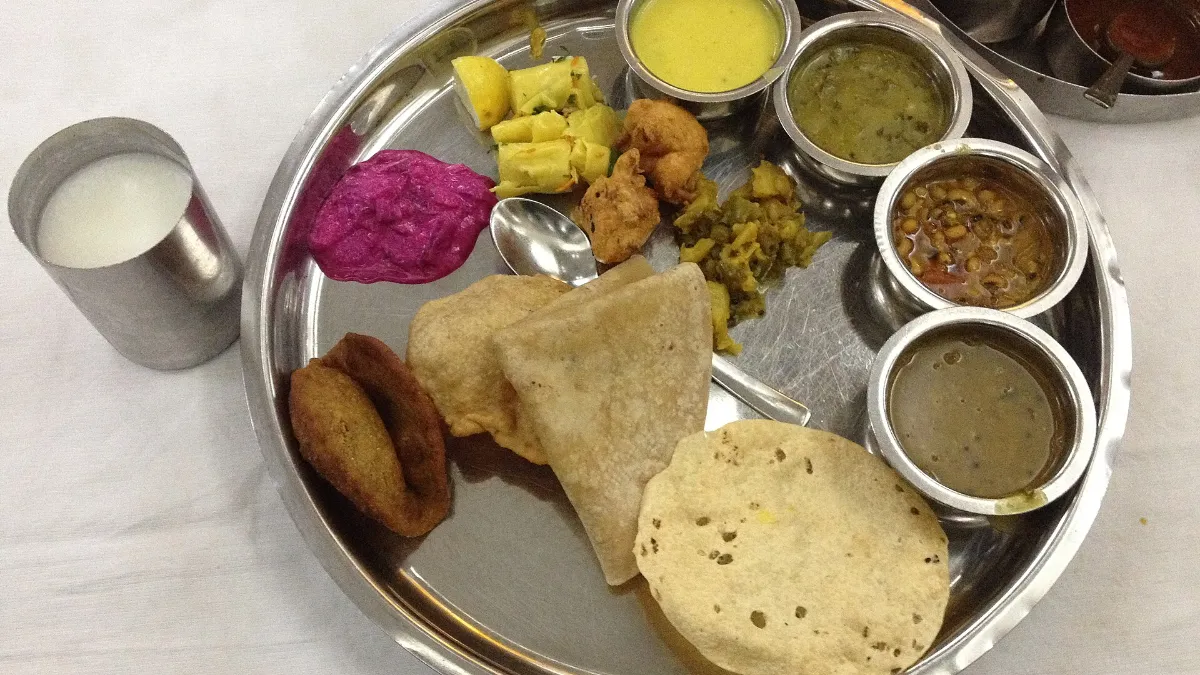
Goda masala, a dark, aromatic spice blend with roasted coconut and sesame, gives much of this food its distinct taste. On festival days the sweets change: ukadiche modak during Ganeshotsav, puran poli on Holi and Gudi Padwa, and shrikhand-puri on special occasions.
For a non-vegetarian Maharashtrian meal, look for tambda rassa and pandhra rassa, the red and white mutton gravies made famous by Kolhapur, or Malvani fish thalis influenced by the Konkan coast. Pune has many restaurants serving both.
Rustic food on the highway and the forts
Weekend trips around Pune come with their own menu. On Sinhagad, pithla bhakri (a thick gram flour preparation with jowar bhakri), kanda bhaji and matka dahi are part of the climb. On the old Mumbai highway and around Lonavala, chikki (peanut or dry fruit brittle) and fudge are the souvenir of choice. On the Satara road and around Saswad, roadside dhabas serve mutton thalis and bhakri. For trip ideas, see our guide to forts near Pune.
Where to eat by neighbourhood
| Area | Known for |
|---|---|
| Peth areas (Sadashiv, Narayan, Budhwar, Shukrawar) | Old-style misal, mastani, namkeen shops, sweets, traditional thalis |
| Deccan and FC Road | Student cafes, South Indian breakfast joints, Irani cafes, chaat |
| Camp (MG Road, East Street) | Parsi and Irani bakeries, Irani cafes, kebabs and biryani |
| Koregaon Park and Kalyani Nagar | International restaurants, cafes, brunch places |
| Kothrud and Karve Road | Popular misal and snack joints, family restaurants |
| Baner, Balewadi, Wakad, Hinjewadi | New cafes, breweries, food courts serving the IT crowd |
| Pimpri-Chinchwad | Local misal spots, vada pav, mutton thali places |
Sweets to try
- Shrikhand and amrakhand: Strained curd sweetened with sugar and flavoured with saffron and cardamom, or mango for amrakhand.
- Puran poli: A thin flatbread stuffed with jaggery and chana dal, eaten with ghee or katachi amti.
- Ukadiche modak: Steamed rice flour dumplings with coconut and jaggery, the offering to Ganpati.
- Basundi: Slow-cooked thickened milk with dry fruits.
- Amba barfi and mango sweets: Seasonal favourites when Alphonso mangoes from Ratnagiri and Devgad arrive in Pune’s markets around spring.
A one-day Pune food trail
If you have one day and a good appetite, this route covers the city’s food identity from breakfast to dessert. Use the Metro and autos to move between areas, and walk inside the old city.
- 8 am, misal in the Peths: Start with misal pav and a glass of taak at a traditional misal house in Narayan or Sadashiv Peth. Go early; the queues start forming by 9 on weekends.
- 10 am, a walk and namkeen shopping: Walk along Bajirao Road and Laxmi Road, pick up bakarwadi and chivda to carry home, and look at the sweet shops’ trays of barfi and pedha.
- 1 pm, a Maharashtrian thali: Have lunch at a thali restaurant in the old city or on Tilak Road. Ask for varan bhaat, amti and a sweet of the day.
- 4 pm, mastani: A mango mastani in Sadashiv Peth, or a seasonal flavour if mangoes are not in season.
- 6 pm, Irani chai in Camp: Take the Metro towards Camp, have bun maska and Irani chai, and pick up Shrewsbury biscuits or mawa cake if the bakery still has stock.
- 8 pm, dinner your way: Either a Kolhapuri or Malvani non-vegetarian thali, or street food near FC Road for something lighter.
Pune’s food calendar through the year
Pune eats with the seasons and the festival calendar. Knowing what is in season helps you order well.
| Season or festival | What to eat |
|---|---|
| Gudi Padwa (March or April) | Shrikhand-puri, puran poli |
| Summer (April to June) | Alphonso mangoes, aamras, amrakhand, mango mastani, kokum sharbat and taak |
| Monsoon (June to September) | Kanda bhaji, corn on the cob, hot misal, chai and vada pav |
| Ganeshotsav (August or September) | Ukadiche modak, panchkhadya, sheera |
| Navratri and Dussehra | Fasting foods such as sabudana khichdi, rajgira and sweet potato dishes |
| Diwali (October or November) | Faral: chakli, karanji, anarse, shankarpali, chivda and laddoos |
| Winter (December to February) | Strawberries from Mahabaleshwar, hurda (tender jowar) parties in villages near Pune, til laddoos for Makar Sankranti |
Hurda parties deserve a special mention. In winter, farms around Pune roast tender green jowar over fire and serve it with chutneys, curd and sweets, and many families make a day trip of it.
Tips for eating out in Pune
- Go early for famous places. Many old shops and misal places work in fixed hours and sell out.
- Check closing days. Several traditional shops close on a fixed weekday or in the afternoon.
- Ask for less spice if you are not used to Maharashtrian heat. “Kami tikhat” usually works.
- Carry cash or UPI. Most places accept UPI now, but small stalls may not take cards.
- Respect the rules. Old Pune shops are proud of their way of doing things. Follow the sign boards and the queue.
- Eat safe. Choose busy stalls with high turnover, prefer freshly fried food, and be careful with cut fruit and water at roadside stalls during summer and the monsoon.
Frequently asked questions
What is the most famous food in Pune?
Misal pav is the dish most closely tied to Pune, along with mastani, bakarwadi, vada pav, Irani cafe bun maska and Camp’s Shrewsbury biscuits.
What is the difference between Pune misal and Kolhapuri misal?
Both use a sprouted moth bean usal topped with farsan and a spicy tarri. Kolhapuri misal is usually much hotter, while many Pune versions are slightly milder and sometimes a little sweet, though each shop has its own recipe.
What is mastani in Pune?
Mastani is a thick milkshake, most often mango, blended with ice cream and topped with a scoop of ice cream and dry fruits. It was popularised in Pune’s Sadashiv Peth from the late 1960s.
Where can I buy Shrewsbury biscuits in Pune?
Shrewsbury biscuits are most closely associated with Kayani Bakery on East Street in Camp, set up in 1955. Expect queues on weekends, and go early because stock can run out.