Diwali Faral Guide: Chakli, Karanji, Anarse, Shankarpali and Chivda, the Maharashtrian Diwali Platter Explained
Diwali faral explained: chakli, karanji, anarse, shankarpali, chivda and laddoos, when Maharashtrian homes eat them, and how to keep faral fresh.
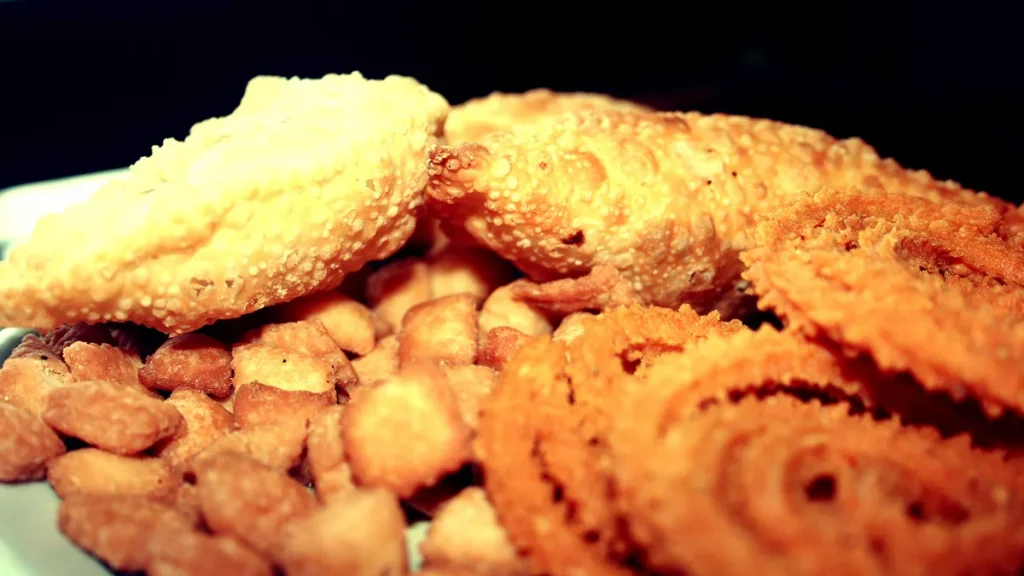
Photo: Milindb05 / CC BY-SA 4.0, via Wikimedia Commons
Walk past any Pune housing society in the first week of November and you can smell it before you see it: chakli frying in one kitchen, besan being roasted in another. Diwali faral, the platter of homemade snacks and sweets, is as central to a Maharashtrian Diwali as the akash kandil at the window.
With Lakshmi Puja on Sunday, 8 November this year, many homes have already started. Here is a guide to what goes on a traditional faral plate and why each item is there.
When faral is eaten
Faral is traditionally first eaten on the morning of Narak Chaturdashi, after the early abhyang snan (oil bath with utane). This year the abhyang snan falls on Sunday, 8 November, the same day as Lakshmi Puja; our Diwali 2026 calendar explains the dates.
After that, the dabbas stay open for days. Plates of faral go to neighbours, relatives and the building watchman, and a plate usually comes back filled. Visiting someone during Diwali without being offered faral is almost unheard of in Pune.
The savoury side
Chakli. The spiral that every faral plate is judged by. It is made from bhajani, a flour of roasted rice, chana dal, urad dal and spices such as cumin and coriander seeds, which is ground in advance. The dough is pressed through a star-shaped mould into spirals and fried. A good chakli is crisp right through and does not turn soft after a few days.
Chivda. The most common Pune version uses thin poha, roasted till crisp and tossed with peanuts, roasted chana dal (dalia), curry leaves, green chilli, a little sugar and turmeric. Some homes also make a spicier version with thick poha that is fried instead of roasted.
Shev. Thin strands of seasoned besan pressed straight into hot oil. Often eaten on its own or mixed into chivda.
Kadboli. Ring-shaped and spiced, more common in western Maharashtra homes with roots in Kolhapur and Satara. It is made from a mix of flours and is fiddly to shape, so fewer families make it now.
The sweet side
Karanji. Half-moon pastries with a filling of grated dry coconut, sugar, cardamom and sometimes poppy seeds or dry fruit, fried till golden. The edges are sealed and trimmed with a fluted cutter.
Anarse. Probably the hardest item to get right. Rice is soaked for several days, dried and ground, then mixed with jaggery and left to rest before being patted into rounds, pressed into poppy seeds and fried. Families argue about anarse every year: too much jaggery and they spread in the oil, too little and they turn hard.
Shankarpali. Small diamond-shaped bites of dough made with flour, sugar, milk and ghee, fried slowly. A savoury, salted version exists too.
Laddoos. Besan laddoo and rava laddoo are the usual pair. Besan has to be roasted slowly in ghee until it smells nutty, which is why it is often the job given to whoever has the most patience.
Homemade, ordered or bought
Fewer Pune families make every item at home now. Many order faral from women-run home kitchens, mahila bachat gats (self-help groups) and local sweet shops, and some send faral boxes to relatives abroad by courier. If you are ordering, ask what oil or ghee is used and when it was made, and check for a FSSAI registration or licence number on packaged boxes.
Prices of sugar, oil and ghee affect what faral costs this year; see our report on sugar prices in Pune before Diwali. The FDA’s festive checks on sweets and dry fruits are covered in our story on the Pune FDA seizure.
Keeping faral fresh
Fried, dry items keep best in airtight steel or glass dabbas once they have cooled fully. Packing warm chakli or chivda traps moisture and makes them soft. Most dry faral stays good for a couple of weeks if stored this way; karanji with fresh coconut filling spoils much faster than the dry-coconut kind and should be eaten within a few days.
Faral is rich, so go easy, especially if you have diabetes or are watching your diet. This article is general information, not medical or nutritional advice.
Frequently asked questions
What is Diwali faral?
Diwali faral is the platter of homemade snacks and sweets prepared in Maharashtrian homes for Diwali. It usually includes chakli, chivda, shev, karanji, anarse, shankarpali and laddoos.
When is faral eaten during Diwali?
Faral is traditionally first eaten on the morning of Narak Chaturdashi after the abhyang snan. In 2026, the abhyang snan falls on Sunday, 8 November. Families then share faral with guests and neighbours through the festival.
What is chakli made of?
Chakli is made from bhajani, a flour of roasted rice, chana dal and urad dal with spices such as cumin and coriander seeds. The dough is pressed into spirals and deep-fried.
How long does Diwali faral last?
Dry fried items such as chakli, chivda and shankarpali usually stay fresh for about two weeks in airtight containers. Karanji with fresh coconut filling should be eaten within a few days.