Pune Air Quality During Diwali 2026: How to Check AQI, Which Areas Turn Poor and How to Protect Your Family
How to check Pune’s AQI during Diwali, which areas usually slip to poor, what the firecracker noise limits are, and simple steps to protect children and the elderly.
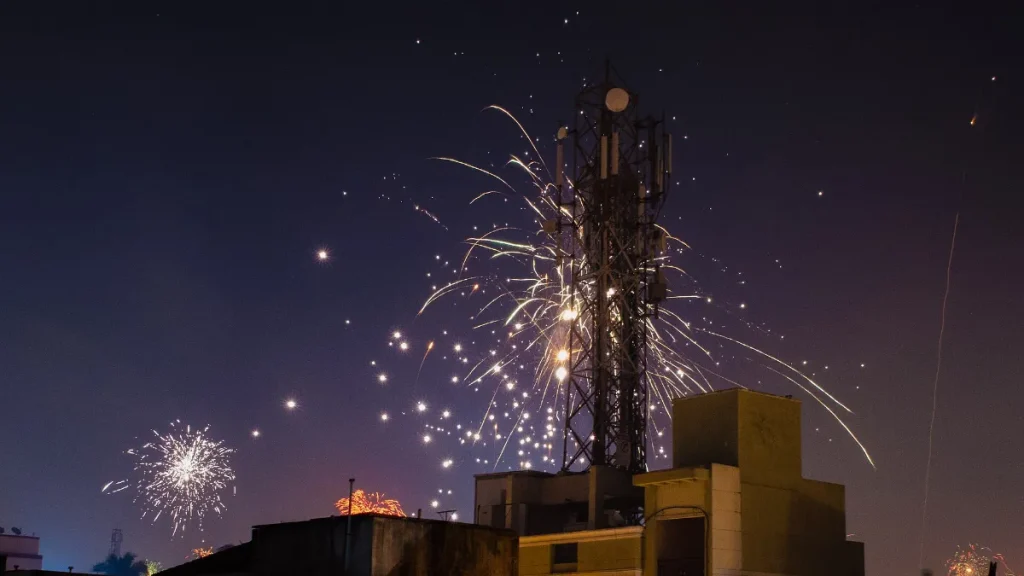
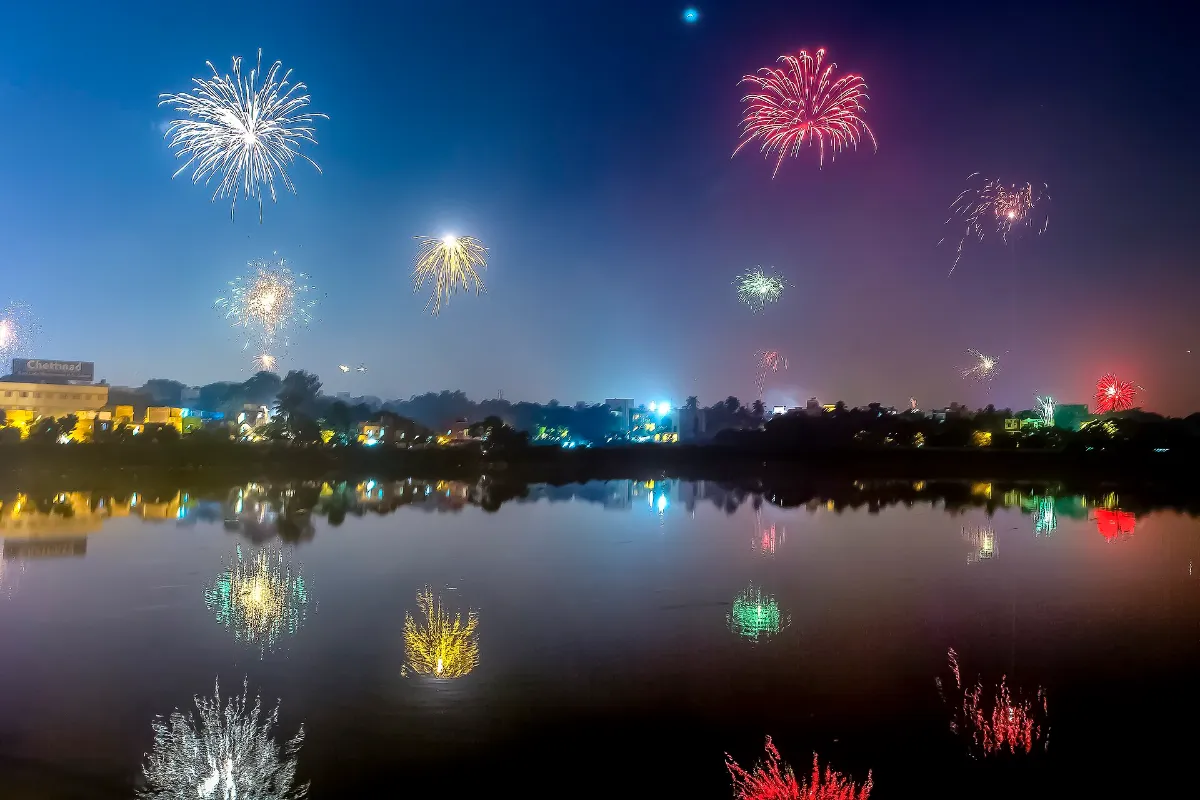
Photo: Ashwin Kumar / CC BY-SA 2.0, via Wikimedia Commons
*Last updated: 5 November 2026*
Quick answer: Pune’s air usually stays in the moderate range in early November, but can slip to poor on calm Diwali nights when firecracker smoke stays close to the ground. Check the live AQI before early-morning walks, and keep children and the elderly indoors during the heaviest firecracker hours.
How to check Pune’s AQI
- Our Pune AQI today page explains the readings and links to the official monitors.
- The Central Pollution Control Board’s SAMEER app and AQI dashboard show hourly readings from government stations in Pune, including those run by the Maharashtra Pollution Control Board (MPCB).
Look at PM2.5 in particular. Firecracker smoke is mostly fine particles that go deep into the lungs.
What the AQI numbers mean
- 0-50 Good and 51-100 Satisfactory: fine for everyone.
- 101-200 Moderate: people with asthma or heart disease may feel discomfort.
- 201-300 Poor: breathing discomfort for many people on long exposure.
- 301 and above, Very poor: avoid outdoor exercise.
Which parts of Pune usually turn poor
MPCB officials have said Pune’s AQI typically moves from moderate to poor from October until the end of winter. In Diwali 2024, MPCB’s Pune office noted poor readings at Shivajinagar, Lohegaon, Karve Nagar and Bhosari, The Free Press Journal reported.
Dense old areas such as the peths, busy junctions on Nagar Road and Satara Road, and industrial belts in Bhosari and Chakan usually record higher readings than green, open areas like Pashan and Aundh.
Why Diwali nights are worse this year
IMD expects clear, calm weather all through Diwali week, with nights cooling to 16°C to 19°C. Our Pune weather forecast for the week has the details. Calm, cool nights let smoke settle in a low layer over the city instead of rising and spreading, so the morning after Lakshmi Puja (Sunday, 8 November) is often the haziest of the year.
Simple steps to protect your family
- Keep windows shut from about 8 pm to midnight on Diwali nights and air the house in the afternoon.
- Move morning walks to after 9 am, when the sun has lifted the smoke layer.
- Keep inhalers handy for asthma patients and follow their doctor’s plan.
- Children, older people and pregnant women should stay away from firecracker smoke.
- An N95 mask helps outdoors; cloth masks do little against fine particles.
- Rinse eyes with clean water if they sting, and do not rub them.
*This is general information, not medical advice. See a doctor if breathing trouble persists.*
Noise rules that apply too
Pune Police have barred noisy firecrackers between 10 pm and 6 am and banned all crackers within 100 metres of hospitals, schools and courts. Read the full Pune firecracker rules for Diwali 2026, and learn how to spot certified green crackers.
Frequently asked questions
How do I check the air quality in Pune today?
Use the CPCB SAMEER app or AQI dashboard for hourly readings from Pune’s government monitors, or see our Pune AQI today page.
Which areas in Pune have the worst air during Diwali?
In past years MPCB recorded poor air at Shivajinagar, Lohegaon, Karve Nagar and Bhosari. Busy junctions and dense old areas are usually worse than green, open areas.
What time is firecracker smoke worst in Pune?
Smoke builds up through the evening of Diwali and is often worst late at night and early next morning, when calm, cool air traps it near the ground.