Museums in Pune: Raja Dinkar Kelkar, Aga Khan Palace, National War Memorial and Miniature Railways
Museums in Pune: Raja Dinkar Kelkar Museum, Aga Khan Palace, the National War Memorial, Joshi’s Miniature Railways and more, with history and visit tips.
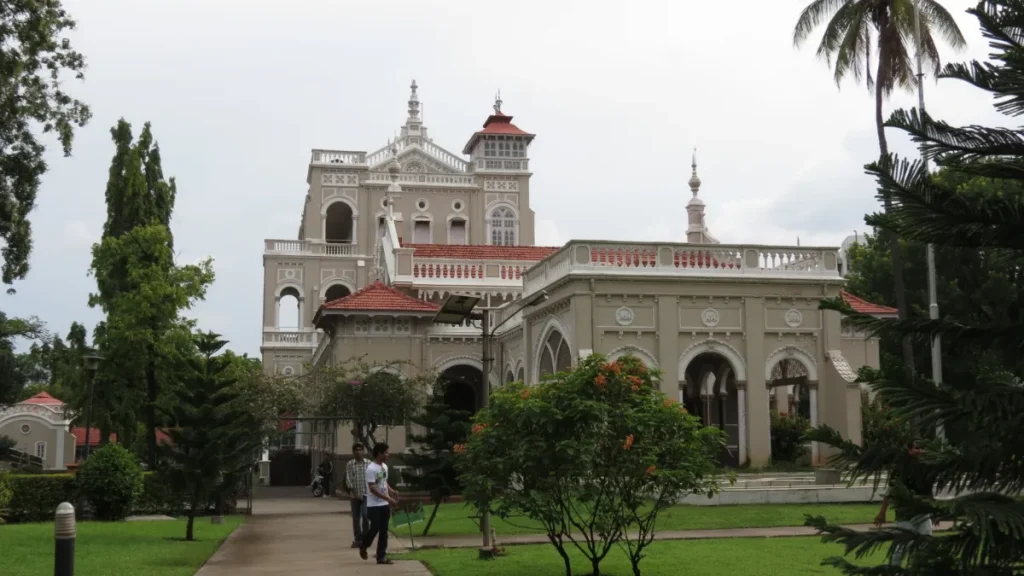
Photo: Preity.133 / CC BY-SA 3.0, via Wikimedia Commons
Last updated: 13 November 2026 · 9 min read · By Prashant Chaudhari
Pune’s museums range from a world-class private collection of everyday Indian objects to the palace where Mahatma Gandhi was held during the Quit India Movement. Most are small enough to cover in an hour or two, which makes them easy to combine with a day out in the city.
Quick answer: if you see only two, choose the Raja Dinkar Kelkar Museum in the old city and Aga Khan Palace on Nagar Road. Families with children should add Joshi’s Museum of Miniature Railways in Kothrud and the National War Memorial in Camp.
Pune museums at a glance
| Museum | Area | Best for | Time needed |
|---|---|---|---|
| Raja Dinkar Kelkar Museum | Shukrawar Peth (old city) | Art, crafts, musical instruments | 1.5 to 2 hours |
| Aga Khan Palace (Gandhi National Memorial) | Nagar Road, Yerawada | Freedom struggle history | 1 to 1.5 hours |
| National War Memorial, Southern Command | Pune Cantonment | Military history, families | 1 hour |
| Joshi’s Museum of Miniature Railways | Kothrud | Children, model trains | 45 minutes |
| Peshwa Museum, Parvati hill | Parvati | Peshwa-era objects | 30 minutes |
| Ganesh idol museum, Sarasbaug | Near Swargate | Ganpati idols | 30 minutes |
| Chapekar Wada | Chinchwad | Revolutionary history | 45 minutes |
Raja Dinkar Kelkar Museum
This museum grew out of one man’s passion. Dr Dinkar G Kelkar began collecting around 1920 and kept going for decades, buying lamps, pots, textiles, weapons, toys, doors and other everyday objects from across India. The museum was formally established in 1962, and in 1992 he donated the collection to the Government of Maharashtra. Current galleries are listed on the museum’s website.
Today the collection runs to more than 20,000 objects, of which about 2,500 are on display at any time. The musical instruments gallery is among the finest in the country. Look out for the carved doors and windows, the betel-nut cutters (adkittas) in dozens of shapes, and the rooms recreated in traditional style.
Tip: the museum is in the old city, close to Bajirao Road and the peths. Combine it with Kasba Ganpati, Shaniwar Wada and a meal in Sadashiv Peth. Our guide to Pune’s peths explains the area.
Aga Khan Palace and the Gandhi National Memorial
Sultan Muhammed Shah Aga Khan III had this palace built in 1892 as a charitable project to give work to people hit by famine around Pune. Set in about 19 acres of gardens, it is one of the city’s most photographed buildings, with long arched verandahs and Italian-style arches.
Its place in history comes from the freedom struggle. Mahatma Gandhi, Kasturba Gandhi and Gandhi’s secretary Mahadev Desai were detained here from 9 August 1942 to 6 May 1944, after the Quit India resolution. Both Kasturba and Mahadev Desai died during this period, and their samadhis are in the grounds.
Aga Khan IV donated the palace to the people of India in 1969, and it was declared a monument of national importance in 2003 by the Archaeological Survey of India. The museum rooms show photographs, personal belongings and the story of the Quit India Movement, and there is a khadi shop on site.
Tip: go in the morning or late afternoon, when the gardens are pleasant. Allow time to sit quietly at the samadhis, which are the most moving part of the visit.
National War Memorial, Southern Command
Opened on 15 August 1998, this memorial in Pune Cantonment honours soldiers who died after Independence. Children love the outdoor exhibits, which include a MiG-23BN aircraft used in the Kargil war and a replica of the frigate INS Trishul.
A small museum displays uniforms, weapons and equipment, and a sound and light show is held on Friday, Saturday and Sunday evenings. As it is inside a defence area, follow photography and security instructions on site.
Joshi’s Museum of Miniature Railways
Tucked into a residential lane in Kothrud, this is one of Pune’s most charming small museums. A detailed miniature town comes alive with model trains, signals, stations, street lights and moving vehicles, all controlled from a single panel in a short guided show.
Shows run in batches, so arrive a little before a show starts. Read about the museum’s model of the city’s new metro line in our story on Joshi’s Museum and the Metro Line 3 miniature.
Peshwa Museum on Parvati hill
After climbing the steps of Parvati hill, stop at the small Peshwa museum next to the temples. It holds coins, weapons, utensils, wooden furniture and a palanquin from the Peshwa era. It is small, but the setting makes it worthwhile. See our guide to famous temples in Pune for more on Parvati.
Ganesh idol museum at Sarasbaug
Inside the Sarasbaug garden, a museum added in 1995 displays several hundred Ganesha idols in different materials and styles. Visit in the evening, when the garden and the Talyatla Ganpati temple are at their liveliest.
Chapekar Wada, Chinchwad
In Pimpri-Chinchwad, the restored Chapekar Wada is a memorial museum to the Chapekar brothers, who shot the British plague commissioner W C Rand in 1897. It is a good stop if you are exploring PCMC; see our latest Pimpri-Chinchwad news.
For researchers: libraries and manuscript collections
The Bhandarkar Oriental Research Institute (BORI) on Law College Road holds one of India’s most important collections of manuscripts. It is a research institute rather than a museum, but it hosts exhibitions from time to time. Read about one of its treasures in our story on BORI’s birch-bark Mahabharata manuscript.
Planning tips
- Check closing days: several museums close one day a week and on some public holidays. Check the official website or call before you go, as timings change.
- Tickets: entry fees are generally modest, with separate rates for foreign visitors at ASI-protected sites. Camera charges may apply.
- Combine by area: old city (Kelkar, Shaniwar Wada, Parvati, Sarasbaug), east Pune (Aga Khan Palace, War Memorial), west Pune (Joshi’s museum).
- Weekdays are calmer: school groups visit on weekday mornings during term, and families crowd in on Sunday afternoons.
For a full sightseeing route, see our guide to places to visit in Pune in one day.
Frequently asked questions
Which is the most famous museum in Pune?
The Raja Dinkar Kelkar Museum is Pune’s best-known museum, with a collection of more than 20,000 everyday art objects gathered by Dr Dinkar G Kelkar.
Why is Aga Khan Palace important?
Mahatma Gandhi, Kasturba Gandhi and Mahadev Desai were detained there from 1942 to 1944 during the Quit India Movement, and Kasturba’s and Desai’s samadhis are in its grounds.
Which Pune museum is best for children?
Joshi’s Museum of Miniature Railways in Kothrud and the National War Memorial in Pune Cantonment are the most popular with children.
Can all Pune museums be seen in one day?
Not comfortably, because they are spread across the city. Pick two or three in the same area, such as the Kelkar Museum, Parvati and Sarasbaug in the old city.