BORI Pune’s Birch-Bark Mahabharata Manuscript Enters UNESCO Memory of the World Asia-Pacific Register
A birch-bark Mahabharata manuscript in Sharada script, kept at BORI on Law College Road, is now on UNESCO’s Memory of the World Asia-Pacific register.
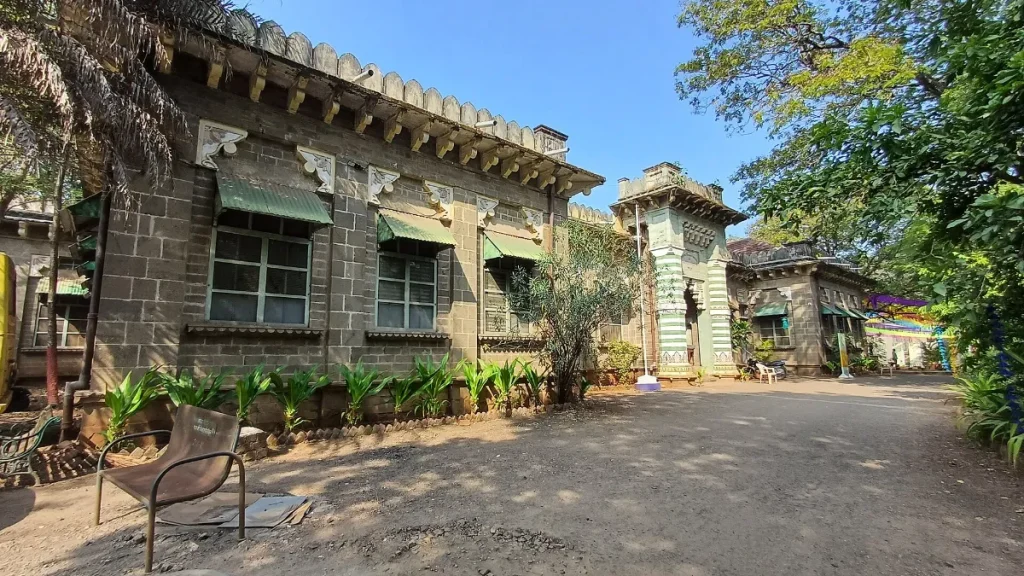
Photo: DesiBoy101 / CC BY 4.0, via Wikimedia Commons
Pune, 8th November 2026: A birch-bark manuscript of the Mahabharata held at the Bhandarkar Oriental Research Institute (BORI) in Pune has been added to UNESCO’s Memory of the World Register for Asia and the Pacific. The Union Ministry of Culture shared the news on Thursday, 5 November.
Two other Indian works were inscribed at the same time: a palm-leaf Arthashastra held in Mysuru and a Rajatarangini manuscript held in Srinagar.
What the BORI Mahabharata manuscript is
The manuscript is written in Sharada, the old script of Kashmir, on birch bark (bhurjapatra). BORI dates it to the 16th century, while the Ministry of Culture described it as about 400 years old, as reported by The Tribune.
The German Indologist Georg Bühler acquired it in Kashmir in 1875, and it has been part of the Government Manuscripts Library collection at BORI since. According to Civic Mirror, it runs to 358 folios and carries catalogue number 159/1875-76.
The copy is incomplete. UNESCO’s nomination notes call it “the most authentic extant representative of the old Kashmiri version”, as quoted by ThePrint.
Why this manuscript matters to BORI’s Mahabharata
BORI is best known for its critical edition of the Mahabharata, a decades-long project to compare hundreds of manuscripts and fix the oldest recoverable text. V.S. Sukthankar led it as general editor from 1925 until his death in 1943.
According to BORI, as reported by Civic Mirror, this Kashmiri birch-bark copy was one of the main manuscripts that edition relied on. That makes it a working source for scholars, not only a museum piece.
Who prepared the UNESCO nomination
Civic Mirror reported that the nomination was filed last year by Dr Rameshchandra Gaur and Dr Mayank Shekhar, research officers at the Indira Gandhi National Centre for the Arts (IGNCA), New Delhi. At BORI, Dr Shrinand Bapat, Dr Amruta Natu and Balkrishna Joshi prepared the technical and research material.
The decision was taken at the 11th session of the Memory of the World Committee for Asia and the Pacific (MOWCAP) in Jakarta, Indonesia. The exact date of the session has not been published in the reports we checked.
BORI’s other UNESCO-listed manuscripts
This is not BORI’s first entry. Its Rigveda manuscripts went onto UNESCO’s international Memory of the World Register in 2007. The Bhagavad Gita and Natyashastra were added to the international register in April 2025.
In 2024, India received regional register listings for the Panchatantra and the Sahrdayaloka-Locana among others. BORI says it now holds six of India’s 17 Memory of the World entries, according to Civic Mirror.
Prof Sudhir Vaishampayan, Honorary Secretary of BORI, said keeping such heritage alive is not only about remembering the past but about building future learning. He called the listing a matter of pride for India and Maharashtra.
What the listing means, and what it does not
The Memory of the World programme is UNESCO’s register for documents: manuscripts, archives, films and recordings. It is different from the World Heritage list for monuments such as forts and temples.
A listing brings recognition and can help with funding and digitisation. It does not move the manuscript or change who owns it. The Mahabharata copy stays in BORI’s collection on Law College Road.
BORI has not announced any public display of the manuscript. Birch bark is fragile, so access is normally limited to researchers. We will update this story if the institute plans an exhibition or releases digitised pages.
For more on old Pune’s history, see our guide to Pune’s peths and other stories in Education.
Frequently asked questions
Which Pune manuscript was added to UNESCO’s Memory of the World register?
A birch-bark Mahabharata manuscript in Sharada script, held at the Bhandarkar Oriental Research Institute (BORI) in Pune, was added to the Asia-Pacific regional register in November 2026.
Which other Indian works were added with it?
A palm-leaf Arthashastra manuscript from the Oriental Research Institute, Mysuru, and a Rajatarangini manuscript held in Srinagar were inscribed at the same time.
Can the public see the BORI Mahabharata manuscript?
BORI has not announced a public display. Rare birch-bark manuscripts are usually kept in controlled storage and shown mainly to researchers.
How many BORI manuscripts are on UNESCO’s registers?
BORI says six of its works are now listed, including the Rigveda manuscripts (2007) and the Bhagavad Gita and Natyashastra (2025).