History of Pune: A Timeline From Rashtrakuta Copper Plates to the Peshwas, British Rule and the IT City
The history of Pune explained: Rashtrakuta copper plates, Shivaji and Jijabai, the Peshwas and Shaniwar Wada, British rule, reformers and the IT boom.
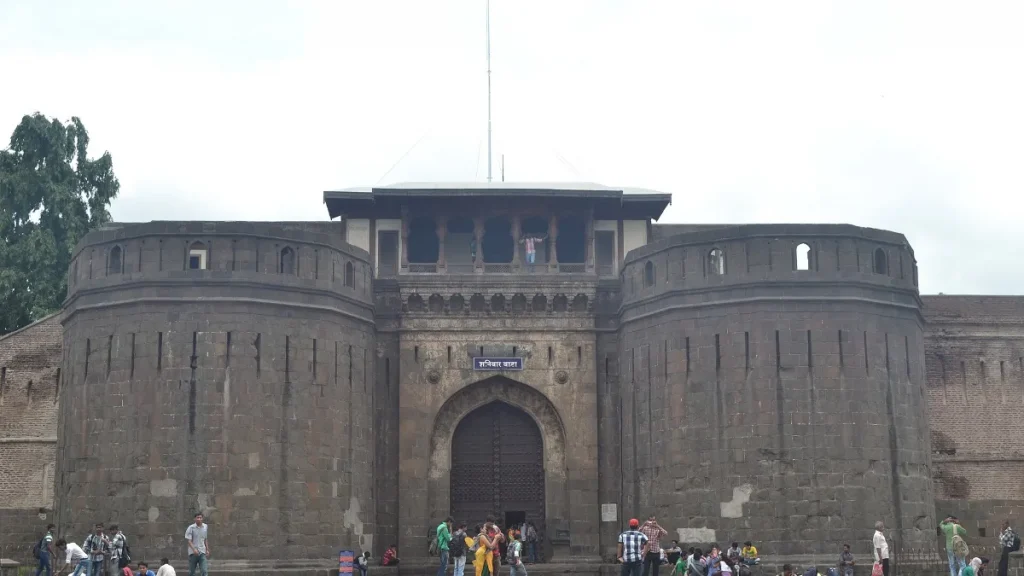
Photo: Aakash.gautam / CC BY-SA 3.0, via Wikimedia Commons
Last updated: 18 November 2026 · 10 min read · By Rahul Sharma
Few Indian cities have changed roles as often as Pune. It has been a small river town, the childhood home of Shivaji Maharaj, the capital of the Peshwas, a British military station, the centre of social reform, an industrial hub and, most recently, an IT city. This timeline walks through each chapter and points you to the places where you can still see it.
Quick answer: Pune first appears in records in the 8th century. It became important under the Bhosles in the 1600s, was the Peshwas’ capital from 1728 to 1818, came under British rule after 1818, and grew into a major education, industrial and IT centre in the 20th century.
Pune’s history at a glance
| Period | What happened | Where to see it today |
|---|---|---|
| 8th century | First written references in Rashtrakuta copper plates | Pataleshwar cave temple |
| 1300s to 1600s | Yadavas, Delhi Sultanate, Deccan sultanates | Old city layout around Kasba Peth |
| 1630s to 1640s | Jijabai and young Shivaji make Pune their home | Kasba Ganpati, Lal Mahal |
| 1728 to 1818 | Capital of the Peshwas | Shaniwar Wada, Parvati, the peths |
| 1818 to 1947 | British rule, cantonment, reform movements | Camp, Khadki, Fergusson College |
| 1947 to 1990 | Education, defence and industry grow | MIDC Bhosari, SPPU |
| 1990s onwards | IT boom and rapid expansion | Hinjewadi, Kharadi, Magarpatta |
Early Pune: copper plates and river towns
The earliest written mention of the Pune region comes from two copper plates issued in 758 and 768 AD by the Rashtrakuta ruler Krishna I. The rock-cut Pataleshwar cave temple in Shivajinagar, protected by the Archaeological Survey of India, dates from the same Rashtrakuta period and is the best place to feel how old the city really is.
By the 9th century the area was part of the Yadava kingdom of Devagiri. In 1317 the Khaljis of Delhi overthrew the Yadavas, and for the next few centuries Pune passed between the Delhi Sultanate, the Bahmani kingdom and the Deccan sultanates of Ahmednagar and Bijapur.
The Bhosles, Jijabai and young Shivaji
In the late 1590s, the Ahmednagar ruler granted the Pune jagir to Maloji Bhosle. The town suffered badly in 1630-31, when it was razed during wars between the Deccan powers.
Its revival is tied to Jijabai and her young son Shivaji. Around 1630 Jijabai arrived in Pune, and the Kasba Ganpati temple, now the city’s presiding deity, is linked to her. Shahaji regained the family’s Pune jagir in 1637, and the Lal Mahal, the family residence, was completed in 1640. Shivaji spent part of his childhood here before going on to found the Maratha state.
The Peshwa capital: 1728 to 1818
Pune’s golden age began when Bajirao I, appointed Peshwa in 1720, moved the Maratha administration here in 1728. The fortified palace of Shaniwar Wada was completed in 1730, and the city grew rapidly around it in a series of planned neighbourhoods called peths.
The Peshwas built temples, gardens and lakes that still define Pune: the temple complex on Parvati hill (completed in 1749), the lake temple at Sarasbaug (completed in 1784) and many wadas in the old city. Read more in our guides to Pune’s peths and famous temples in Pune.
The period also had dark chapters. The Maratha defeat at Panipat in 1761 was a huge blow, and the young Peshwa Narayanrao was murdered at Shaniwar Wada in 1775, after which Nana Phadnavis ran the administration as regent. Under Bajirao II, who became Peshwa in 1795, the state weakened. Yashwantrao Holkar captured Pune in 1802, and the British East India Company finally defeated Bajirao II in 1818, ending Peshwa rule. The Battle of Khadki in November 1817 was one of the decisive engagements of that war.
Shaniwar Wada itself was largely destroyed by a fire in 1828. Only the fortification walls, gates and foundations survive today.
British Pune: cantonment, railways and reformers
Under the British, Pune became a major military station, with the cantonment (Camp) and Khadki developing as separate British areas. After 1858 the city came under direct Crown rule, and the railway and telegraph arrived the same year, linking Pune to Bombay.
Pune also became a centre of social reform and nationalism:
- Education for girls: Savitribai Phule and Jyotirao Phule opened a school for girls in Pune in 1848, one of the first in India.
- Deccan Education Society: founded in 1884 by reformers including Bal Gangadhar Tilak and Gopal Ganesh Agarkar; it opened Fergusson College in 1885.
- Public Ganeshotsav: Tilak helped turn Ganeshotsav into a public festival in the 1890s; see our Ganeshotsav guide.
- The plague years: during the plague of 1897, harsh anti-plague measures caused anger in the city. On 22 June 1897, the plague commissioner W C Rand was shot by the Chapekar brothers.
In 1942 to 1944, Mahatma Gandhi was detained at the Aga Khan Palace during the Quit India Movement; see our museums in Pune guide.
After Independence: education, defence and industry
After 1947, Pune grew as a city of institutions. The University of Poona (now Savitribai Phule Pune University) was set up in 1949, and national laboratories, defence establishments and research institutes followed, earning the city the name “Oxford of the East”.
Industry arrived in a big way in the 1950s and 1960s, especially in Pimpri, Chinchwad and Bhosari, which became a separate municipal corporation in 1982. Read our Pimpri-Chinchwad city guide.
In July 1961, the Panshet dam failed and floodwaters damaged large parts of the riverside old city. The rebuilding that followed changed the shape of several peths.
The IT city: 1990s to today
After India’s economic reforms began in 1991, IT parks were set up in Aundh, Hinjewadi and along Nagar Road in the late 1990s. By the mid-2000s Pune had more than two lakh IT professionals, and the city spread rapidly towards Hinjewadi, Kharadi, Wakad and Hadapsar.
The Pune Metro opened its first stretches in March 2022 and has since expanded across the city, with the Hinjewadi line among the latest additions; see our Pune Metro timings and fares guide.
A one-day history walk
- Morning: Shaniwar Wada, Lal Mahal and Kasba Ganpati in the old city.
- Late morning: walk through the peths to the Raja Dinkar Kelkar Museum and Mandai.
- Afternoon: Pataleshwar caves and Fergusson College Road.
- Evening: Parvati hill at sunset, then Sarasbaug.
Frequently asked questions
What is the old name of Pune?
Early records refer to the area by names such as Punya Vishaya and Punaka, and the city was long known in English as Poona. The official spelling became Pune in 1978.
When did Pune become the capital of the Peshwas?
Bajirao I moved the Maratha administration to Pune in 1728, and Shaniwar Wada was completed in 1730. Peshwa rule ended in 1818.
Why is Pune called the Oxford of the East?
Because of its large number of universities, colleges and research institutes, including Savitribai Phule Pune University, founded in 1949, and Fergusson College, founded in 1885.
What happened to Shaniwar Wada?
Shaniwar Wada was largely destroyed by a fire in 1828. Its walls, gates and foundations survive and are open to visitors.