Which Dams Supply Pune’s Water? Khadakwasla, Panshet, Varasgaon, Temghar, Pavana and How the 13 TMC Quota Works
Pune drinks from four dams on the Mutha: Khadakwasla, Panshet, Varasgaon and Temghar. How the system works, what a TMC is, who shares the water and why cuts come.
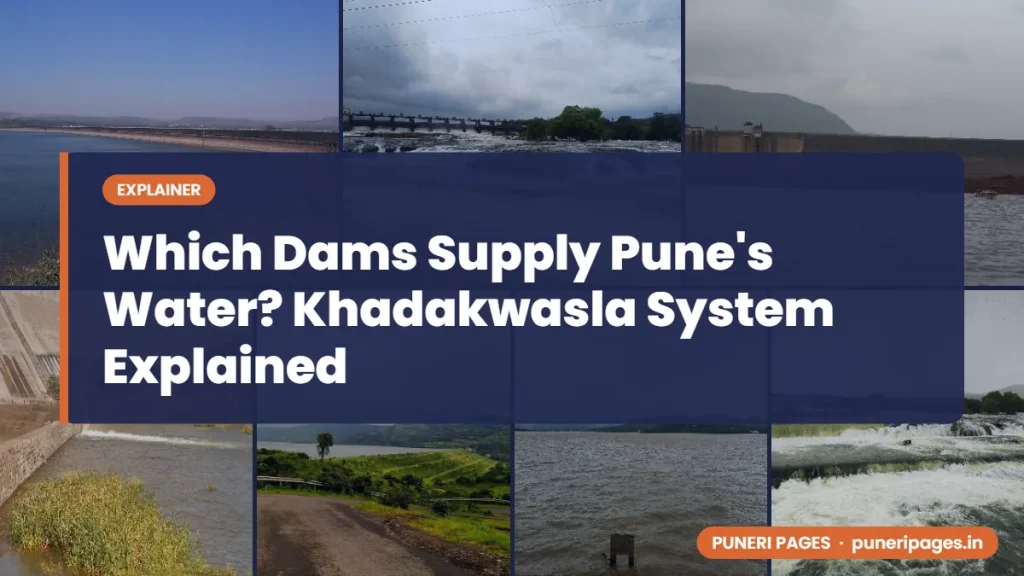
Collage: Puneri Pages (CC BY-SA 4.0). Photos via Wikimedia Commons: Advaitk at English Wikipedia / CC BY-SA 3.0; DesiBoy101 / CC BY 4.0; Gppande / CC BY-SA 3.0; मनीष घोरपडे / CC BY-SA 4.0; Sachin Mohol / CC BY 4.0; DesiBoy101 / CC BY 4.0; DesiBoy101 / CC BY-SA 4.0
Last updated: 18 November 2026 · 6 min read · By Rahul Sharma
Most of Pune city’s drinking water comes from four dams on the Mutha river and its tributaries, west of the city: Khadakwasla, Panshet, Varasgaon and Temghar. Together they are called the Khadakwasla system or Khadakwasla cluster, and when full they hold 29.15 TMC (thousand million cubic feet) of water. Pimpri-Chinchwad depends mainly on a different dam, Pavana in Maval.
Quick answer: the Khadakwasla system supplies PMC areas, the cantonments and farmers downstream. For the 2026-27 water year, PMC has been allotted 13 TMC from it, against an estimated need of about 21 TMC. That gap is why talk of alternate-day supply has started this winter.
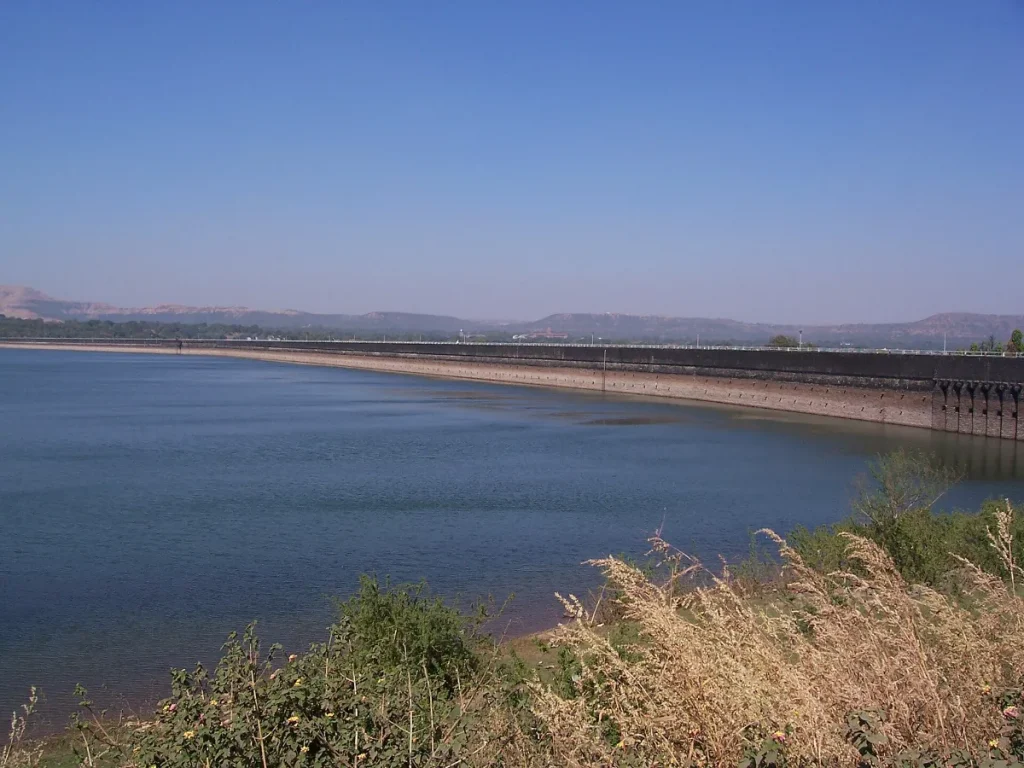
The four dams of the Khadakwasla system
| Dam | River | Role |
|---|---|---|
| Temghar | Mutha (upper reaches) | Smallest and newest; feeds water downstream |
| Varasgaon | Mose | Largest storage in the system |
| Panshet | Ambi | Large storage; feeds Khadakwasla |
| Khadakwasla | Mutha | Last dam before Pune; water is released from here to the city and canals |
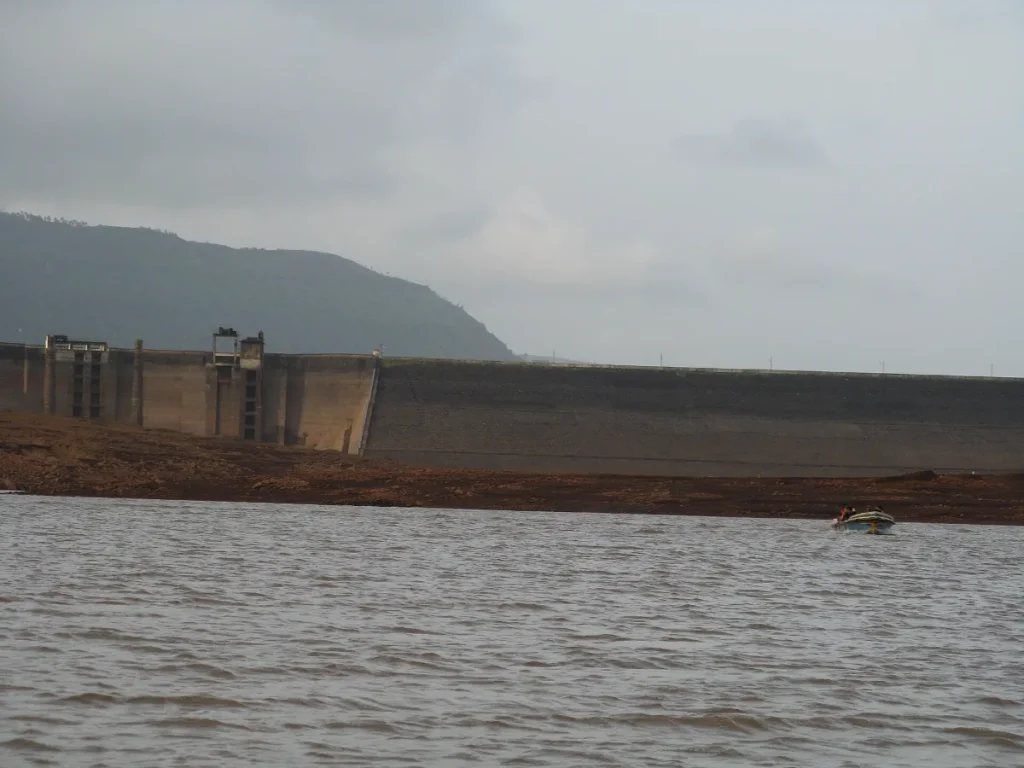
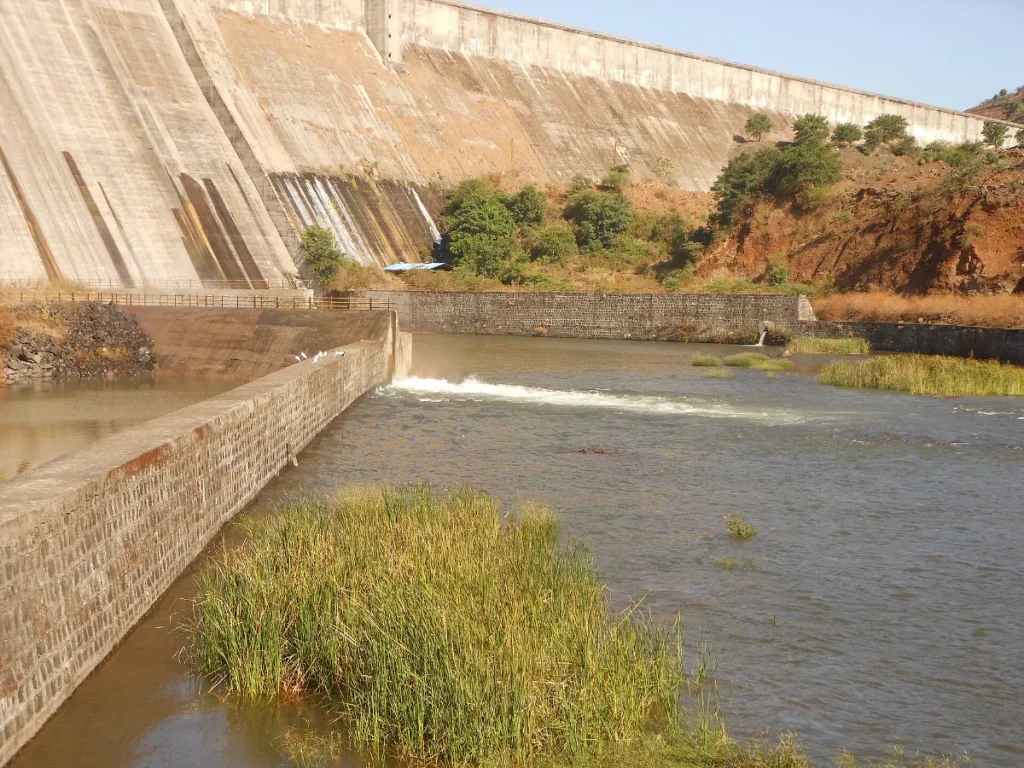
The three upper dams act as storage tanks. Water is released from them into Khadakwasla lake, and from there it goes to PMC’s water treatment plants through pipelines and the canal, and to irrigation canals. Varasgaon is the largest of the feeder lakes, followed by Panshet and Temghar, according to the Khadakwasla dam’s Wikipedia record.
Khadakwasla: a 147-year-old dam
Khadakwasla is one of the oldest masonry dams in India. Work on it began in 1869 and was completed in 1879, when the lake behind it was named Lake Fife. The dam is about 1.9 km long and its backwaters stretch about 22 km towards Panshet. The National Defence Academy, the Central Water and Power Research Station and the College of Military Engineering all sit close to its shores.
On weekends, the dam’s backwater road becomes a popular evening spot. Stopping or swimming in restricted areas is dangerous, and police regularly fine people who park on the dam road.
Panshet 1961: the day Pune flooded
On 12 July 1961, after weeks of very heavy rain, the newly built Panshet dam breached. The flood wave broke Khadakwasla downstream and swept through Pune, submerging the old city’s peths along the Mutha. It remains the worst disaster in the city’s modern history, and older Punekars still date events as “before Panshet” or “after Panshet”.
The flood reshaped Pune. Many families displaced from the riverside peths were resettled in new colonies such as the “Panshet flood colonies” in areas like Lokmanya Nagar. Panshet was later completed and remains part of the water system.
What is a TMC?
Water stocks in Maharashtra are reported in TMC, short for thousand million cubic feet. One TMC is about 28.3 million cubic metres, or 2,830 crore litres. When news reports say the Khadakwasla system holds “24 TMC”, they mean the combined usable stock in the four dams.
A quick way to think about it: Pune city’s yearly allotment of 13 TMC works out to roughly 1 TMC a month. That is why every few weeks of delay in the monsoon, or extra summer use, makes a difference.
Who shares the Khadakwasla water?
The cluster is not only for Pune city. Its water is divided by the canal advisory committee, chaired by the district guardian minister, among:
- PMC: drinking water for the city and merged villages.
- Cantonments and other bodies such as Khadki and Pune cantonments.
- Farmers: irrigation through the Mutha right and left bank canals in Haveli, Daund and Indapur talukas, especially for the rabi and summer seasons.
- Downstream needs, including water that eventually flows towards Ujani dam.
There is constant tension between city demand and farm demand. PMC had asked for 21 TMC for 2026-27, while the irrigation department proposed a lower figure. At the canal committee meeting on 29 October 2026, Water Resources Minister Radhakrishna Vikhe Patil put the city’s share at 13 TMC, as we reported in our story on Pune’s water allocation.
Why is Pune short of water after a good monsoon?
The monsoon filled most dams this year, yet the region began the dry season with less water than last year. On 1 November 2026, dams in the Pune revenue region held 77.81% of their capacity, against 92.81% on the same date in 2025, according to figures we reported in our dam storage update. Late-season rain was weak, and September was unusually dry.
Demand has also grown faster than storage. The city’s population and its merged villages have expanded, and leakage and unequal distribution mean some areas get far more water than others. By the end of October 2026, PMC had already used about 6.35 TMC of its 13 TMC quota, leaving about 6.65 TMC to last until 30 June 2027. Read our report on possible alternate-day water supply.
Pavana and the dams for Pimpri-Chinchwad
Pimpri-Chinchwad draws most of its water from Pavana dam in Maval taluka, through the Ravet barrage on the Pavana river. Pavana’s catchment is in the heavy-rain belt near Lonavala, so it usually fills every year.
PCMC has also been working to bring water from the Andra and Bhama Askhed dams in Khed taluka to its northern areas, and PMC uses Bhama Askhed water for some eastern parts of Pune. These extra sources have helped, but pipeline and treatment capacity remain bottlenecks.
How water reaches your tap
From Khadakwasla, raw water travels to PMC’s treatment plants at Parvati, Warje, Cantonment and other sites, partly through closed pipelines and partly through the old canal. After treatment it is pumped to storage tanks spread across the city, and from there it flows into local distribution lines by gravity.
This is why areas at the tail end of the network, on higher ground or far from a tank, are the first to get low pressure when supply is cut. PMC’s long-running 24×7 equal water supply project aims to fix this with new tanks, meters and pipelines, but it is still incomplete in many wards.
Other dams near Pune you may hear about
- Mulshi: a large dam owned by Tata Power for hydroelectricity, not a city drinking water source.
- Bhatghar and Neera Deoghar: dams in the Neera valley south of Pune, mainly for irrigation.
- Chaskaman and Bhama Askhed: on the Bhima and Bhama rivers in Khed taluka, used for irrigation and some urban supply.
- Ujani: the giant dam downstream on the Bhima, which receives water released from Pune’s dams.
How to track dam levels and water cuts
The state water resources department publishes daily reservoir levels, and local media report Khadakwasla cluster figures most mornings in the monsoon. For your area, PMC announces weekly shutdowns and any special cuts. Bookmark our Pune water cut today page, which we update when PMC changes the schedule.
What residents can do
- Fix leaking taps and overflowing tanks; an overflowing society tank can waste thousands of litres a day.
- Reuse RO reject water for mopping or plants.
- Ask your housing society to install water meters and rainwater harvesting.
- Report pipeline leaks on the road to PMC’s complaint app.
Frequently asked questions
Which dams supply water to Pune city?
Khadakwasla, Panshet, Varasgaon and Temghar, together called the Khadakwasla system, supply most of Pune city’s water.
What is the capacity of the Khadakwasla dam system?
The four dams together hold 29.15 TMC when full.
Which dam supplies water to Pimpri-Chinchwad?
Pavana dam in Maval taluka supplies most of Pimpri-Chinchwad’s water, drawn through the Ravet barrage.
How much water does Pune get from Khadakwasla in 2026-27?
PMC’s allocation for 2026-27 is 13 TMC, against an estimated need of about 21 TMC.