Pune to Bhimashankar: Route, Distance, ST Buses, Darshan After the 2026 Reopening and Sanctuary Tips
How to reach Bhimashankar Jyotirlinga from Pune by car or ST bus, what changed after the temple’s five-month closure in 2026, the shekru sanctuary and the best season.
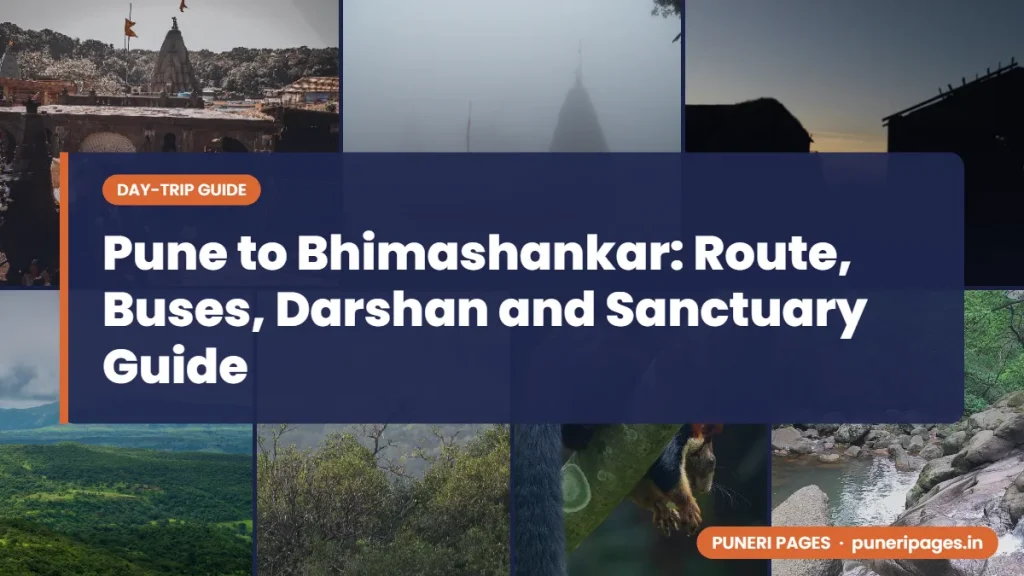
Collage: Puneri Pages (CC BY-SA 4.0). Photos via Wikimedia Commons: Mechatron00 / CC BY-SA 4.0; Pradeep245 / CC BY-SA 3.0; Nikhil More / CC BY-SA 4.0; Rohit Sharma / CC BY-SA 4.0; Nikhil More / CC BY-SA 4.0; Tisha Mukherjee / CC BY-SA 4.0; Santhosh.manchala / CC BY-SA 4.0
Last updated: 18 November 2026 · 6 min read · By Prashant Chaudhari
Bhimashankar, about 110 km north-west of Pune, is one of the 12 Jyotirlingas of Shiva and the only one in Pune district. The temple sits in thick forest on the crest of the Sahyadri range, inside a wildlife sanctuary, which makes the trip as much about the hills as about darshan.
Quick answer: drive via the Pune-Nashik highway to Rajgurunagar and then west through the ghats, or take an MSRTC bus from Shivajinagar. Allow three hours each way. The temple reopened on 15 June 2026 after a five-month closure for development works, so check for any new queue or parking arrangements before you go.
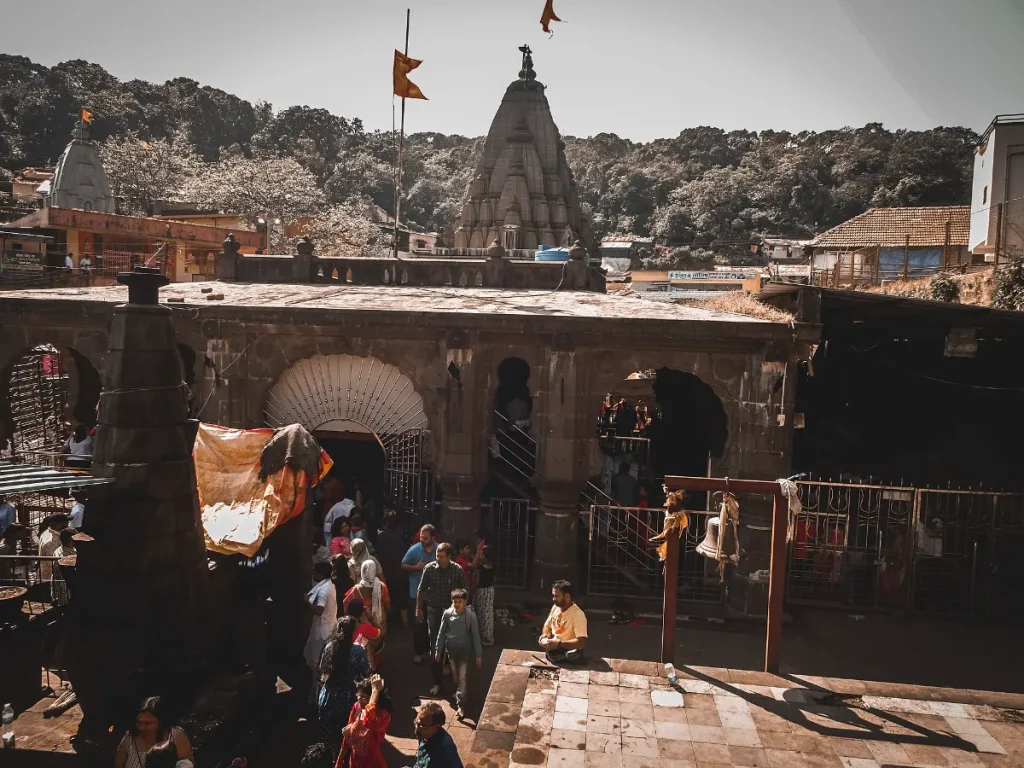
About the Bhimashankar Jyotirlinga temple
The temple is in Khed taluka, in the Bhimashankar forest range. It is carved in black stone. The shrine is mentioned in writings from the 13th century, and its sabhamandap (hall) and shikhara were improved in the 18th century by Nana Phadnavis, according to the temple’s Wikipedia history.
Look for the large bell in front of the temple. Chimaji Appa, brother of Peshwa Bajirao I, presented it after the Marathas captured Vasai fort from the Portuguese in 1739; similar bells hang at a few other Maharashtra temples. The Bhima river, which flows past Pune district to Pandharpur, rises here.
Bhimashankar among Maharashtra’s Jyotirlingas
Jyotirlingas are the 12 most sacred shrines of Shiva, and Maharashtra has more than any other state. Besides Bhimashankar, the best known are Trimbakeshwar near Nashik and Grishneshwar near the Ellora caves, while devotees also count shrines at Parli and Aundha in Marathwada. Many pilgrims from Pune combine Bhimashankar with Trimbakeshwar on a two-day circuit by the Nashik highway.
Is Bhimashankar temple open now?
Yes. The temple was closed to devotees from 9 January 2026 for development works linked to the 2027 Nashik Kumbh Mela, and the closure was extended several times. Darshan resumed from 15 June 2026, the Free Press Journal reported, citing acting District Collector Gajanan Patil.
The administration said a new congregation hall and improved approach paths were being built, and that remaining work outside the main shrine would continue in phases. Expect some construction around the complex and possible changes to queue lines and parking.
Pune to Bhimashankar by car
| Detail | Information |
|---|---|
| Distance | About 110 km |
| Time | About 3 hours each way, more on weekends |
| Route | Pune-Nashik highway to Rajgurunagar (Khed), then west via Wada through the ghats |
| Road | Highway to Rajgurunagar, then a winding hill road |
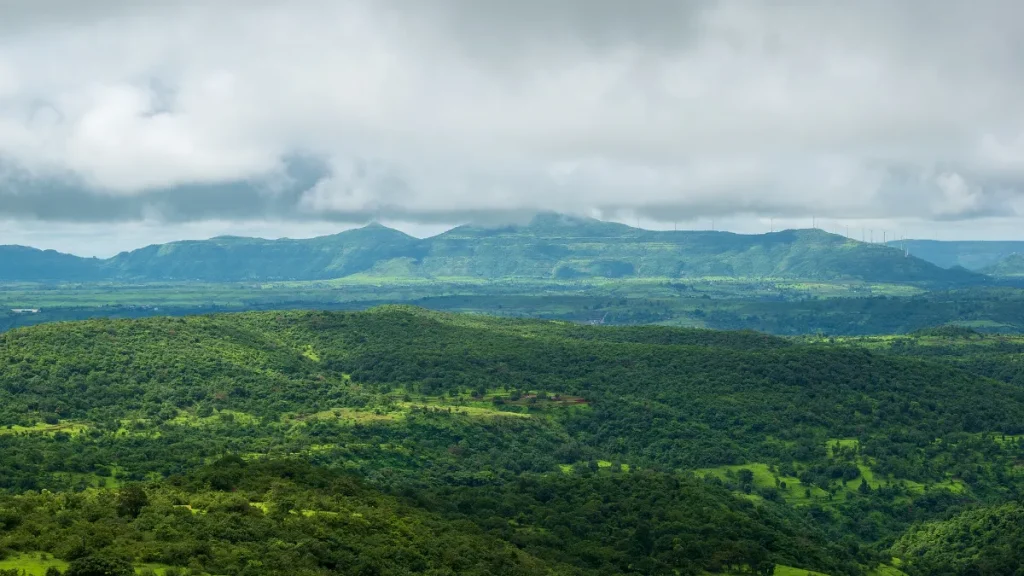
The road after Rajgurunagar passes villages, dams and forest, and climbs steeply in the last stretch. In the monsoon, fog can cut visibility to a few metres, so drive slowly with headlights on. Fuel up in Rajgurunagar; pumps are scarce further up.
Parking is arranged in lots below the temple, and from there you walk down a long flight of steps to the shrine. The climb back is tiring for elderly visitors, so plan rests.
Pune to Bhimashankar by bus
MSRTC runs buses from Pune to Bhimashankar, mainly from the Shivajinagar bus stand, with more services on Mondays in Shravan and on Mahashivratri. Buses also run from Rajgurunagar and Manchar. Check timings and book on the MSRTC app; our guide to MSRTC online booking covers concessions for senior citizens and women.
There is no railway line to Bhimashankar. Private tour operators in Pune run day trips, often combined with an Ashtavinayak temple; see our Ashtavinayak yatra guide.
When to visit Bhimashankar
| Season | What to expect |
|---|---|
| June to September | Heavy rain, fog, waterfalls and leeches; very scenic but slow driving |
| October to February | Clear skies, cool mornings, best for darshan and forest walks |
| March to May | Hot in the plains, pleasant at the top; dry forest |
| Mahashivratri and Shravan Mondays | Very heavy crowds, long queues and traffic |
For a quiet visit, go on a weekday between November and February and leave Pune by 6 am.
The Bhimashankar Wildlife Sanctuary
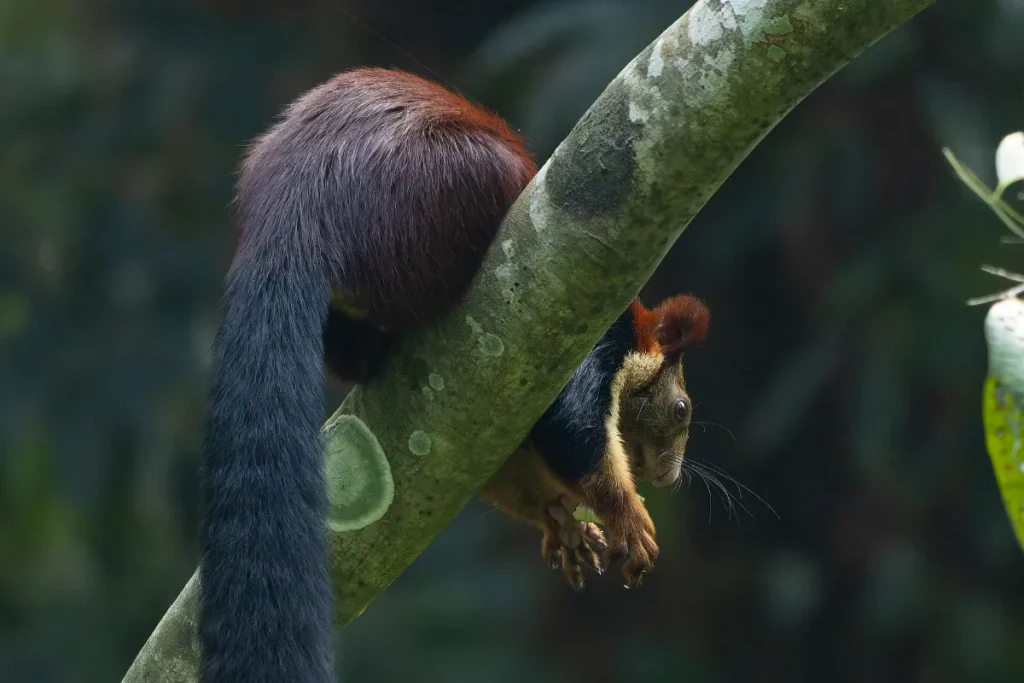
The temple stands inside the Bhimashankar Wildlife Sanctuary, declared in 1985 mainly to protect the Indian giant squirrel, known locally as shekru, which is Maharashtra’s state animal. The sanctuary’s evergreen and semi-evergreen forest also holds langurs, barking deer, many birds, snakes and butterflies.
You are most likely to see a shekru early in the morning, high in the trees, when it leaps between branches. Walk quietly on the forest paths near the temple and look for its long, bushy tail. Do not feed monkeys or langurs; they become aggressive around food.
Places to see around the temple
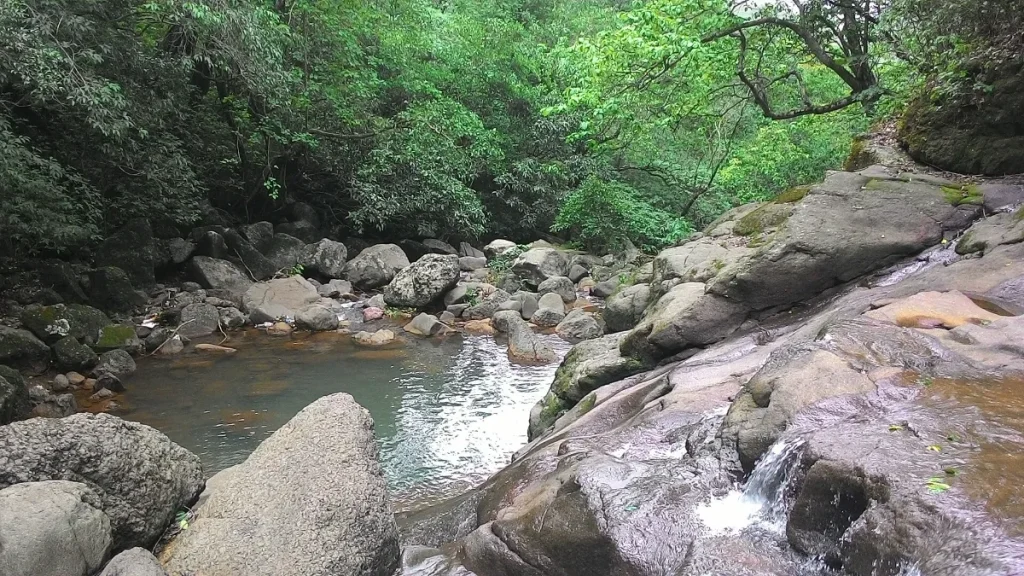
- Gupt Bhimashankar: a short forest walk downhill to a small shrine near a stream, believed to be the hidden origin of the Bhima. The path is slippery in the rains.
- Kamalaja Mata temple: near the main shrine.
- Nagphani point: a viewpoint on a rock shaped like a cobra’s hood, with views over the Konkan side on clear days.
- Hanuman lake: a small lake in the forest.
Ask locals or forest guards about path conditions before walking far, especially in the monsoon.
Trekking to Bhimashankar
Experienced trekkers climb to Bhimashankar from the Konkan side, from Khandas village near Karjat, using the Ganesh ghat route or the steeper Shidi ghat route with iron ladders. These treks take most of a day and should be done with a group and a guide. In heavy rain, the Shidi ghat route can be dangerous; avoid it then. Read our forts and treks near Pune guide for easier options.
A one-day plan from Pune
| Time | Plan |
|---|---|
| 6 am | Leave Pune; breakfast stop at Rajgurunagar or Manchar |
| 9 to 9.30 am | Reach Bhimashankar parking |
| 9.30 to 11.30 am | Darshan, then walk to Gupt Bhimashankar or Nagphani point |
| 12 noon | Lunch near the parking area |
| 1 pm | Start back to avoid driving the ghat in late-afternoon fog |
| 4 pm | Back in Pune |
On Mondays in Shravan and on Mahashivratri, add two or three hours for queues and traffic.
Where to stay if you want a night in the hills
A night at Bhimashankar lets you be in the forest at dawn, the best time to see the giant squirrel and the mist over the valleys. Simple lodges, dharamshalas and homestays operate in and around the village, and there are more options down the road towards Rajgurunagar. Facilities are basic. Book ahead for weekends in the monsoon and for festival days, and carry warm clothes for the night.
Practical tips
- Carry a raincoat in the monsoon and a light jacket in winter; the hilltop is cooler than Pune.
- Keep valuables minimal in the queue, and follow temple rules on phones and photography.
- Eat at the eateries near the parking area; choices are simple.
- Leave the hilltop before dark if you are driving back, especially in fog.
- Mobile signal can be weak in parts of the forest, so download offline maps and share your plan with family.
- Carry cash for parking, prasad and small eateries, as card machines may not work.
For more ideas within a few hours of the city, see our guide to hill stations near Pune.
Frequently asked questions
How far is Bhimashankar from Pune?
It is about 110 km, roughly three hours by road via Rajgurunagar on the Pune-Nashik highway.
Is Bhimashankar temple open in 2026?
Yes. Darshan resumed on 15 June 2026 after the temple was closed from 9 January for development works ahead of the 2027 Nashik Kumbh Mela.
Which is the best time to visit Bhimashankar?
October to February is best for clear weather. The monsoon is beautiful but foggy and slippery, and Mahashivratri and Shravan Mondays are very crowded.
Is there a bus from Pune to Bhimashankar?
Yes. MSRTC runs buses mainly from the Shivajinagar bus stand in Pune; check timings on the MSRTC app.