Ashtavinayak Yatra From Pune: Route, Traditional Order, Distances and a 2-Day Plan for All 8 Temples
Ashtavinayak yatra from Pune: the traditional order of all 8 Ganpati temples, distances from Pune, a 2-day route by car or bus, costs and darshan tips.
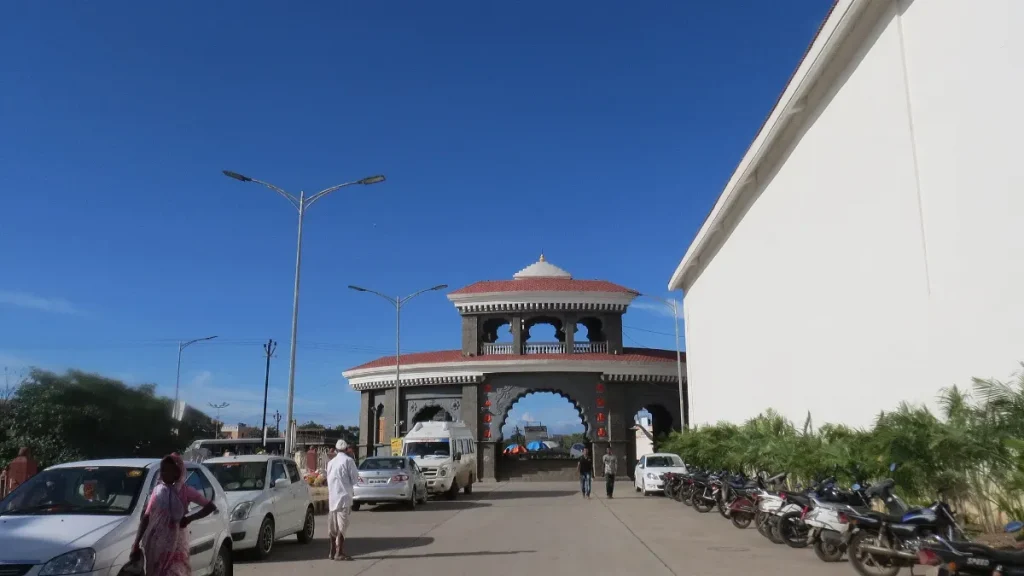
Photo: Booradleyp1 / CC BY-SA 4.0, via Wikimedia Commons
Last updated: 10 November 2026 · 10 min read · By Prashant Chaudhari
The Ashtavinayak yatra is a pilgrimage to eight Ganpati temples, six of them in Pune district and two in Raigad. Each temple has a self-formed (swayambhu) idol and its own story, and Pune is the natural starting point because most of the circuit lies within about 120 km of the city.
Quick answer: the traditional order starts and ends at Morgaon: Morgaon, Siddhatek, Pali, Mahad, Theur, Lenyadri, Ozar, Ranjangaon, and back to Morgaon. By car the full circuit is roughly 650 to 700 km and takes two to three days.
The eight Ashtavinayak temples at a glance
| Temple | Village | District | From Pune (approx.) |
|---|---|---|---|
| Mayureshwar (Moreshwar) | Morgaon | Pune | 55 to 65 km |
| Siddhivinayak | Siddhatek | Ahilyanagar | about 110 km |
| Ballaleshwar | Pali | Raigad | 110 to 120 km |
| Varadavinayak | Mahad (near Khopoli) | Raigad | 80 to 85 km |
| Chintamani | Theur | Pune | 22 to 25 km |
| Girijatmaj | Lenyadri, near Junnar | Pune | about 95 km |
| Vighneshwar (Vighnahar) | Ozar | Pune | about 90 km |
| Mahaganapati | Ranjangaon | Pune | about 50 km |
Distances are approximate road distances from central Pune and change with the route you take. Note that the Mahad on this list is the village near Khopoli on the old Mumbai-Pune road, not Mahad town on the Mumbai-Goa highway.
Why the order matters, and when it does not
Tradition says the yatra should begin at Morgaon, go round the other seven temples in a fixed sequence, and end with a second darshan at Morgaon. Many families follow this strictly, especially on a first yatra.
In practice, plenty of pilgrims from Pune plan the route by geography instead, to cut driving time. There is no rule that stops you, so decide based on what matters more to your family: the traditional sequence or a shorter drive.
The traditional route, temple by temple
1. Mayureshwar, Morgaon
Morgaon, on the Karha river in Baramati taluka, is considered the most important of the eight. The black-stone temple has four minarets at its corners and a Nandi facing the entrance, which is unusual for a Ganpati temple. The Ganpati here is shown riding a peacock, which gives the name Mayureshwar.
2. Siddhivinayak, Siddhatek
Siddhatek sits on the Bhima river in Ahilyanagar district. It is the only Ashtavinayak idol with the trunk turned to the right, which devotees consider especially powerful. Many pilgrims walk round (pradakshina) the small hill behind the temple.
3. Ballaleshwar, Pali
Pali, in Raigad’s Sudhagad taluka, is the only temple named after a devotee, the boy Ballal. The original wooden temple was rebuilt in stone in 1760, with Nana Phadnavis credited for the work. The prasad here is a besan laddu rather than modak.
4. Varadavinayak, Mahad
This small temple near Khopoli has an idol that, according to temple history, was found in the adjoining lake in 1690, with the temple built in 1725. Devotees are allowed to enter the sanctum and offer prayers close to the idol, which is unusual among the eight.
5. Chintamani, Theur
Theur is the closest temple to Pune, near the confluence of the Mula-Mutha and Bhima. It has strong Peshwa links: it was the family deity of Madhavrao I Peshwa, and the wooden hall was built in the Peshwa era. It makes a good half-day trip on its own.
6. Girijatmaj, Lenyadri
Lenyadri near Junnar is the only Ashtavinayak temple set inside a cave, part of a group of rock-cut Buddhist caves. Reaching it means climbing a little over 300 steps, so older pilgrims should plan a slow climb. A palki and helpers are often available at the base.
7. Vighneshwar, Ozar
Ozar, on the Kukadi river, is about 15 km from Lenyadri, so most people visit the two together. The temple has a golden shikhar and a large walled courtyard.
8. Mahaganapati, Ranjangaon
Ranjangaon is on the Pune-Ahilyanagar highway, which makes it the easiest of the eight to reach. The temple is linked in legend to Shiva worshipping Ganpati before defeating the demon Tripurasura. Pilgrims then return to Morgaon to complete the yatra.
A practical 2-day plan by car from Pune
This version keeps the traditional order but starts very early and uses an overnight halt. It suits families with a private car or a hired cab.
- Day 1: Leave Pune by 5 am for Morgaon. Continue to Siddhatek, then drive west via Pune or Daund towards Pali for an evening darshan. Stay overnight at Pali or Khopoli.
- Day 2: Mahad (near Khopoli) early in the morning, then back towards Pune for Theur. Head north to Lenyadri and Ozar, finish at Ranjangaon, and return to Morgaon if you are completing the full circle, or drive home to Pune.
Day 2 is long. If you have elderly parents or small children, split it into two days with a night at Junnar or Narayangaon, which have more hotels than the temple villages.
A shorter route if you only have a weekend
Pilgrims who are not following the traditional order often do the four temples close to Pune on one day (Theur, Ranjangaon, Morgaon, Siddhatek) and the other four on another (Lenyadri, Ozar, then Pali and Mahad on a separate trip via the Expressway).
Getting there: car, bus or package tour
| Option | Typical cost (approx.) | Good for |
|---|---|---|
| Own car | Fuel and tolls for about 650 to 700 km | Families who want flexibility |
| Hired cab with driver | About Rs 9,000 to Rs 15,000 for the circuit | Groups of 4 to 6 |
| Organised bus package (2 days) | About Rs 2,500 to Rs 4,500 per person | Elderly pilgrims, first-timers |
| MSRTC buses | About Rs 1,000 to Rs 1,500, excluding stay | Budget travellers with time to spare |
Costs are indicative figures from travel operators and will vary by season and vehicle. Package tours usually include stay, meals and darshan help, so compare what is included rather than just the price. For more on the temples and other pilgrim circuits in the state, see Maharashtra Tourism.
Best time to go
October to February is the most comfortable season, with cool mornings and dry roads. Monsoon brings green scenery but the ghat section to Pali and Mahad can be slow and slippery.
Avoid Ganesh Chaturthi, Sankashti Chaturthi and Angarki Chaturthi if you dislike crowds, as queues at every temple run for hours. Weekdays (Monday to Thursday) are calmest.
Tips for a smooth yatra
- Start every day early. Darshan queues build up after 9 am, especially at Morgaon, Theur and Ranjangaon.
- Carry cash and change for parking, prasad and small donations; mobile network can be patchy near Lenyadri.
- Wear footwear that is easy to remove; you will take it off eight times or more.
- For Lenyadri, carry water and avoid the hottest part of the afternoon for the climb.
- Check temple timings locally the day before, since they can change on festival days.
If you want to combine the yatra with sightseeing, Shivneri Fort near Junnar is close to Lenyadri and Ozar; see our forts near Pune guide. For other short trips, read our hill stations near Pune guide.
Frequently asked questions
What is the correct order for the Ashtavinayak yatra?
The traditional order is Morgaon, Siddhatek, Pali, Mahad, Theur, Lenyadri, Ozar and Ranjangaon, ending with a second darshan at Morgaon.
Can the Ashtavinayak yatra be done in one day from Pune?
It is not practical. The circuit is roughly 650 to 700 km with long darshan queues, so plan at least two days, or three with elderly family members.
Which Ashtavinayak temple is closest to Pune?
Chintamani at Theur, about 22 to 25 km from central Pune, is the closest, followed by Ranjangaon at about 50 km.
Which Ashtavinayak idol has a right-turned trunk?
Siddhivinayak at Siddhatek is the only one of the eight with the trunk turned to the right.