Famous Temples in Pune: Kasba Ganpati, Parvati, Pataleshwar Caves, Chaturshringi and Sarasbaug
Famous temples in Pune: Kasba Ganpati, Dagdusheth, Parvati hill, Pataleshwar caves, Chaturshringi, Sarasbaug and more, with history, locations and visit tips.
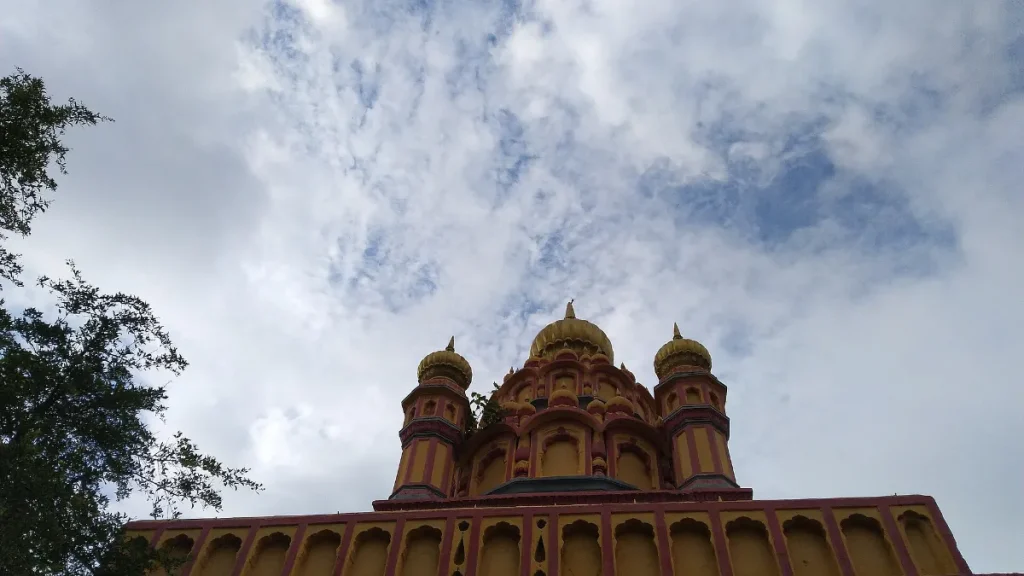
Photo: DesiBoy101 / CC BY-SA 4.0, via Wikimedia Commons
Last updated: 11 November 2026 · 9 min read · By Rahul Sharma
Pune’s temples tell the city’s history better than any museum. Some go back to the Rashtrakutas over a thousand years ago, others were built by the Peshwas in the 1700s, and a few are newer landmarks that draw crowds every weekend. This guide covers the temples most Punekars and visitors ask about, with what makes each one special and how to plan a visit.
Quick answer: for a first visit, start with Kasba Ganpati and Dagdusheth in the old city, climb Parvati hill for the view, see the Pataleshwar cave temple on Jangli Maharaj Road, and end at Sarasbaug in the evening. All of these fit into one long day.
Pune temples at a glance
| Temple | Area | Known for | Best time |
|---|---|---|---|
| Kasba Ganpati | Kasba Peth | Pune’s presiding deity (gramdaivat) | Early morning |
| Dagdusheth Halwai Ganpati | Budhwar Peth | The most visited Ganpati in the city | Weekday mornings |
| Parvati temples | Parvati hill | Peshwa-era temples and city views | Sunrise |
| Pataleshwar | Shivajinagar | 8th-century rock-cut cave temple | Any time in daylight |
| Chaturshringi | Senapati Bapat Road | Hilltop Devi temple, Navratri fair | Morning or evening |
| Sarasbaug (Talyatla Ganpati) | Near Swargate | Ganpati temple in a garden | Evening |
Kasba Ganpati: where Pune’s story begins
Kasba Ganpati in Kasba Peth is Pune’s gramdaivat, the presiding deity of the town. Its origins are linked to around 1630, when Jijabai arrived in Pune with the young Shivaji and had a temple built for an idol found nearby.
Kasba Ganpati is the first of Pune’s five Manache Ganpati. During Ganeshotsav it has the honour of leading the immersion procession, a tradition dating to the public festival’s early years in the 1890s. Read more in our Ganeshotsav guide.
Dagdusheth Halwai Ganpati
A short walk away in Budhwar Peth, the Dagdusheth Halwai Ganpati temple is the city’s most visited Ganpati temple, known for its gold-adorned idol and the lights and decorations during festivals. Queues can be long on Tuesdays and on Sankashti Chaturthi, so go early on a weekday if you can.
The temple is in the heart of the old market area, so park near Mandai or use an auto. For the history of the surrounding lanes, see our guide to Pune’s peths.
Parvati hill: the Peshwas’ temple complex
Parvati hill rises to about 640 metres above sea level, and a broad flight of 103 to 108 stone steps (sources differ) leads to the top. The main temple, Devdeveshwar, is dedicated to Shiva and was completed in 1749 under Balaji Bajirao, better known as Nanasaheb Peshwa. A gold pinnacle was added in 1760.
The hilltop also has temples to Vishnu, Kartikeya, Vitthal-Rukmini, Surya and Bhawani, and a small Peshwa museum with coins, weapons, a palanquin and household objects from the period. Nanasaheb Peshwa spent his last days here, and his samadhi is on the hill.
Tip: go at sunrise. The climb is cooler, the morning walkers make it lively, and you get a wide view of the city towards Sinhagad on clear winter days.
Pataleshwar: an 8th-century cave temple in the middle of the city
Few visitors expect to find a rock-cut temple next to Jangli Maharaj Road. The Pataleshwar caves were carved out of a single rock in the 8th century, in the Rashtrakuta period, and the temple is dedicated to Shiva.
The highlight is the circular Nandi mandapa, carved from the same rock, with a Nandi on a pedestal under a canopy of pillars. Some of the pillars and part of the roof have been lost over the centuries. The site is protected by the Archaeological Survey of India and is a quiet, shaded stop in the middle of a busy area.
Chaturshringi: the hill goddess of Senapati Bapat Road
The Chaturshringi temple stands on a hill slope along Senapati Bapat Road, and you climb more than 200 steps to reach it. The goddess, also called Ambareshwari, is considered one of the city’s presiding deities.
Temple tradition tells of a merchant, Durlabhsheth Pitambardas Mahajan, who was too old to travel to his usual shrine. The goddess is said to have appeared in his dream and told him where to find her, and he built the temple there. A large fair is held at the foot of the hill during Navratri, when queues stretch onto the main road.
Sarasbaug and the Talyatla Ganpati
Sarasbaug, near Swargate at the foot of Parvati hill, began as a lake with a temple on an island in the middle. Work on the Ganpati temple started in 1750 under Nanasaheb Peshwa and was completed in 1784, and the idol became known as Talyatla Ganpati, the Ganpati of the lake.
The lake later dried up, and the municipal corporation turned the area into a public garden in the 1960s. Today it is one of Pune’s favourite evening spots, with the temple at its centre, a museum of Ganesha idols added in 1995, and food stalls outside the gate.
Other temples worth knowing
- Omkareshwar temple: a Peshwa-era Shiva temple on the banks of the Mutha in Shaniwar Peth, close to the river ghats.
- Tulshibaug Ram Mandir: a Peshwa-era Ram temple hidden inside the busy Tulshibaug market, worth a stop while shopping.
- ISKCON NVCC, Kondhwa: a large modern Krishna temple complex on Katraj-Kondhwa Road, popular on weekends and at Janmashtami.
Temples a short drive from Pune
- Alandi: the samadhi of Sant Dnyaneshwar on the Indrayani river, about 25 km north of the city, and the starting point of the Ashadhi wari.
- Dehu: the village of Sant Tukaram, also on the Indrayani, close to Pimpri-Chinchwad.
- Theur and Ranjangaon: two of the eight Ashtavinayak temples; see our Ashtavinayak yatra guide.
A one-day temple route
- 6.30 am: Parvati hill at sunrise.
- 8.30 am: Breakfast in Sadashiv Peth, then Kasba Ganpati and Dagdusheth.
- 11 am: Tulshibaug Ram Mandir and Mandai.
- 3 pm: Pataleshwar caves, then Chaturshringi.
- 6 pm: Sarasbaug for the evening aarti and snacks.
The old-city part of this route is best covered on foot or by auto, as parking near the peths is very limited. For a wider sightseeing plan, see our guide to places to visit in Pune in one day.
Etiquette and practical tips
- Dress modestly and carry a scarf or stole; some temples ask visitors to cover their heads or remove leather items.
- Leave footwear at the stands outside; most are free or charge a small amount.
- Photography inside sanctums is usually not allowed. Ask before taking pictures.
- Timings change on festival days, so check with the temple trust if you are planning around an aarti.
Frequently asked questions
Which is the oldest temple in Pune?
The Pataleshwar cave temple, carved in the 8th century during the Rashtrakuta period, is among the oldest surviving temples in the city.
Who is the gramdaivat of Pune?
Kasba Ganpati in Kasba Peth is Pune’s presiding deity, and it leads the Ganeshotsav immersion procession every year.
How many steps does Parvati hill have?
Sources give either 103 or 108 steps to the temples at the top of Parvati hill. The climb takes about 15 minutes at an easy pace.
Which Pune temples can be covered in one day?
Kasba Ganpati, Dagdusheth, Parvati, Pataleshwar, Chaturshringi and Sarasbaug fit into one long day if you start at sunrise.