Purandar Fort Guide: Treaty of Purandar, Murarbaji’s Last Stand, Vajragad Twin Fort and Day Trip From Pune
Purandar Fort, 50 km from Pune, saw the 1665 Treaty of Purandar and Murarbaji’s last stand. A guide to its history, Vajragad and a day trip.
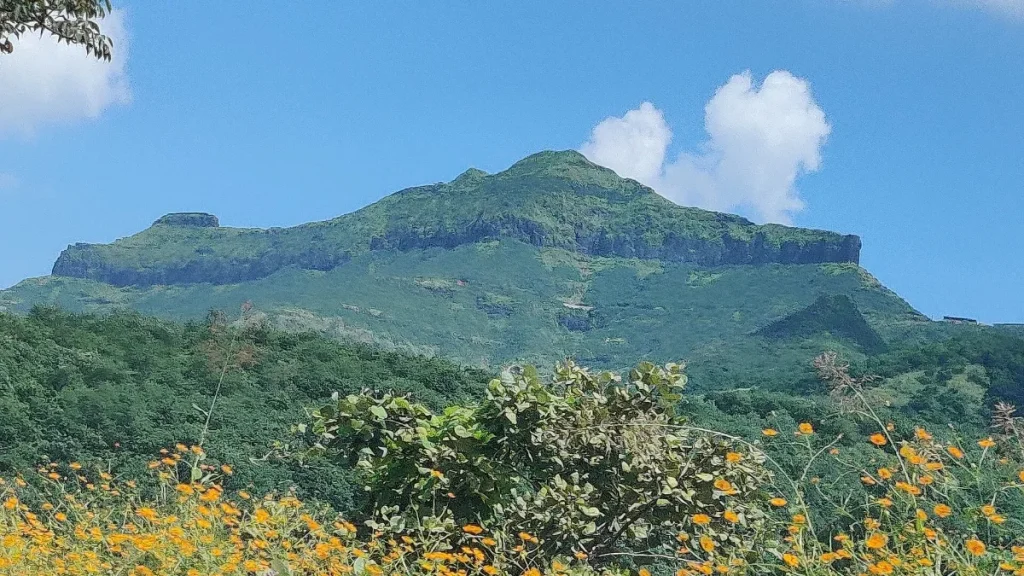
Photo: Ashwin Baindur / CC BY-SA 4.0, via Wikimedia Commons
Last updated: 22 November 2026
Purandar Fort, about 50 km southeast of Pune, is where one of the most important treaties in Maratha history was signed. It is also known as the birthplace of Chhatrapati Sambhaji Maharaj and for the last stand of its brave fort keeper, Murarbaji Deshpande.
Quick facts
- Height: 1,374 m above sea level
- Location: About 50 km southeast of Pune, Purandar taluka
- Base village: Narayanpur
- Twin fort: Vajragad (Rudramal), 1,347 m, on the eastern side
- Known for: The Treaty of Purandar, 1665
The siege and the Treaty of Purandar
In 1665, Mughal forces under Mirza Raja Jai Singh, helped by Diler Khan, laid siege to Purandar. According to Wikipedia’s history of the fort, the fort’s killedar Murarbaji Deshpande led a fierce defence and died fighting. A statue of him stands on the fort today.
With the Mughals pressing hard, Shivaji Maharaj signed the Treaty of Purandar with them. Under its terms, he handed over 23 forts, including Purandar itself, and kept 12, among them Rajgad. Read our Rajgad fort guide for that side of the story.
Later history
The fort changed hands several times in later years. The British took it in 1818. They later used it as a prison, as an internment camp during the Second World War and as a sanatorium for soldiers. Today, the National Cadet Corps uses the area for training, and the fort is also popular with trekkers and paragliders.
What to see
- Murarbaji’s statue: A tribute to the defender of 1665
- Gates and bastions: Remains of the fort’s defences along the climb
- Vajragad: The smaller twin fort to the east, also called Rudramal
- Views: Over the Saswad plains and the Sinhagad range
- Narayaneshwar temple: At the base village of Narayanpur, a Hemadpanthi-style temple linked to the Yadava period
Visiting tips
Parts of the area are used for training, so follow any instructions from staff at the entry points and carry a photo ID. Access rules can change, so ask locally before you start the climb.
- Start early. The climb is exposed and gets hot by noon.
- Carry water and a cap.
- Stay on marked paths and away from edges.
- Do not litter. Carry plastic back down.
How to reach Purandar from Pune
Drive towards Saswad through Hadapsar or via Katraj and the Bopdev ghat, then head to Narayanpur. MSRTC buses run from Swargate to Saswad, from where local transport goes to Narayanpur.
Combine it with
Jejuri’s Khandoba temple is on the same side of the district. Read our Jejuri temple guide. For more forts, see our forts near Pune trekking guide.
Frequently asked questions
What was the Treaty of Purandar?
A 1665 treaty between Shivaji Maharaj and the Mughals under Jai Singh, under which he gave up 23 forts, including Purandar.
Who was Murarbaji Deshpande?
The killedar of Purandar who died defending the fort against the Mughal siege in 1665.
How far is Purandar fort from Pune?
About 50 km southeast of Pune.
What is the twin fort of Purandar?
Vajragad, also called Rudramal, on the eastern side.