
How to Check if Sweets, Khoya and Paneer Are Adulterated: Simple Home Tests, What FDA Pune Found This Festive Season and Where to Complain
Simple checks to spot adulterated khoya, paneer, ghee and sweets at home, what FDA Pune seized this festive season, and how to complain on 1800-222-365.
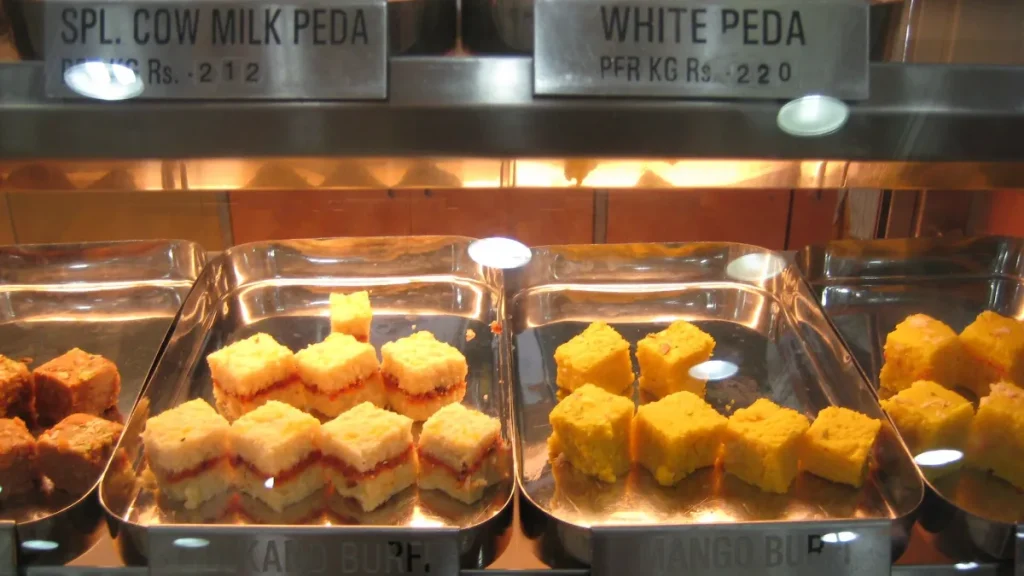
Photo: Melanie M / CC BY 2.0, via Wikimedia Commons
You can spot many common food adulterants at home with simple tests: a few drops of iodine turn starch-mixed khoya or paneer blue, and adulterated ghee separates or smells odd when heated. These checks are not proof, but if something looks wrong, keep the sample and bill and complain to FDA Maharashtra on its toll-free number 1800-222-365.
Festive demand for sweets is when adulteration peaks, and Pune’s FDA has been busy this season.
What FDA Pune found this season
- Between 10 and 15 September, FDA Pune division seized adulterated or misbranded food worth about ₹56.36 lakh from 12 establishments, including cooking butter, milk powder, khoya, paneer, ghee, barfi and boondi. The licences of six sweet shops and eight other food businesses were suspended.
- On 14 and 15 October, it seized food worth ₹38.10 lakh from 14 establishments over suspected adulteration and misleading labels, and suspended licences at nine places.
The drives are part of the state’s “Safe Food, Safe Drug, Safe Maharashtra” campaign.
Simple home tests
| Food | What to do | Warning sign |
|---|---|---|
| Khoya or paneer | Boil a small piece in water, cool it, add 2-3 drops of iodine tincture | Turns blue: starch has been added |
| Ghee | Melt a spoon of ghee and let it cool in a glass | Separate layers or a lingering odd smell can mean added vegetable fat |
| Milk | Put a drop on a slanted polished surface | Pure milk flows slowly and leaves a white trail; watered milk runs fast with no trail |
| Silver varq on sweets | Rub a piece between your fingers | Real silver leaf breaks into fine particles; aluminium turns into small balls |
| Coloured sweets | Dissolve a little in warm water | Very bright colour that bleeds out quickly can mean excess or non-permitted colour |
These are adapted from FSSAI’s home testing guide. A lab test is the only way to be sure.
Buying tips
- Buy from shops that display their FSSAI licence or registration number
- Check the “best before” date on the tray; Maharashtra requires loose sweets to show it
- Avoid khoya sweets that are unusually cheap during peak season
- Refrigerate milk sweets and eat them within a day or two
How to complain
- FDA Maharashtra toll-free: 1800-222-365
- The FSSAI “Food Safety Connect” app or the FoSCoS portal
- Give the shop name, address, date of purchase and a photo of the bill and product
Read about Pune food and dining and our guide to Pune’s famous dishes.
Home checks are only indicators, not laboratory tests. If you suspect adulteration, stop eating the food, keep the bill and the remaining sample, and complain to FDA.
Frequently asked questions
How can I check if khoya is adulterated at home?
Boil a small piece in water, cool it and add a few drops of iodine. If it turns blue, starch has been added.
How do I check ghee for adulteration?
Melt and cool a spoon of ghee in a glass; separate layers or an odd smell can mean added fats. Only a lab test is conclusive.
Where can I complain about adulterated food in Maharashtra?
Call FDA Maharashtra on 1800-222-365, or use FSSAI’s Food Safety Connect app.
Is silver varq on sweets real?
Real silver leaf crumbles into fine particles when rubbed; aluminium foil forms small balls.