Pune AQI After Diwali 2026: Bhosari Hits 326, Dhanakwadi 310 as City Average Jumps From 90 to 288 in Nine Days
CPCB data show Pune and Pimpri-Chinchwad air turned very poor after Lakshmi Pujan, with Bhosari at 326. Station-wise readings, health advice and where to check AQI.
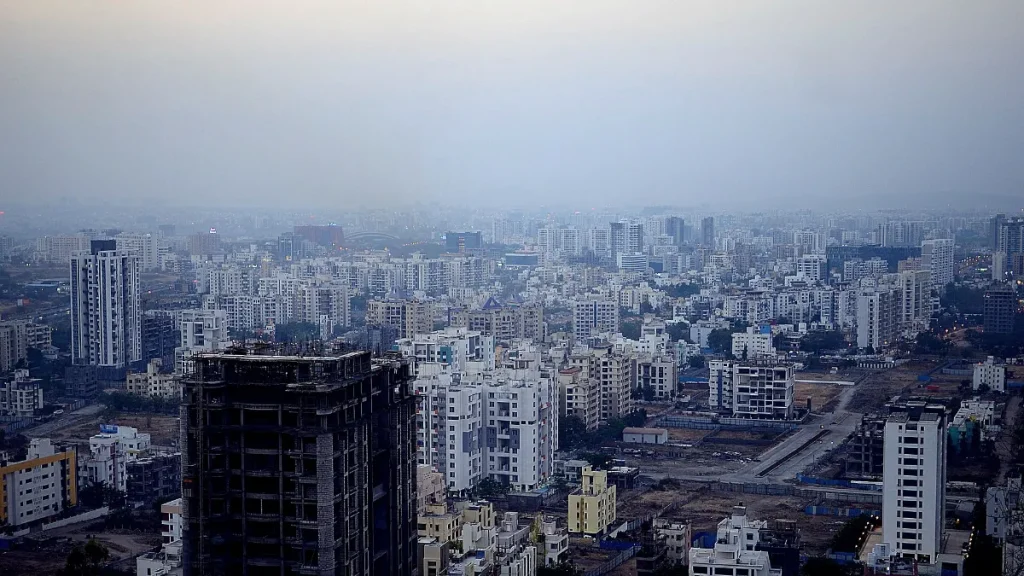
Photo: Ujjawal.Gayakwad / CC BY-SA 4.0, via Wikimedia Commons
Pune, 10th November 2026: Air in Pune and Pimpri-Chinchwad turned “very poor” after Lakshmi Pujan. At 1 pm on Monday, 9 November, Bhosari recorded an AQI of 326 and Dhanakwadi 310, according to Central Pollution Control Board (CPCB) data reported by Punekar News.
The Pune city average stood at 288 and the Pimpri-Chinchwad average at 301. Nine days earlier, on 1 November, Pune’s average was just 90, which falls in the “satisfactory” band.
Which Pune areas had the worst air on 9 November
The CPCB readings at 1 pm showed that the spike was spread across the twin cities, not limited to one or two pockets.
In Pimpri-Chinchwad:
- Bhosari: 326
- Savta Mali Nagar: 320
- Bhumkar Nagar: 305
- Transport Nagar, Nigdi: 305
- Park Street, Wakad: 301
- Thergaon: 291
- Gavlinagar: 256
In Pune:
- Dhanakwadi: 310
- Mhada Colony: 304
- Hadapsar: 300
- Panchwati, Pashan: 289
- Katraj Dairy: 275
- SPPU area: 252
Any reading between 301 and 400 is “very poor” on the CPCB scale, and 201 to 300 is “poor”. So every station in the list was in the poor or very poor band.
How fast the air got worse over Diwali week
The climb started before the main festival days. CPCB figures quoted by Punekar News show Pune’s average moving from 90 on 1 November and 114 on 3 November to 157 on 7 November, 163 on 8 November and 288 on 9 November.
Pimpri-Chinchwad followed a similar path, from 93 on 1 November to 211 on 7 November and 301 on 9 November.
The worst hours came overnight. The Air Quality Early Warning and Decision Support System, run by C-DAC and IITM Pune, showed the city AQI touching 432, in the “severe” band, in the early hours of Monday, as reported by the Free Press Journal. The same report said PM2.5 neared 1,000 micrograms per cubic metre at some stations, against a peak of about 600 during last year’s Diwali.
What IITM expects for the next few days
Dr Sachin Ghude, the IITM scientist in charge of the system, told the Free Press Journal that continued firecracker bursting on Monday could stretch the severe episode into early Tuesday. The system forecast an AQI of about 300 to 320 for Tuesday morning.
Station forecasts for the next day put Bhosari near 427, Shivajinagar near 247, Nigdi near 215 and Pashan near 175. These were forecasts, not measured values, so they can change.
Air usually clears once firecracker use stops and winds pick up. With Bhau Beej on Wednesday, 11 November, another round of evening crackers is possible in some areas.
What Punekars can do while AQI stays high
People with asthma, heart conditions or lung disease, along with children and older adults, feel the effects first. A few simple steps help:
- Check the live AQI of your nearest station before an early-morning walk or run.
- Shift outdoor exercise indoors, or to the afternoon, when readings usually dip.
- Keep windows shut at night and early morning, when smoke stays close to the ground.
- Wear a well-fitting N95 mask outdoors if you must step out in very poor air.
- See a doctor if you have breathlessness, chest tightness or a cough that does not settle.
This is general information, not medical advice. Follow your doctor’s guidance if you have a health condition.
Where to check Pune’s live AQI
The CPCB National Air Quality Index portal and its Sameer app show hourly readings for each Pune and PCMC station. Our Pune AQI today guide explains what each colour band means and lists the stations closest to your area.
For what residents saw on the night itself, read our report on smoke and late-night crackers on Lakshmi Pujan.
What is not known yet
CPCB has not yet published a full-day average for 10 November, and the Maharashtra Pollution Control Board has not issued any statement on the Diwali readings so far. We will update this story when the official daily bulletin comes out.
Frequently asked questions
What was Pune’s AQI after Diwali 2026?
CPCB data showed a Pune average of 288 and a Pimpri-Chinchwad average of 301 at 1 pm on 9 November, with Bhosari the worst at 326.
Which area of Pune had the highest AQI?
Bhosari in Pimpri-Chinchwad recorded 326. Within Pune city limits, Dhanakwadi was highest at 310, followed by Mhada Colony at 304.
Is AQI 300 dangerous?
An AQI of 201 to 300 is “poor” and 301 to 400 is “very poor” on the CPCB scale. Long exposure can cause breathing discomfort, especially for children, older people and those with lung or heart disease.
How do I check live AQI in Pune?
Use the CPCB Sameer app or the CPCB AQI portal, which show hourly readings for every Pune and PCMC monitoring station.