Why Pune Is the Oxford of the East: Its Best-Known Colleges, Universities and Institutes, and Student Tips
Why Pune is called the Oxford of the East: SPPU, COEP, Fergusson, FTII, Symbiosis, AFMC, NDA, IISER and more, plus admissions, student areas and living tips.
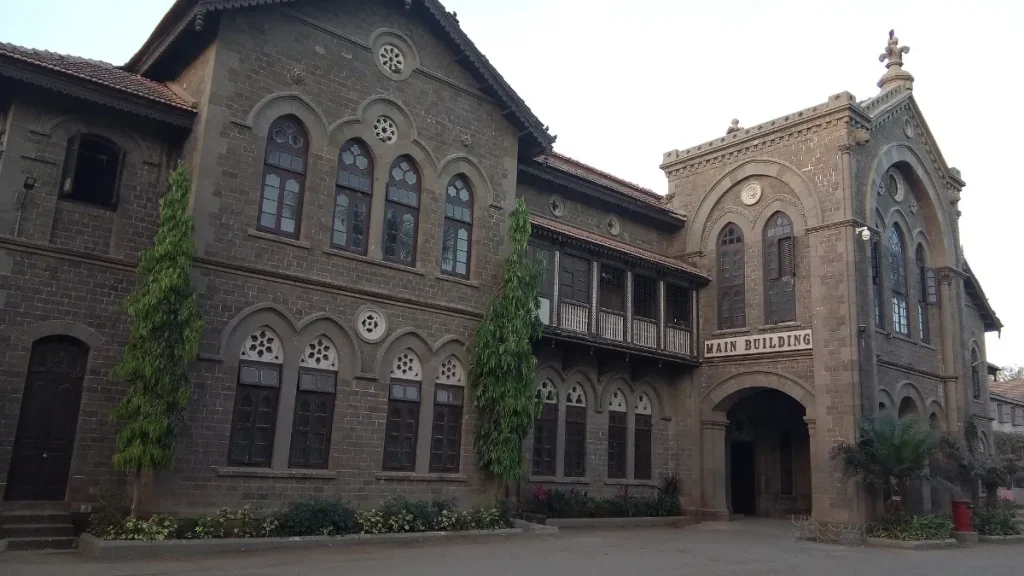
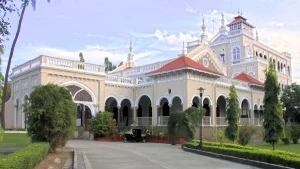
Photo: सुबोध कुलकर्णी / CC BY-SA 4.0, via Wikimedia Commons
Last updated: 19 November 2026 · 10 min read · By Priya Deshmukh
Pune has been called the Oxford of the East for more than a century, and the name still fits. The city has one of India’s oldest engineering colleges, a state university founded in 1949, the country’s premier film school, defence academies, national laboratories and hundreds of colleges. Every June, lakhs of students from across India arrive to study here.
Quick answer: Pune earned the name because of the sheer number and age of its educational and research institutions, from Deccan College (1821) and the College of Engineering Pune (1854) to Fergusson College (1885), Savitribai Phule Pune University (1949) and newer national institutes such as IISER Pune (2006).
Pune’s landmark institutions at a glance
| Institution | Founded | Known for |
|---|---|---|
| Deccan College | 1821 | Archaeology, linguistics, post-graduate research |
| College of Engineering Pune (COEP) | 1854 | One of India’s oldest engineering colleges |
| Fergusson College | 1885 | Arts and sciences, set up by the Deccan Education Society |
| Bhandarkar Oriental Research Institute (BORI) | 1917 | Manuscripts and Indology |
| ILS Law College | 1924 | Law |
| Armed Forces Medical College (AFMC) | 1948 | Medical education for the armed forces |
| Savitribai Phule Pune University (SPPU) | 1949 | State university with hundreds of affiliated colleges |
| National Chemical Laboratory (NCL) | 1950 | Chemistry research (CSIR) |
| Film and Television Institute of India (FTII) | 1960 | Film and television |
| Symbiosis | 1971 | Management, law, media and international students |
| IUCAA | 1988 | Astronomy and astrophysics |
| IISER Pune | 2006 | Science education and research |
Why Pune became a city of learning
Pune’s reputation goes back to the 19th century, when it was a centre of the reform movement. Savitribai and Jyotirao Phule opened a school for girls here in 1848, one of the first in India. In 1884 reformers including Bal Gangadhar Tilak and Gopal Ganesh Agarkar founded the Deccan Education Society, which opened Fergusson College the next year.
After Independence, the University of Poona was set up in 1949; it was later renamed Savitribai Phule Pune University. National laboratories, defence institutions and private universities followed. The city’s mild climate, relatively low living costs compared to Mumbai, and its tradition of public lectures, libraries and theatre made it a natural home for students. Read the full story in our history of Pune timeline.
The universities
Savitribai Phule Pune University (SPPU)
SPPU‘s main campus at Ganeshkhind, with its historic main building, is one of the most beautiful university campuses in India. It runs its own departments and affiliates a very large number of colleges across Pune, Ahilyanagar and Nashik districts. Many students deal with SPPU for exams, results and transcripts; see our guide to getting SPPU transcripts online.
Private and deemed universities
Pune also has several large private and deemed universities, including Symbiosis International, Bharati Vidyapeeth, MIT World Peace University and Dr D Y Patil Vidyapeeth. They attract students from across India and abroad, especially for management, law, engineering, medicine and design.
Famous colleges
- Fergusson College (FC Road): one of India’s best-known arts and science colleges, with a historic campus and a lively student strip outside its gates.
- COEP Technological University (Shivajinagar): founded in 1854 and among the oldest engineering colleges in India; its campus sits by the Mula-Mutha river.
- ILS Law College (Law College Road): one of India’s leading law colleges, on a hillside campus.
- BMCC (Brihan Maharashtra College of Commerce): a well-known commerce college near Deccan.
- B J Government Medical College: linked to Sassoon General Hospital, a major government medical college.
National and defence institutes
Pune is unusual in having so many national institutes in one city:
- National Defence Academy (NDA), Khadakwasla: trains cadets for the Army, Navy and Air Force.
- Armed Forces Medical College (AFMC): founded in 1948, trains doctors for the armed forces.
- FTII: India’s premier film school, on the former Prabhat Studios campus on Law College Road.
- NCL, IUCAA and IISER Pune: leading research institutions in chemistry, astronomy and the sciences, mostly around the Pashan and SPPU area.
- BORI and Deccan College: centres for Indology, archaeology and manuscripts; read about BORI’s birch-bark Mahabharata manuscript.
Admissions: what students should know
- Engineering, pharmacy and many professional courses in Maharashtra admit students through MHT-CET and the state CET Cell’s centralised admission process (CAP) rounds.
- Medical courses admit through NEET.
- Arts, science and commerce colleges affiliated to SPPU usually run their own merit lists based on Class 12 marks.
- Private universities such as Symbiosis hold their own entrance tests (for example SET and SNAP).
- Reserved category students need valid caste, non-creamy layer and domicile certificates in time; see our guide to the non-creamy layer certificate.
Always confirm dates and rules on the official State CET Cell, university or college website, as they change every year.
Where students live
- Deccan, Shivajinagar and Kothrud: close to Fergusson, COEP, ILS and BMCC; old-city charm, crowded but well connected.
- Viman Nagar and Nagar Road: near Symbiosis’ city campus and private colleges in east Pune.
- Lavale and Hinjewadi side: for Symbiosis’ hilltop campus and colleges along the western edge.
- Katraj, Dhankawadi and Narhe: near Bharati Vidyapeeth and colleges in south Pune.
- Pimpri-Chinchwad: for D Y Patil and other PCMC-area colleges; see our Pimpri-Chinchwad city guide.
Our moving to Pune guide explains renting, transport and daily costs in more detail.
Student life in Pune
Pune’s student culture is one of its biggest attractions: cafes on FC Road, theatre at Bal Gandharva and Sudarshan Rangmanch, the Pune Book Festival in December and the Sawai Gandharva music festival in January. The city is also a good base for weekend treks; see our forts near Pune guide.
Frequently asked questions
Why is Pune called the Oxford of the East?
Pune is called the Oxford of the East because of its large number of old and respected educational and research institutions, from Deccan College (1821) and COEP (1854) to SPPU (1949) and IISER Pune (2006).
Which is the oldest college in Pune?
Deccan College, which traces its origins to 1821, is the oldest; COEP, founded in 1854, is among the oldest engineering colleges in India.
When was Pune University founded?
The University of Poona was founded in 1949. It was later renamed Savitribai Phule Pune University.
Which entrance exam is needed for engineering colleges in Pune?
Most government and private engineering colleges in Maharashtra admit students through MHT-CET and the CET Cell’s CAP rounds, while some private universities hold their own tests.