Narak Chaturdashi 2026: Abhyang Snan on Sunday, 8 November, Utane, Karit and the Story of Narakasura
In Maharashtra, Narak Chaturdashi’s Abhyang Snan falls on Sunday, 8 November 2026. Here is how the early oil bath, utane and karit tradition work.
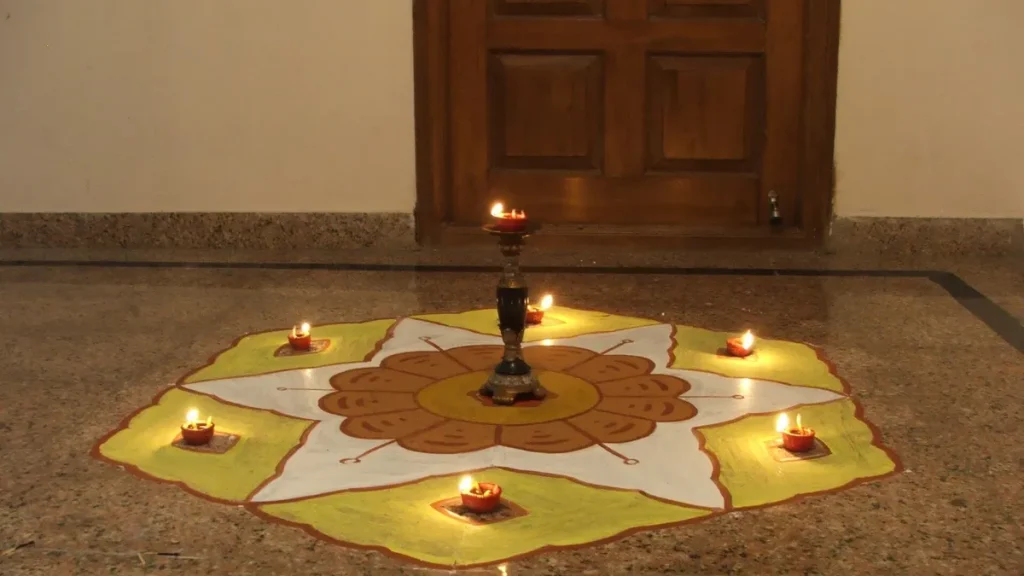
Photo: Abhinaba Basu / CC BY 2.0, via Wikimedia Commons
In Maharashtra, Narak Chaturdashi’s Abhyang Snan, the early morning oil bath, falls on Sunday, 8 November 2026. It is the same day as Lakshmi Pujan this year, so the morning is for the bath and faral, and the evening for the puja.
Some national calendars show Narak Chaturdashi on Saturday, 7 November, because the Chaturdashi tithi begins that morning. Marathi calendars place the bath on Sunday morning, when the tithi is in force at sunrise. See our Diwali 2026 calendar for all the dates.
What is Narak Chaturdashi?
The day marks Lord Krishna’s victory over the demon Narakasura, Free Press Journal notes, a story of light and purity winning over darkness. In much of north India it is called Choti Diwali. In Maharashtra it is known above all for the Abhyang Snan, which many Punekars call the first “real” morning of Diwali.
How is Abhyang Snan done?
The bath is taken early, traditionally before sunrise, as Lokmat Times describes. The usual steps:
- Massage warm oil over the body and scalp. Sesame or coconut oil is common, often scented.
- Leave it on for 15 to 20 minutes.
- Apply utane, a fragrant paste, all over the body.
- Bathe with warm water.
- Wear new clothes.
In many homes, the mother or wife does an aukshan (aarti) for family members after the bath, and the day continues with faral and early crackers.
What is in utane?
Utane is a powder of herbs and fragrant ingredients, mixed with oil, milk or water into a paste. Common ingredients include:
- Turmeric
- Sandalwood
- Gram flour (besan)
- Rose petals
- Manjistha and other herbs
- Orange peel and camphor in some mixes
Ready-made utane packets are sold across Pune in Diwali season, including at the markets on Laxmi Road and Tulshibaug. See our Pune Diwali shopping guide. Anyone with sensitive skin should test a little first.
Why is karit crushed on Narak Chaturdashi?
Karit is a small, bitter green fruit that looks like a tiny melon or parval. After the bath, family members crush a karit under the big toe. The tradition says this stands for Krishna killing Narakasura, with the bitter fruit standing for the demon.
Karit is seasonal and not always easy to find in city markets. If you cannot find one, many families simply skip this step.
What do Pune families eat after the bath?
Breakfast on Narak Chaturdashi is the year’s first full plate of faral: chakli, chivda, karanji, shankarpali, besan ladoo and anarse. Our Diwali faral guide covers each one.
Many families then visit Diwali Pahat concerts, which are held at venues across Pune in the early morning. See our Diwali Pahat 2026 list.
How to plan Sunday, 8 November
With Abhyang Snan and Lakshmi Pujan on the same day, Pune homes have a long day. A simple plan:
- Early morning: oil massage, utane and bath, then new clothes
- Morning: aukshan, faral breakfast and Diwali Pahat if you have tickets
- Afternoon: rest, last-minute shopping for puja flowers and the new broom
- Evening: Lakshmi Pujan, then diyas and crackers before 10 pm
Read our guide on how Lakshmi Pujan is done at home.
Frequently asked questions
When is Narak Chaturdashi Abhyang Snan in 2026?
In Maharashtra, Abhyang Snan is on Sunday, 8 November 2026, the same day as Lakshmi Pujan. Some national calendars show Narak Chaturdashi on 7 November.
What is utane made of?
Utane is a fragrant paste of ingredients such as turmeric, sandalwood, gram flour, rose petals and herbs, applied after an oil massage.
Why is karit crushed on Narak Chaturdashi?
By tradition, crushing the bitter karit fruit under the toe symbolises Krishna’s killing of the demon Narakasura.
Is Narak Chaturdashi the same as Choti Diwali?
Yes. North India calls the day Choti Diwali, while Maharashtra marks it mainly with the Abhyang Snan.