
Geminid Meteor Shower 2026 in Pune: Peak on Night of December 13-14, Up to 150 Meteors an Hour, Where to Watch
The Geminids peak on the night of 13-14 December 2026 with a thin crescent moon. Here is when to look up from Pune and how to see the most meteors.
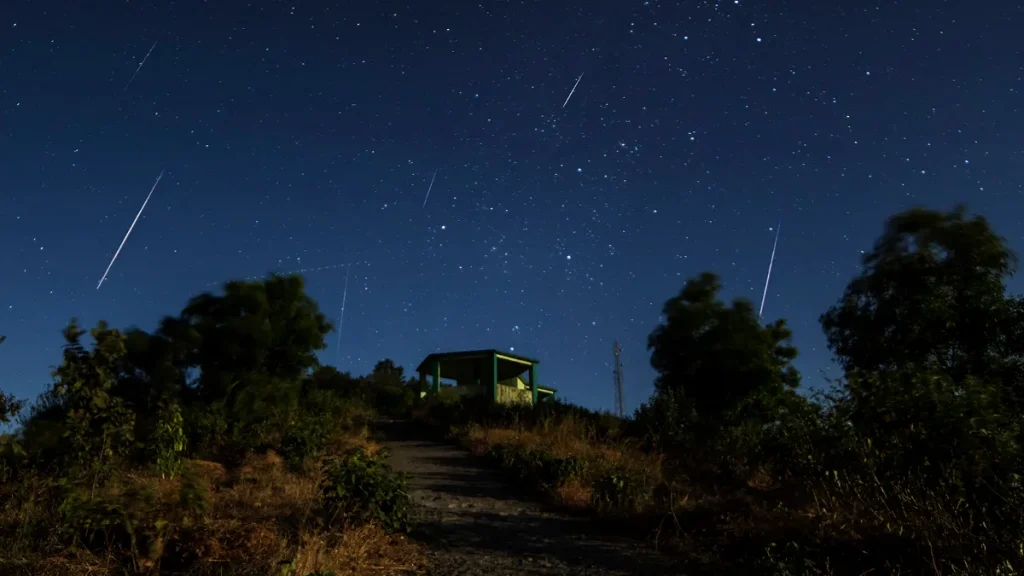
Photo: Asim Patel / CC BY-SA 3.0, via Wikimedia Commons
Last updated: 23 November 2026
The Geminid meteor shower, usually the strongest of the year, peaks on the night of Sunday 13 December into Monday 14 December 2026. Under dark skies it can produce up to 150 meteors an hour, and this year a thin crescent moon sets early, leaving most of the night dark.
From Pune, the best window is from about 10 pm on 13 December until dawn on 14 December.
When exactly is the peak?
The International Meteor Organization puts the peak at about 14:00 UTC on 14 December, which is 7.30 pm IST, according to StarWalk. That time falls in Indian daylight-to-evening, but the Geminids have a broad peak. Enhanced activity runs from about 13 December night through 14 December, so the night of 13-14 December is the one to plan for.
The shower is active from 4 December to about 17 to 20 December, so a few meteors are visible on other nights too. The nights of 12-13 and 14-15 December are good backups if clouds spoil the peak.
How many meteors will you see from Pune?
Rates of 75 to 150 an hour are possible only under very dark rural skies with the radiant high, the Farmers’ Almanac notes. In suburban skies the number drops to about 25 to 50 an hour.
Inside the city, with street lights in Kothrud, Viman Nagar or Wakad, you will see only the brighter meteors. Driving 40 to 60 km out of Pune makes a big difference.
Does the moon get in the way?
Not much this year. New moon falls on 8 December, so on the peak night the moon is a thin waxing crescent, only about 20% lit. It sets by about 9 pm, after which the sky is dark until dawn.
Where to look and when
The meteors appear to come from the constellation Gemini, which rises in the north-east in the evening and is high overhead around 2 am. You do not need to stare at Gemini itself. Meteors can appear anywhere, so look at a wide patch of dark sky about halfway up.
Activity usually builds after midnight and is strongest in the early morning hours, when Gemini is highest.
Good dark-sky spots near Pune
- Mulshi and Tamhini side: away from the Hinjewadi glow, though check road conditions at night.
- Panshet and Velhe side: darker than the city edge; go in a group.
- Bhimashankar and Junnar side: darker skies, longer drive.
- Rooftops in the city: fine for bright meteors if you turn off nearby lights.
Go in groups, tell someone where you are going, carry a torch with a red filter and avoid parking on narrow ghat roads.
Tips for a better view
- Give your eyes 20 to 30 minutes to adjust to the dark. Avoid looking at your phone.
- Lie on a mat or reclining chair so you can watch a large area of sky.
- December nights in Pune can drop near 10 degrees Celsius; carry a jacket and blanket. See our Pune weather in December guide.
- Binoculars and telescopes are not needed. Meteors move too fast and are best seen with the naked eye.
Can you photograph meteors with a phone?
Yes, with patience. Put the phone on a tripod or prop it firmly, use night mode or a manual mode with a long exposure, and point it at a dark part of the sky. Take many shots over an hour; most will be empty, but a bright Geminid may cross the frame.
Why the Geminids are different
Most meteor showers come from comets. The Geminids come from the asteroid 3200 Phaethon, a rock about 6 km across. Each December, Earth passes through the trail of dust it leaves behind, and the grains burn up in the upper atmosphere as bright streaks.
If you missed November’s shower, read our note on the Leonid meteor shower.
Frequently asked questions
When is the Geminid meteor shower 2026?
It peaks on the night of 13-14 December 2026, and is active from 4 December to about 17 to 20 December.
What time should I watch from Pune?
Watch from about 10 pm on 13 December to dawn on 14 December. Rates are usually highest after midnight.
Will the moon spoil the view?
No. A thin crescent about 20% lit sets around 9 pm, leaving the rest of the night dark.
Do I need a telescope?
No. Meteors are best seen with the naked eye from a dark place, lying back to watch a wide part of the sky.