
Forts Near Pune: The Complete Trekking Guide to Sinhagad, Rajgad, Torna, Lohagad, Shivneri, Purandar and More
A complete guide to the forts near Pune: Sinhagad, Rajgad, Torna, Lohagad, Shivneri, Purandar and more, with history, trek difficulty, routes and safety tips.
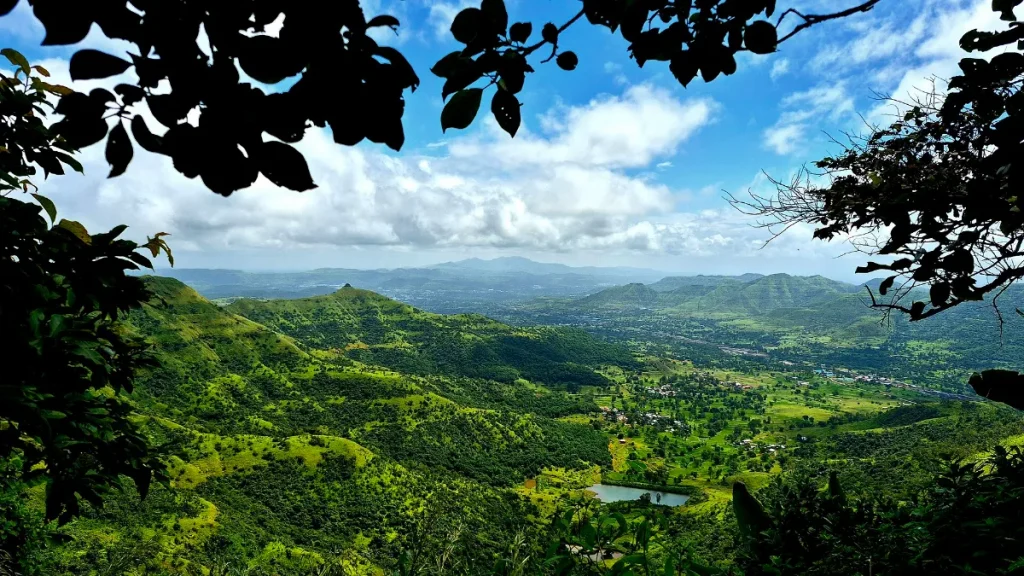
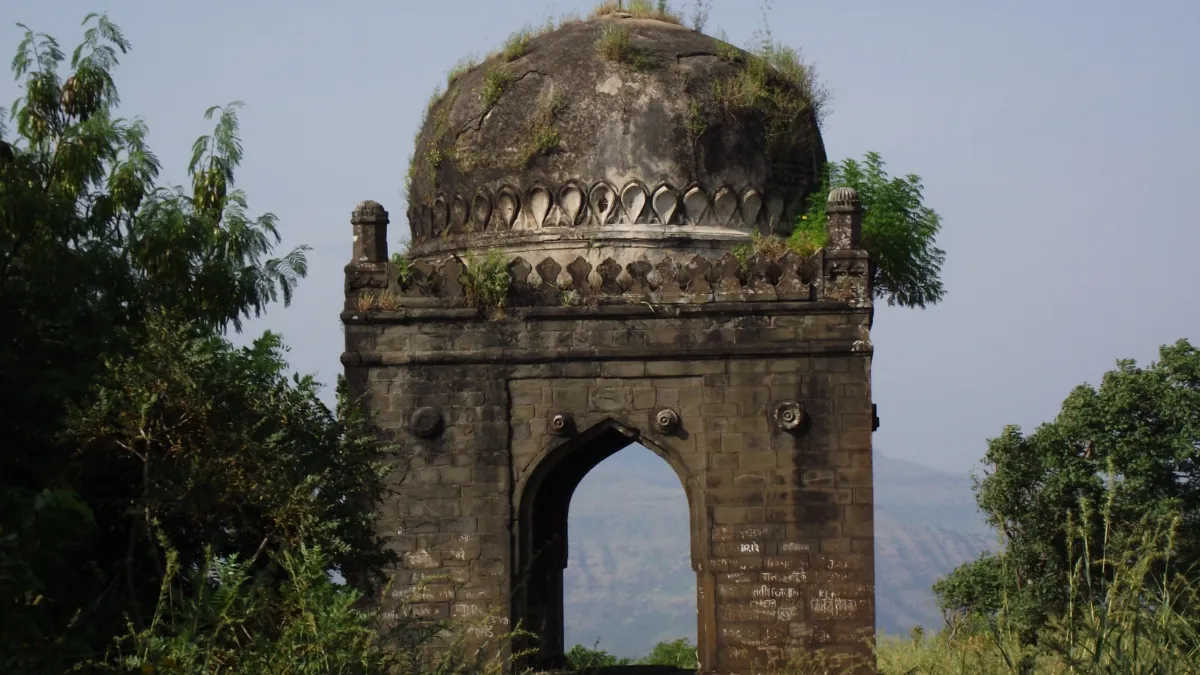
Photo: Suraj Digrase / CC0, via Wikimedia Commons
Few cities in India have history standing on the hills around them the way Pune does. Within two or three hours of the city, the Sahyadri range is dotted with forts that shaped the Maratha story: the fort where Chhatrapati Shivaji Maharaj was born, the fort that was his first capital, the first fort he captured as a teenager, and the cliff where Tanaji Malusare gave his life.
For Punekars, these forts are also simply where weekends happen. College groups set off for Sinhagad before sunrise, families drive to Lohagad in the monsoon, and serious trekkers plan the Rajgad to Torna ridge walk months in advance.
This guide brings together what you need to choose the right fort, plan the trip and come back safely. It covers history in brief, difficulty, how to reach each fort, the best season, and the rules and etiquette that apply to these protected heritage sites.
Key takeaways
- Sinhagad is the easiest fort to visit from Pune city and works as a first trek or a family outing.
- Rajgad, Lohagad and Shivneri are part of the UNESCO World Heritage listing “Maratha Military Landscapes of India”, inscribed in July 2025.
- Torna is the highest hill fort in Pune district at about 1,403 m and was the first fort captured by Shivaji Maharaj, in 1646.
- October to February is the most comfortable trekking season. The monsoon is beautiful but slippery, and some routes become dangerous.
- Carry water, start early, respect closing times and never litter or deface walls. Crowd and vehicle rules on popular forts such as Sinhagad are changing, so check before you go.
In this guide
- Why the forts around Pune matter
- Quick comparison: which fort should you pick?
- Sinhagad: the fort every Punekar climbs
- Rajgad: the king of forts
- Torna: the first fort of Swarajya
- Lohagad and Visapur: the monsoon favourites
- Shivneri: the birthplace of Shivaji Maharaj
- Purandar and Vajragad
- Other forts worth knowing
- When to go: season by season
- Safety checklist for fort treks
- Fort etiquette: what not to do
- A suggested first-year fort plan for beginners
- Frequently asked questions
Why the forts around Pune matter
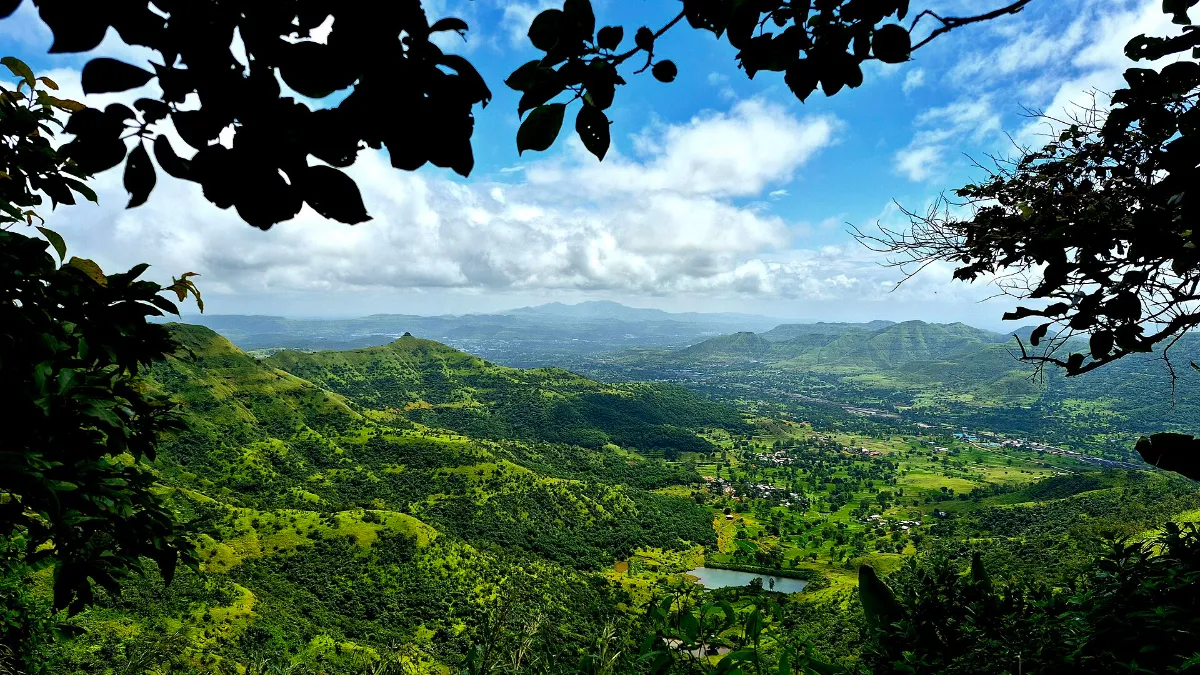
Maharashtra has more than 350 forts, and a large share of the most important ones sit in Pune district and the neighbouring Raigad and Satara districts. They were not built as palaces. Most are hill forts, using steep basalt cliffs as natural walls, with gates, bastions, water cisterns cut into rock and “machis”, the flat terraces below the main citadel where soldiers and settlements lived.
In July 2025, UNESCO inscribed 12 forts under the name “Maratha Military Landscapes of India” on its World Heritage List at the 47th session of the World Heritage Committee in Paris. Eleven are in Maharashtra and one, Gingee, is in Tamil Nadu. Three of them are in Pune district: Shivneri, Rajgad and Lohagad. The others are Salher, Raigad, Pratapgad, Panhala, Khanderi, Suvarnadurg, Vijaydurg and Sindhudurg.
That recognition has brought more visitors, and with them more attention to conservation, crowd control and cleanliness. Treat every visit as a visit to a monument, not just a hike.
Quick comparison: which fort should you pick?
Trek times below are approximate for a reasonably fit adult on the most common route, one way. Distances are by road from central Pune and vary with your starting point.
| Fort | Distance from Pune | Height (approx.) | Difficulty | Approx. climb time | Best for |
|---|---|---|---|---|---|
| Sinhagad | About 30 to 35 km | 1,317 m | Easy to moderate | 1 to 1.5 hours on foot | First trek, families, sunrise |
| Lohagad | About 52 km (near Lonavala) | 1,033 m | Easy | 1 to 2 hours from Malavli; less from Lohagad village | Monsoon, beginners |
| Rajgad | About 60 km | 1,376 m | Moderate to hard | 2.5 to 3.5 hours | History lovers, overnight trek |
| Torna | About 50 to 65 km | 1,403 m | Moderate to hard | 2.5 to 3 hours | Ridge views, experienced trekkers |
| Shivneri | About 90 to 95 km (Junnar) | Not officially listed | Easy | Under 1 hour by the steps | Families, heritage |
| Purandar | About 40 to 50 km | Over 1,300 m | Easy to moderate | 1 to 1.5 hours | Short half-day trip |
Sinhagad: the fort every Punekar climbs
Sinhagad stands about 30 km south-west of the city, and on a clear morning you can see its TV tower from the western suburbs. Its old name was Kondhana. The fort is tied forever to the night attack of 1670, when Shivaji Maharaj’s commander Tanaji Malusare and his men scaled the steep western cliff to retake it from the Mughal garrison. Tanaji was killed in the fight. Shivaji Maharaj is said to have remarked “Gad aala, pan sinha gela” (the fort is won, but the lion is gone), and the fort has carried the name Sinhagad, the lion’s fort, ever since.
On top you will find the Pune Darwaza and Kalyan Darwaza gates, a memorial to Tanaji Malusare, the samadhi of Chhatrapati Rajaram Maharaj, who died here in 1700, and a bungalow associated with Lokmanya Tilak. The Doordarshan TV tower on the fort was set up in 1973.
How to reach and climb
Most people come via Khadakwasla and Donje to the base village of Atkarwadi, from where a well-worn footpath climbs to the top in roughly an hour to an hour and a half. There is also a ghat road to a parking area near the top, which is why Sinhagad gets very crowded on weekends and holidays.
Vehicle access to the top has been restricted in the past, with electric buses run from the base at different times. In August 2026, the forest department announced a crowd-control plan under which entry can be stopped once the fort reaches a safe number of visitors, with online registration planned later. Check the latest advisory from the Pune forest division before you leave.
Don’t miss
The food. Small stalls near the top sell pithla bhakri, kanda bhaji, matka dahi and buttermilk, and a hot plate of pithla bhakri after the climb is part of the Sinhagad ritual.
Local tip: Go on a weekday morning if you can. On Sundays the ghat road and the summit car park can be jammed by 9 am.
Rajgad: the king of forts
If Sinhagad is the fort Pune knows best, Rajgad is the one trekkers rate highest. It stands about 60 km south-west of Pune near Velhe, at about 1,376 m, on a hill once known as Murumbdev. It served as the first capital of the Maratha state under Shivaji Maharaj for almost 26 years before the capital moved to Raigad.
Rajgad saw important moments in the Swarajya story. Maharani Saibai, Shivaji Maharaj’s wife, died here on 5 September 1659, and Chhatrapati Rajaram Maharaj was born here on 24 February 1670. The fort’s layout is unusual: a central citadel, the Bale Killa, with three long machis spreading out on separate spurs, Padmavati, Suvela and Sanjeevani.
Routes and difficulty
The most common routes start from Gunjavane village (via the Chor Darwaza) and Pali Darwaza side. Both involve a steady climb of around 2.5 to 3.5 hours with some steep, rocky sections. The final climb to Bale Killa has exposed stretches with railings and steps cut into rock, which need care in wet weather or if you are uneasy with heights.
Many groups stay overnight at Padmavati Machi, where there is a temple and space for trekkers, and climb Bale Killa for sunrise. If you plan an overnight trip, carry your own water purification or enough water, food and warm layers for winter nights.
Rajgad to Torna
The ridge between Rajgad and Torna is one of the best-known treks in Maharashtra, usually done over two days. It needs route knowledge, good fitness and preferably an experienced group or guide, because sections of the ridge are narrow and easy to lose in fog.
Torna: the first fort of Swarajya
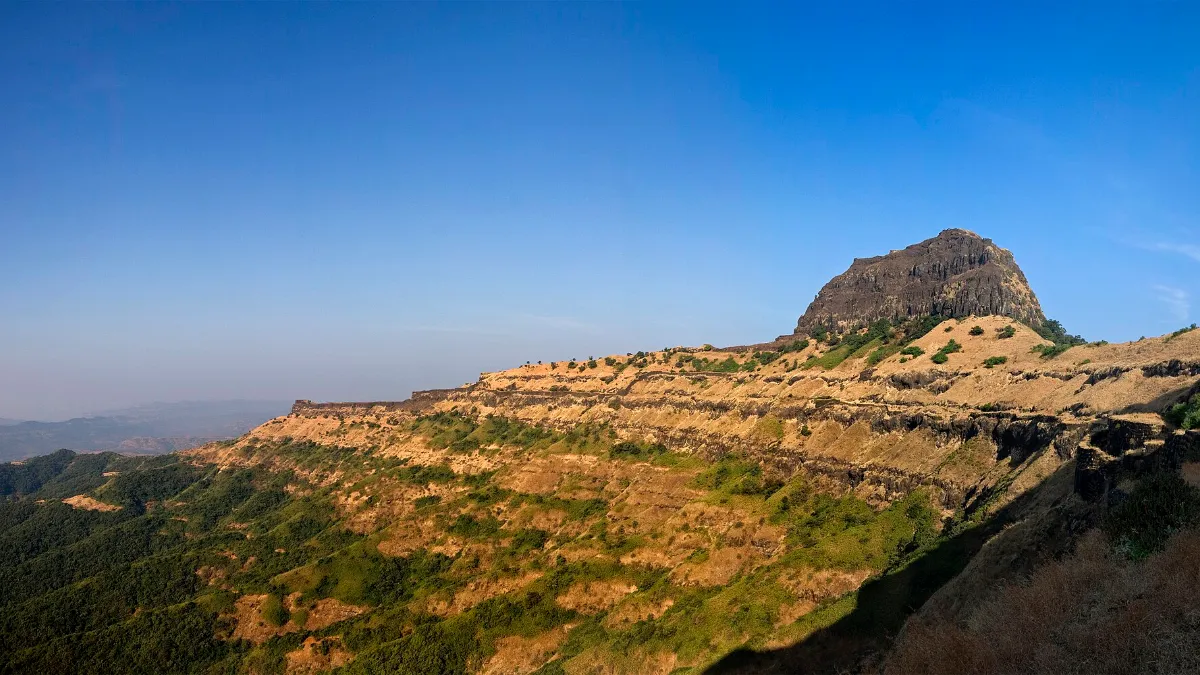
Torna, also called Prachandagad, is the highest hill fort in Pune district at about 1,403 m. In 1646, a 16-year-old Shivaji captured it, which is widely seen as the start of the Maratha kingdom. Aurangzeb later named it Futulgaib.
The fort has two long machis, Budhla Machi and Zunjar Machi, and the Menghai Devi temple, where trekkers often rest. The views from the top take in Rajgad, the Panshet and Gunjavani backwaters, and on clear days the long line of the Sahyadri.
Routes and difficulty
The usual route starts from Velhe, the base village, about 50 km from Pune via Pabe ghat or about 65 km via the Satara road. Expect a steep climb of 2.5 to 3 hours, with a rocky section near the top where railings help. Zunjar Machi in particular involves exposed rock and should only be attempted by experienced trekkers in dry weather.
Lohagad and Visapur: the monsoon favourites
Lohagad, near Lonavala, is about 52 km north-west of Pune and rises to about 1,033 m. It is one of the easiest major forts to climb, which makes it hugely popular in the monsoon when the hills turn green and clouds roll over the walls.
Shivaji Maharaj captured Lohagad in 1648, handed it to the Mughals under the Treaty of Purandar in 1665 and took it back in 1670. He used it to store treasury, including wealth from the raid on Surat. In the Peshwa period, Nana Phadnavis lived here for some time and built a large tank and a step-well. The fort’s best-known feature is the Vinchu Kata, a long, narrow fortified spur that looks like a scorpion’s tail.
How to reach
The classic approach is by local train to Malavli station on the Pune-Lonavala suburban line, then a walk through Bhaje village to Lohagadwadi and up the steps. From Malavli the full walk takes about two hours. You can also drive to Lohagadwadi, close to the gates, which shortens the climb to well under an hour.
On the way, the Bhaje Caves, early Buddhist rock-cut caves about 2 km from Malavli, are worth a stop. Visapur, the larger sister fort next to Lohagad, is less crowded and has a more rugged climb, including a stretch that turns into a waterfall route during heavy rain. Avoid that route when water is flowing strongly.
Shivneri: the birthplace of Shivaji Maharaj
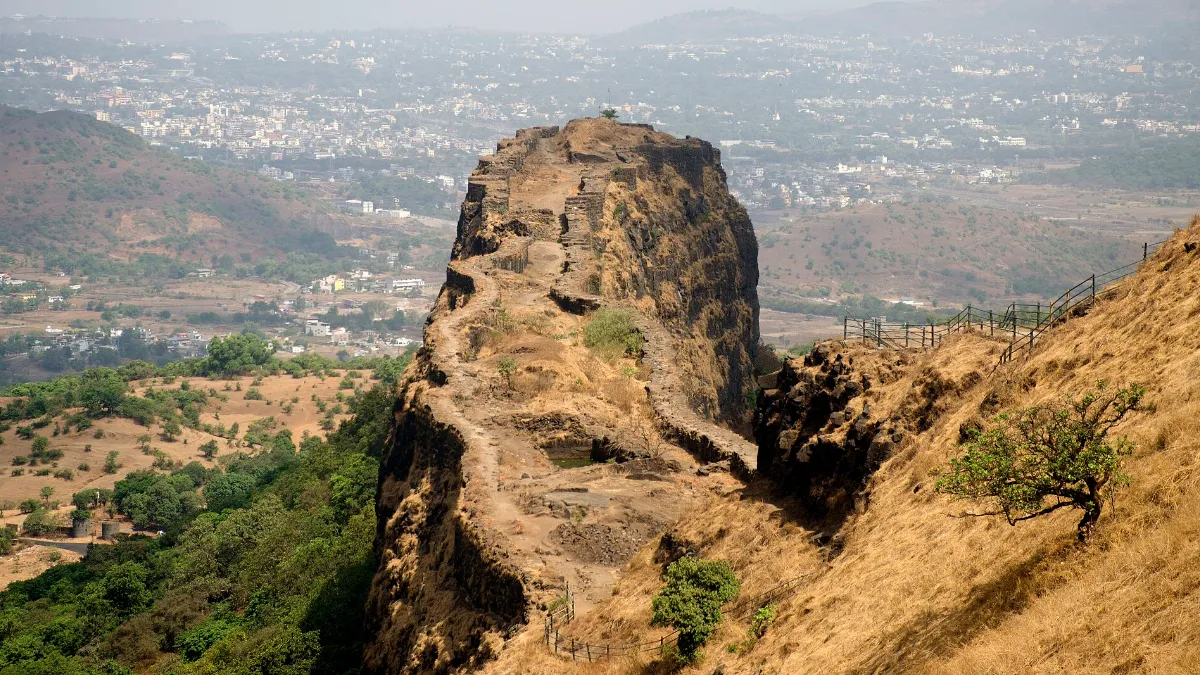
Shivneri stands above Junnar town, about 90 km north of Pune. Chhatrapati Shivaji Maharaj was born here on 19 February 1630, and the fort is a place of pilgrimage as much as history, especially on Shiv Jayanti, when thousands of people visit.
The climb is short and well developed, with stone steps leading through seven gates to the top. Inside you will see the small Shivai Devi temple, after whom many believe Shivaji Maharaj was named, the Badami Talav water tank, and statues of Rajmata Jijabai and young Shivaji near it. The building marked as the birthplace is the emotional heart of the visit.
Around Shivneri
Junnar is rich in rock-cut caves. The Lenyadri caves, about 2 km from Shivneri, are an early Buddhist cave complex that also houses one of the eight Ashtavinayak Ganesh temples, so many families combine both in one day.
Purandar and Vajragad
Purandar lies about 40 to 50 km south-east of Pune near Saswad. It has two important places in Maratha history. Chhatrapati Sambhaji Maharaj was born here in 1657, and the Treaty of Purandar between Shivaji Maharaj and the Mughal commander Mirza Raja Jai Singh was signed in 1665, under which several forts were handed over to the Mughals.
The fort is paired with Vajragad, or Rudramal, on a neighbouring hill. Part of the Purandar area is used by the Indian Army, so carry a valid photo ID, follow instructions at the entry point and expect restrictions on photography and timings. Entry has occasionally been closed for repairs or security reasons, so check before travelling.
Other forts worth knowing
Once you have done the big names, these forts are popular next steps:
- Tikona (Vitandgad): A triangle-shaped hill near Pawna lake, with a short but steep final climb. Good half-day trek.
- Tung (Kathingad): Next to Tikona, small but steep, with excellent views of Pawna lake.
- Korigad: Near Aamby Valley road, with a large flat top and long walls. Easy and good in the monsoon.
- Rajmachi: Twin forts, Shrivardhan and Manaranjan, reached by a long walk from Lonavala or a climb from Kondivade. Popular for overnight monsoon treks and fireflies season in late May and early June.
- Raigad: Not in Pune district but a must-visit, about 130 km from Pune. Shivaji Maharaj’s later capital and the site of his coronation in 1674. A ropeway makes it accessible to elderly visitors.
When to go: season by season
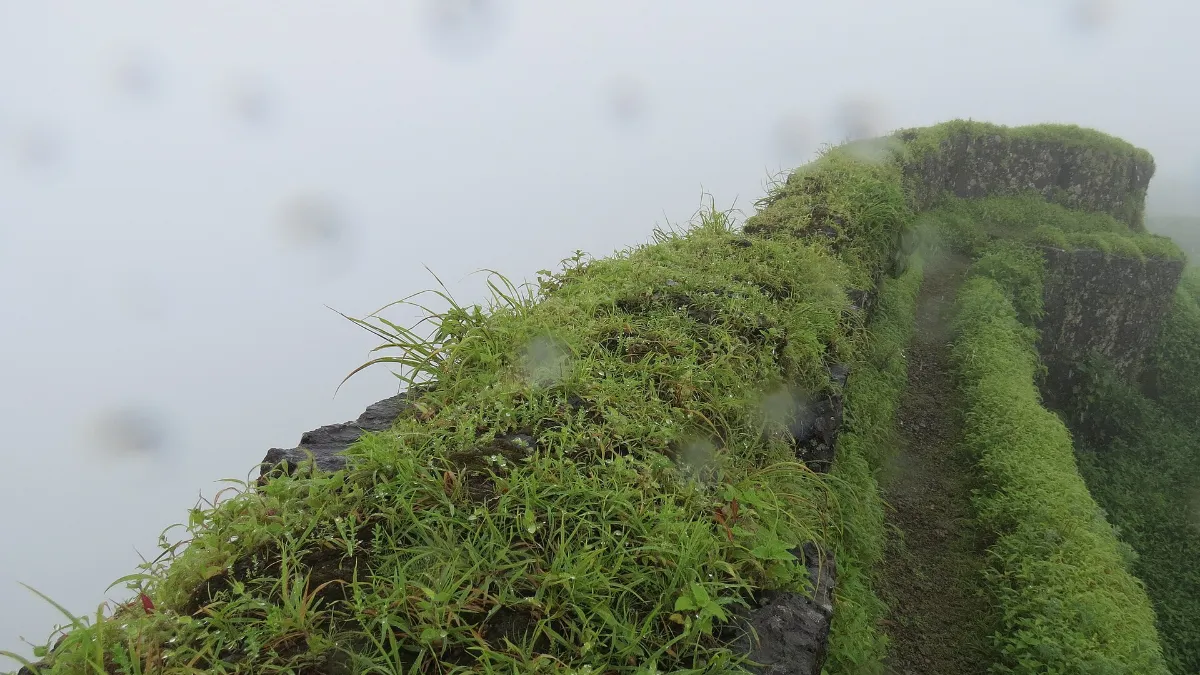
Monsoon (June to September): The forts are at their most beautiful, but trails turn slippery, streams rise fast and fog hides edges. Lohagad, Korigad and Sinhagad by the road are easier choices. Avoid exposed routes such as Zunjar Machi, Visapur’s waterfall route or the Rajgad-Torna ridge in heavy rain. The district administration sometimes issues prohibitory orders for specific tourist spots during heavy rain alerts, so check news before leaving.
Post-monsoon and winter (October to February): The best season. Clear skies, dry trails and cool mornings. This is the time for Rajgad, Torna and overnight treks.
Summer (March to May): Hot and dry. Start before sunrise, carry more water than you think you need and finish by late morning.
Safety checklist for fort treks
Most accidents on Sahyadri forts happen to people who underestimate a familiar place. A few habits prevent most of them:
- Start early and plan to be off the fort before dark. Torch light on a slippery descent is a common cause of falls.
- Carry at least 2 to 3 litres of water per person, plus some salt or electrolytes in summer.
- Wear shoes with real grip. Sports shoes with worn soles are dangerous on wet rock.
- Stay away from cliff edges for photos, especially in wind or fog.
- Do not enter water in tanks, dams or streams near forts. Depth and currents are hard to judge.
- Tell someone your plan and expected return time. Mobile signal is patchy on many routes.
- Go with an experienced group for harder routes and overnight treks.
In an emergency, dial 112. Local rescue teams and trekking clubs often assist police on fort rescues, but help can take hours to reach remote sections.
Fort etiquette: what not to do
These forts are protected monuments and, for many families, sacred places. The basic rules are simple:
- Do not write on walls, carve names or move stones.
- Carry all your plastic and wrappers back. Several forts have plastic bans in place.
- No alcohol on forts. Visitors found drunk on forts have faced police action in the past.
- Keep music off. Loud speakers disturb other visitors and wildlife.
- Respect temples and samadhis on the forts: remove footwear where asked and behave as you would in any shrine.
A suggested first-year fort plan for beginners
If you are new to trekking and want to work your way up, this sequence builds stamina and confidence:
- Sinhagad on foot from Atkarwadi.
- Shivneri with family, combined with Lenyadri.
- Lohagad from Malavli station in early monsoon.
- Purandar on a cool winter morning.
- Tikona and Tung on the same weekend.
- Rajgad with an overnight stay at Padmavati Machi.
- Torna, and then, with an experienced group, the Rajgad-Torna ridge.
For more short trips from the city, see our guide to weekend getaways near Pune this winter. For quick news on fort rules, weather alerts and road closures, follow our Travel section.
Frequently asked questions
Which is the easiest fort near Pune for beginners?
Sinhagad and Lohagad are the easiest well-known forts near Pune. Sinhagad takes about an hour to an hour and a half on foot from Atkarwadi, and Lohagad can be climbed in under an hour from Lohagadwadi village.
Which forts near Pune are UNESCO World Heritage Sites?
Shivneri, Rajgad and Lohagad in Pune district are part of the “Maratha Military Landscapes of India”, a group of 12 forts inscribed on the UNESCO World Heritage List in July 2025.
Which is the highest fort in Pune district?
Torna, also called Prachandagad, is the highest hill fort in Pune district at about 1,403 metres. It was the first fort captured by Shivaji Maharaj, in 1646.
What is the best time to visit forts near Pune?
October to February is the most comfortable season, with dry trails and clear views. The monsoon from June to September is beautiful but slippery, so choose easier forts and avoid exposed routes in heavy rain.