
Is 2 Days Enough for Pune? A Practical 2-Day Itinerary With Costs, Metro Tips and When to Visit
Two days is enough for Pune’s main sights. Here is a realistic plan for the old city, a fort and the Aga Khan Palace, with costs, transport tips and what a third day adds.

Collage: Puneri Pages (CC BY-SA 4.0). Photos via Wikimedia Commons: Aakash.gautam / CC BY-SA 3.0; Khushroo Cooper / CC BY-SA 2.0; SasmitV / CC BY 3.0; Himanshu Rane / CC BY-SA 4.0; Siddheshnampurkar / CC BY-SA 3.0; DesiBoy101 / CC BY 4.0; DesiBoy101 / CC BY 4.0
Last updated: 27 November 2026 · 5 min read · By Prashant Chaudhari
Quick answer: yes, two days is enough to see Pune’s main sights at an easy pace: the Peshwa-era old city on day one, and a fort plus the Aga Khan Palace on day two. A third day lets you add a hill station such as Lonavala or a long trek.
Pune is a working city rather than a resort town, so most of what visitors want sits in a few neighbourhoods: the old peths around Shaniwar Wada, the cantonment and Koregaon Park, and the forts on the city’s edge.
Day 1: the old city on foot
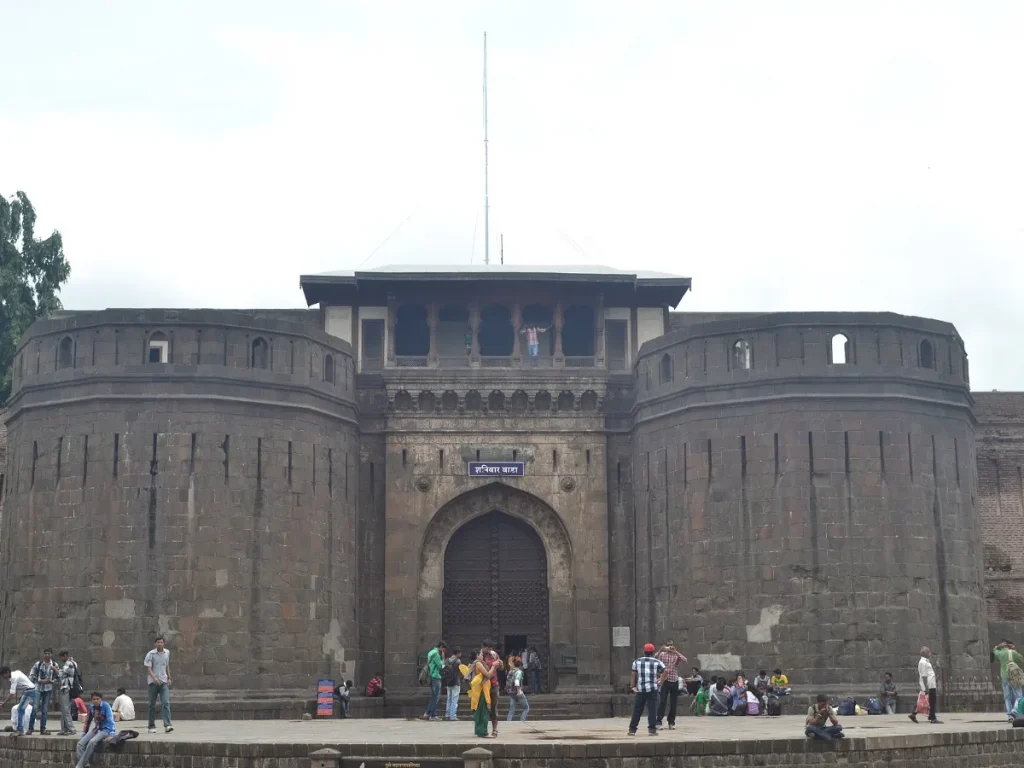
Morning: Shaniwar Wada. Start at the fortified seat of the Peshwas in Shaniwar Peth when it opens at 8 am, before the heat and the tour buses. The palace burnt down in 1828, but the walls, the Delhi Darwaza and the gardens give a good sense of its scale.
Late morning: Dagdusheth Halwai Ganpati. A ten-minute walk away, this is Pune’s best-known Ganesh temple. Weekday mornings are calmest.
Lunch: try misal pav or a thali in Sadashiv or Narayan Peth. Our Pune food guide lists the dishes and where locals eat them.
Afternoon: Raja Dinkar Kelkar Museum. One man’s collection of lamps, musical instruments, locks and everyday objects from across India. Tickets are ₹100 for Indian adults on the museum’s own site. Allow two hours.
Evening: walk Tulshibaug and Laxmi Road for shopping, then head to FC Road or JM Road for dinner. Shaniwar Wada’s light and sound show runs in the evening if you want to go back.
Day 2: a fort and the Aga Khan Palace
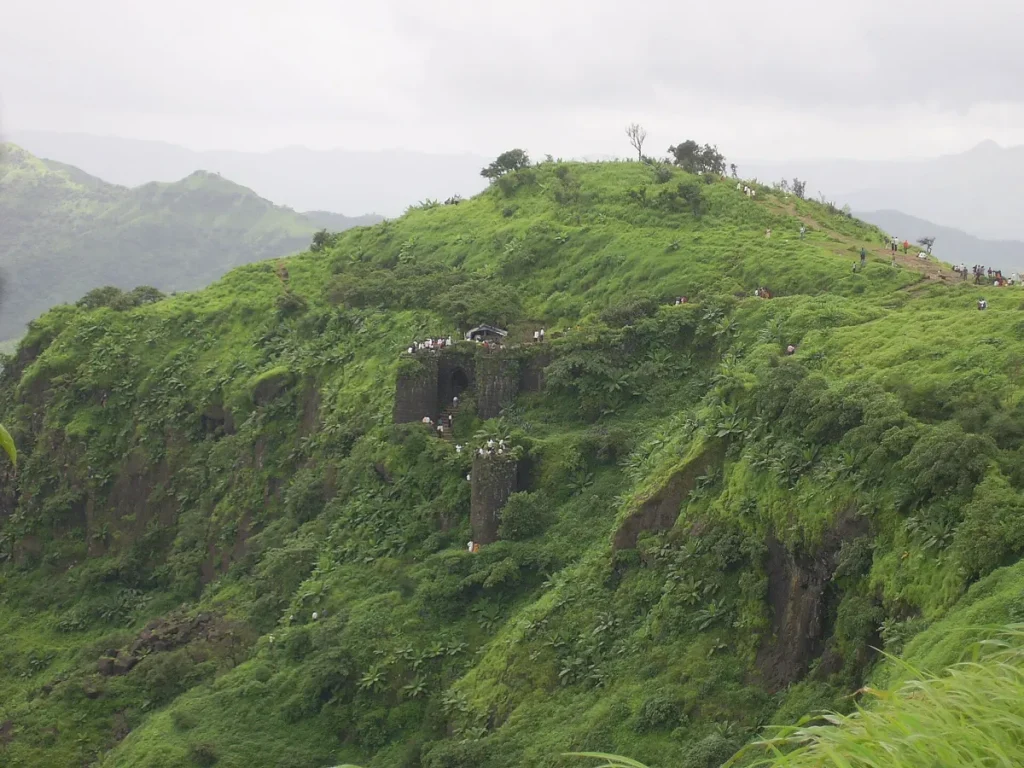
Early morning: Sinhagad. Leave by 6 am to beat traffic and enjoy the climb or drive up while it is cool. Have pithla bhakri and buttermilk at the stalls at the top. Our Sinhagad Fort guide has timings, trek time and vehicle rules.
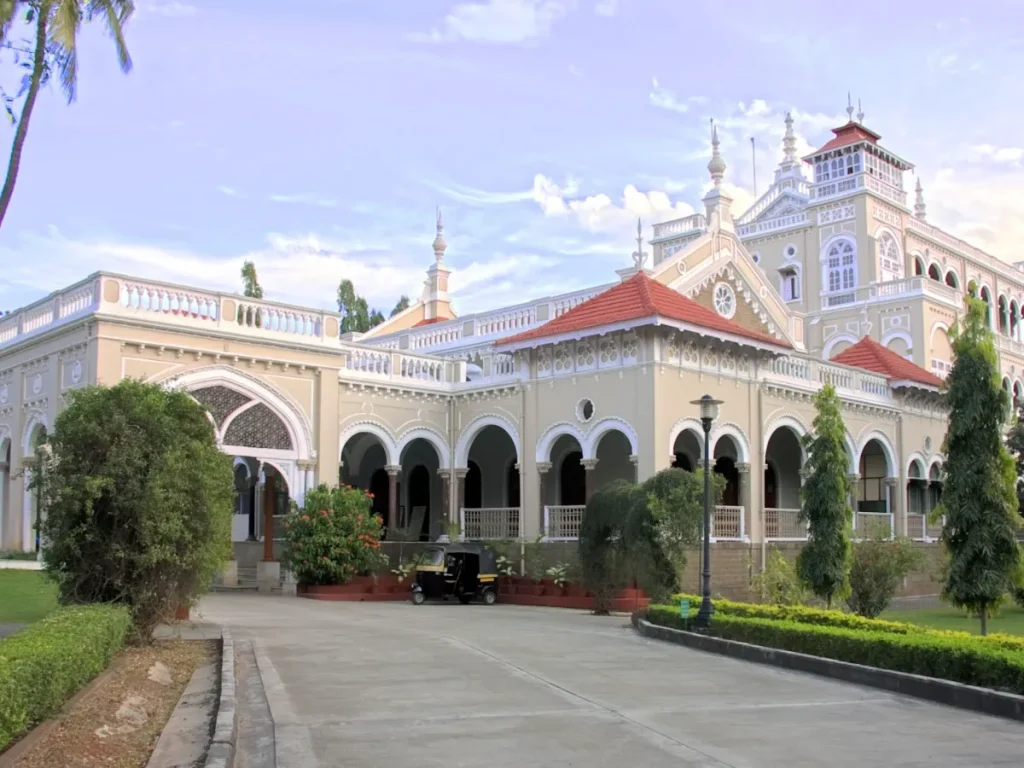
Afternoon: Aga Khan Palace. Built in 1892 by Sultan Muhammad Shah Aga Khan III on Nagar Road, it is where Mahatma Gandhi, Kasturba Gandhi and Mahadev Desai were held during the Quit India movement. The samadhis of Kasturba and Mahadev Desai are in the grounds. It is open from about 9 am to 5:30 pm.
Evening: Koregaon Park or Kalyani Nagar for cafes, or the Irani cafes of the cantonment. See our Irani cafes guide for the classics.
Getting around without a car
The Pune Metro now covers the two most useful routes for visitors: the Aqua Line between Vanaz and Ramwadi (stops include Deccan Gymkhana, Civil Court, Pune Railway Station and Yerawada), and the Purple Line between PCMC and Swargate (stops include Shivajinagar, Civil Court, Kasba Peth near Shaniwar Wada, Mandai and Swargate). Autos and app cabs fill the gaps; check our auto fare chart so you are not overcharged.
For Sinhagad, a cab or your own vehicle is far easier than public transport.
Getting into the city
If you fly in, Pune airport at Lohegaon is about 10 km from the railway station; our airport to railway station guide covers cabs, buses and the metro route. If you arrive by train, Pune Junction has its own metro station on the Aqua Line, so you can reach Deccan or Civil Court without a cab.
Where to stay for a short trip
- Deccan, Shivajinagar and FC Road: the best base for the old city, with many mid-range hotels and easy metro access.
- Near Pune Junction and Bund Garden: convenient if you arrive late by train, and close to the Aga Khan Palace.
- Koregaon Park and Kalyani Nagar: more cafes and nightlife, and higher prices.
Book early for weekends in December and January, when weddings and events fill hotels.
What to eat in two days
Try misal pav for breakfast, a Maharashtrian thali for lunch, vada pav as a snack and mastani (a thick milkshake topped with ice cream) in the evening. Bakeries in the cantonment sell Shrewsbury biscuits and nankhatai that travel well as gifts.
Is Pune expensive or cheap for tourists
Pune is moderately priced. A meal at a simple restaurant costs about ₹400 per person according to Numbeo’s November 2026 data, and street food is much cheaper. Entry tickets at monuments and museums are low. Mid-range hotels in Deccan, Shivajinagar and near the railway station are the best value; Koregaon Park and the airport area cost more.
A realistic two-day budget for one person, staying in a mid-range hotel and using cabs, is roughly ₹6,000 to ₹9,000 including stay.
When is the best time to visit
October to February is the most pleasant, with cool mornings and dry days. December nights can drop close to 10°C. March to May is hot, with April afternoons often near 40°C, so plan sightseeing for mornings. June to September is monsoon: the forts and ghats are green and beautiful, but trails are slippery.
Is 3 days enough for Pune
Three days is ideal if you want one day outside the city. The easiest add-ons are Lonavala and the Karla-Bhaja caves, Lohagad fort, or a winter drive to the places in our weekend getaways near Pune list.
Frequently asked questions
Is 2 days enough for Pune?
Yes. One day covers the old city around Shaniwar Wada and Dagdusheth; the second covers Sinhagad Fort and the Aga Khan Palace.
Is 3 days enough for Pune?
Three days is the sweet spot if you also want a day trip, for example Lonavala, the Karla and Bhaja caves or Lohagad fort.
Is Pune expensive or cheap?
Moderately priced. Simple restaurant meals are around ₹400 per person and monument tickets are low; hotels in Koregaon Park and near the airport cost the most.
What is the best month to visit Pune?
October to February, when days are dry and mornings are cool. Avoid planning outdoor sightseeing on April and May afternoons.