Pataleshwar Cave Temple Guide: 8th-Century Rock-Cut Shiva Shrine on JM Road and Its Round Nandi Mandapa
Pataleshwar is an 8th-century rock-cut Shiva cave temple in the heart of Pune. A guide to its history, the round Nandi mandapa and visiting tips.
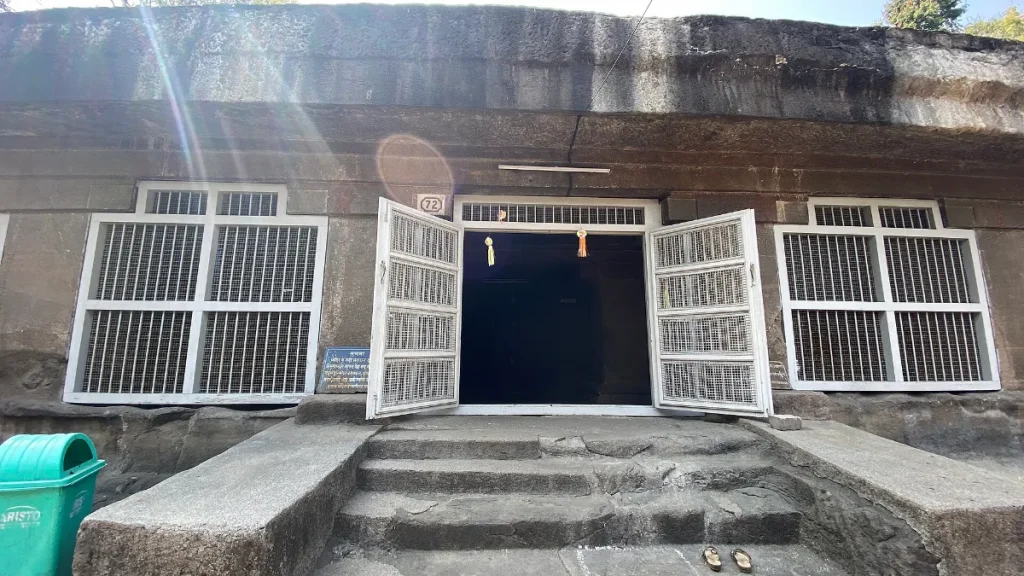
Photo: Himanshu Rane / CC BY-SA 4.0, via Wikimedia Commons
Last updated: 22 November 2026
Hidden behind a small garden off Jangli Maharaj Road in Shivajinagar is one of Pune’s oldest monuments: the Pataleshwar cave temple, carved out of a single basalt hill about 1,200 years ago. It is a quiet place in the middle of one of the city’s busiest areas.
Quick facts
- Age: About 8th century, Rashtrakuta period
- Type: Rock-cut (monolithic) cave temple dedicated to Shiva
- Location: Shivajinagar, off JM Road
- Highlight: A circular Nandi mandapa cut from the rock
- Protection: Archaeological Survey of India
History of Pataleshwar
According to Wikipedia’s entry on the site, the temple was excavated in the 8th century from a rocky hill on the north side of old Pune, west of where the Mula and Mutha rivers meet. Builders cut downward and inward into the Deccan Trap basalt rather than building with stone blocks.
The name “Pataleshwar” refers to Shiva as the lord of the underworld (patal), fitting for a shrine cut into the ground.
What to see
- The Nandi mandapa: In front of the cave is a round pavilion, cut from the same rock, with a monolithic Nandi bull on a pedestal. It originally had 16 pillars, though four pillars on the eastern side and part of the roof are lost. Round mandapas like this are rare in rock-cut architecture.
- The cave shrine: A pillared hall leads to the sanctum with a Shiva linga. Some side cells were left unfinished.
- The garden: A small garden on the site displays architectural fragments recovered from the area.
The Pune office of the Archaeological Survey of India is next door.
Tips for visiting
- Remove footwear before entering the cave, as it is an active place of worship.
- Keep your voice down. Many visitors come to pray.
- Photography of the exterior and mandapa is common. Follow any signs about photos inside.
- Morning and late afternoon light is best for the mandapa.
Visiting hours are not published on the ASI listing we checked, but the temple is generally open through the day. Allow 30 to 45 minutes for a visit.
How to reach
Pataleshwar is in Shivajinagar, close to JM Road and FC Road. It is a short walk from the Deccan and Balgandharva area. The nearest metro station is Shivajinagar on the Purple Line, or Deccan Gymkhana on the Aqua Line, both a short auto ride away.
Combine it with
You can add Pataleshwar to an old-city heritage walk with Shaniwar Wada, the Raja Dinkar Kelkar Museum and Lal Mahal. See our museums in Pune guide and Shaniwar Wada guide.
Frequently asked questions
How old is the Pataleshwar cave temple?
It dates to about the 8th century, in the Rashtrakuta period.
Where is Pataleshwar in Pune?
In Shivajinagar, off Jangli Maharaj Road, near JM Road and FC Road.
What is special about Pataleshwar?
It is carved out of a single basalt rock, and it has a rare circular Nandi mandapa in front of the shrine.
Is Pataleshwar protected by ASI?
Yes. It is a protected monument managed by the Archaeological Survey of India.