Lakshmi Pujan 2026 on Sunday, 8 November: How Maharashtrian Homes Do the Puja, and Why the Broom Is Worshipped
Lakshmi Pujan falls on Sunday, 8 November 2026. Here is how the puja is usually done in Maharashtrian homes, from coins and account books to the broom.
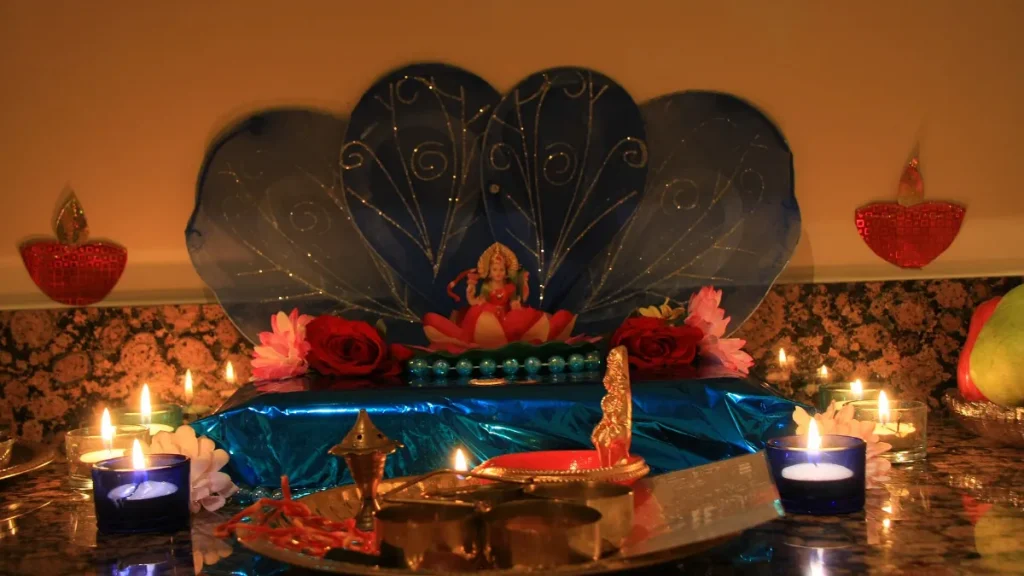
Photo: humdingor / CC BY-SA 2.0, via Wikimedia Commons
Lakshmi Pujan falls on Sunday, 8 November 2026, the main night of Diwali. In Maharashtrian homes the puja is done in the evening, and alongside the goddess, families worship money, gold, account books, a new broom and salt.
The same day begins with Narak Chaturdashi’s Abhyang Snan in the morning. Our Diwali 2026 calendar explains why both fall on 8 November this year. We do not publish city-specific muhurat timings; check your family priest or a trusted local panchang.
What goes on the Lakshmi Pujan thali?
Families vary, but a typical Maharashtrian Lakshmi Pujan setup includes:
- An idol or image of Lakshmi, often with Ganesh and Kuber
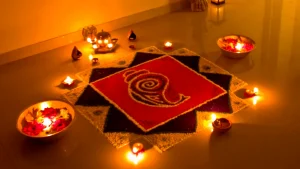
- A pat (low wooden stool) with a red cloth and a rangoli or swastika of rice
- A kalash of water with mango leaves and a coconut
- Haldi, kunku, akshata, flowers, durva and a garland
- Coins, currency notes and gold or silver jewellery to be worshipped
- Account books, a cash box or business ledger
- A new broom (kersuni) and a bowl of salt
- Diyas, agarbatti and camphor for the aarti
What is offered as naivedya?
The naivedya for Lakshmi Pujan in Maharashtra is simple. Lokmat Times lists cow’s milk flavoured with cloves, cardamom and sugar, along with dhane (coriander seeds) and jaggery, lahya (puffed paddy) and batashe. After the puja, the prasad is shared with everyone at home and with neighbours.
Most homes also place a plate of the Diwali faral before the goddess. See our Diwali faral guide.
Why are the broom and salt worshipped?
The broom is worshipped because, in tradition, it sweeps out Alakshmi, the goddess of misfortune, and makes room for Lakshmi. Many families buy a new broom for the day, worship it with haldi and kunku after the main puja, and use it to sweep the house late at night.
Salt is honoured because it is said to have emerged from the churning of the ocean along with Lakshmi, which is why it is called her brother in some retellings. A bowl of salt is placed near the puja and bowed to in thanks.
Two customs linked to the broom are widely followed: do not step on it, and never use it to hit anyone, including children or animals.
How is the puja usually done?
- Clean the house and draw rangoli at the door and near the puja.
- Set up the pat, kalash and the idol or image.
- Place coins, notes, jewellery and account books before the goddess.
- Worship with haldi, kunku, flowers and akshata, and light the diyas.
- Offer the naivedya.
- Worship the broom and the salt.
- Perform the aarti and distribute prasad.
Traders and shopkeepers do a separate puja of their ledgers, often called chopda puja, at their shops. Stock market investors may also follow Muhurat trading that evening; see our Muhurat trading 2026 guide.
Keeping the evening safe
Lakshmi Pujan night is also the busiest night for crackers and fires in Pune. Keep diyas away from curtains and rangoli powder, and save the Pune fire brigade numbers. Pune Police ban noisy crackers after 10 pm.
Frequently asked questions
When is Lakshmi Pujan in 2026?
Lakshmi Pujan is on Sunday, 8 November 2026. Narak Chaturdashi’s Abhyang Snan falls on the morning of the same day in Maharashtra.
Why is a broom worshipped on Lakshmi Pujan?
By tradition, the broom drives out Alakshmi, or misfortune, so families worship a new broom and sweep the house with it late that night.
What naivedya is offered on Lakshmi Pujan in Maharashtra?
Milk flavoured with cardamom and cloves, dhane-gul (coriander seeds and jaggery), lahya and batashe are common, along with Diwali faral.
Are account books worshipped on Lakshmi Pujan?
Yes. Traders and businesses worship their ledgers and account books, often called chopda puja.