
How Much Salary Is Good to Live in Pune in 2026? Monthly Budgets on ₹30,000, ₹70,000 and for a Family
A practical look at Pune’s cost of living in 2026: rents, food and travel, sample monthly budgets on Rs 30,000 and Rs 70,000, a family budget, and Pune versus Delhi.
Collage: Puneri Pages (CC BY-SA 4.0). Photos via Wikimedia Commons: Ujjawal.Gayakwad / CC BY-SA 4.0; Phadke09 / CC BY-SA 4.0; DesiBoy101 / CC BY 4.0; Nilotpal42 (talk) / CC BY 3.0; HokuroN / CC BY-SA 4.0; Deepak Patil / CC BY-SA 3.0; Universalashic / CC BY-SA 3.0
Last updated: 28 November 2026 · 4 min read · By Prashant Chaudhari
Quick answer: a single person can live in Pune on ₹30,000 a month by sharing a flat and using public transport, but there is little left to save. ₹50,000 to ₹70,000 gives a single professional a comfortable life with a 1BHK and regular savings. A family of four usually needs ₹1 lakh or more, depending on rent and school fees.
These are not official numbers. Pune has no government cost-of-living index, so this guide uses crowd-sourced data from Numbeo (updated 20 November 2026) and our own sample budgets.
This is general information to help you plan, not financial advice. Your costs depend on your area, lifestyle and loans.
What Pune costs in 2026: the main numbers
| Item | Typical monthly cost |
|---|---|
| 1BHK rent, central areas | about ₹24,000 |
| 1BHK rent, outer areas | about ₹17,000 |
| 3BHK rent, central areas | about ₹60,500 |
| Utilities for a mid-size flat (power, water, maintenance) | about ₹4,000 |
| Broadband | about ₹750 |
| Monthly public transport pass | ₹1,500 |
| Meal at an inexpensive restaurant | about ₹400 |
Source: Numbeo, Pune page, November 2026. Numbeo estimates a single person’s monthly costs at about ₹35,300 without rent, and a family of four at about ₹1.29 lakh without rent. Those totals assume a fairly urban lifestyle with regular eating out, so many Punekars spend less.
Where you live changes everything
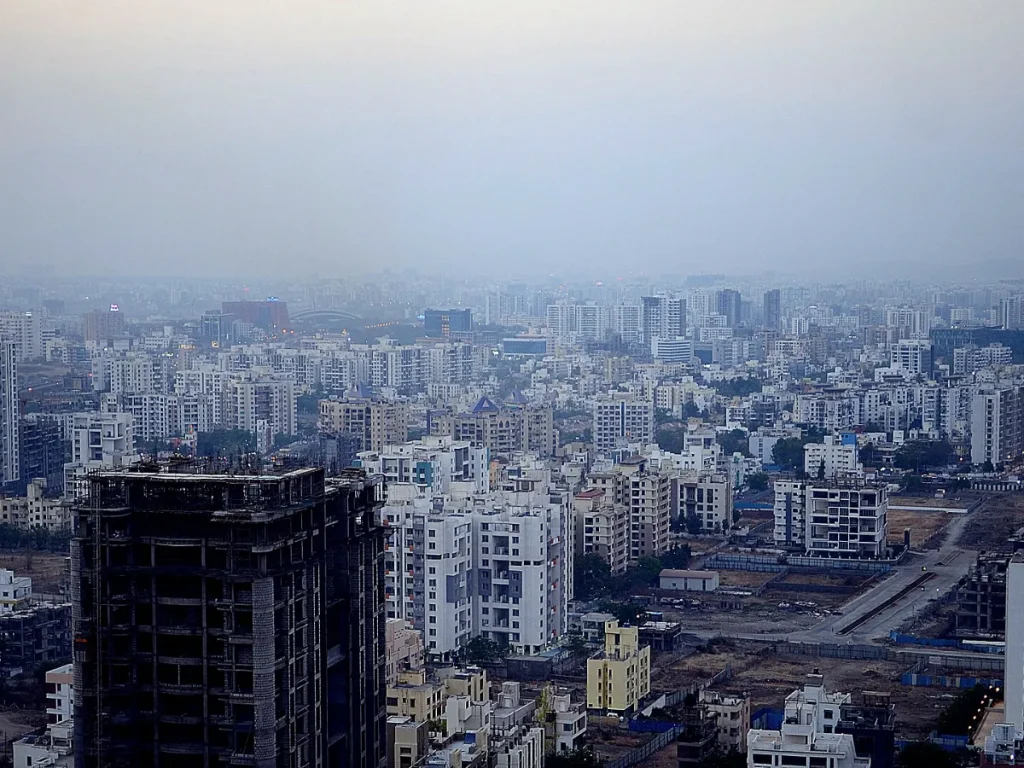
Rent is the biggest line in any Pune budget, and it swings by area. Older central areas such as Koregaon Park, Kalyani Nagar, Baner and Aundh sit at the top. The IT belts of Hinjewadi, Wakad and Kharadi are cheaper per square foot but have heavy traffic. Outer areas such as Undri, Katraj, Ravet and Moshi cost less again.
The trap is commuting. A cheaper flat in Hadapsar is no saving if you drive to Hinjewadi every day. Living near a Pune Metro station on your office route often works out cheaper overall than a lower rent far from it.
Is ₹30,000 enough in Pune
It can work for a single person, with discipline. A sample month:
| Expense | Amount |
|---|---|
| Shared flat or PG (your share) | ₹9,000 to ₹12,000 |
| Food and groceries | ₹6,000 |
| Bus pass or metro | ₹1,500 |
| Phone and internet share | ₹800 |
| Electricity and maintenance share | ₹1,200 |
| Personal and outings | ₹4,000 |
| Left to save | about ₹4,500 to ₹7,500 |
If your take-home pay is ₹30,000, check how much your employer deducts first; our explainer on PF deduction on a ₹30,000 salary shows the maths.
Is ₹70,000 a good salary in Pune
Yes, for a single person or a couple without children it is a comfortable income. A sample month for one person:
| Expense | Amount |
|---|---|
| 1BHK in an IT-belt area | ₹16,000 to ₹22,000 |
| Food, groceries and eating out | ₹12,000 |
| Two-wheeler fuel or cabs | ₹4,000 |
| Utilities, phone, internet | ₹3,500 |
| Insurance, gym, subscriptions | ₹4,000 |
| Outings and shopping | ₹6,000 |
| Left to save or invest | about ₹18,500 to ₹24,500 |
A couple sharing a 2BHK on ₹70,000 can still save, but a car loan or high rent in Baner or Koregaon Park eats into that quickly.

How much does a family of four need
Families face three costs that singles do not: a bigger flat, school fees and healthcare. A 2BHK in a decent society, school fees for two children and a car loan can together cross ₹60,000 a month before food. That is why most families find ₹1 lakh to ₹1.5 lakh a month comfortable in Pune, and ₹70,000 to ₹80,000 workable only with modest rent and government or low-fee schools.
Which city is costlier, Delhi or Pune
On Numbeo’s comparison, everyday costs excluding rent are about 5% lower in Delhi, but rents are about 14.6% higher in Delhi than in Pune. Overall, a household needs roughly the same income in both cities for the same standard of living, so the real difference comes from which area you choose and how far you commute.
Is salary growth keeping up
Pay rises vary by sector. A TeamLease report covered by Punekar News in July 2026 expected manufacturing, engineering and infrastructure jobs to see the highest average hikes in 2026-27, at about 9.4%, ahead of IT. Pune’s large auto and engineering base around Chakan, Talegaon and Pimpri-Chinchwad benefits from that.
If you are new to the city, our moving to Pune guide covers areas, rentals and paperwork.
Frequently asked questions
How much salary is good to live in Pune?
For a single person, ₹50,000 to ₹70,000 a month is comfortable with a 1BHK and savings. A family of four usually needs ₹1 lakh or more, mainly because of rent and school fees.
Is ₹30,000 enough to live in Pune?
Yes for a single person who shares a flat or stays in a PG and uses buses or the metro, but savings will be small, around ₹5,000 a month.
Is ₹70,000 a good salary in Pune?
Yes. A single person on ₹70,000 can rent a 1BHK in an IT-belt area and still save about ₹20,000 a month if they avoid large loans.
Is Pune cheaper than Delhi?
Rent is about 15% lower in Pune, but day-to-day costs excluding rent are about 5% higher, according to Numbeo, so overall costs are similar.