Jejuri Khandoba Temple Guide: Sonyachi Jejuri, Bhandara Tradition, Somvati Amavasya Yatra and Trip From Pune
Jejuri’s Khandoba temple is one of Maharashtra’s most visited shrines. A guide to the bhandara tradition, big yatra days and how to plan a trip from Pune.
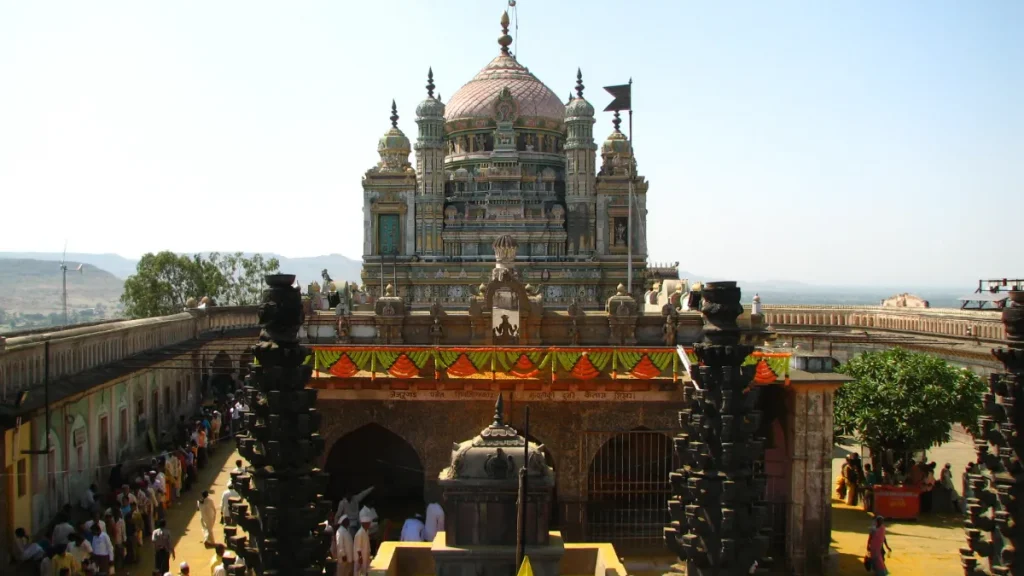
Photo: Ashishbagate13 / CC BY-SA 3.0, via Wikimedia Commons
Last updated: 21 November 2026
Jejuri, a temple town in Purandar taluka southeast of Pune, is home to the hilltop temple of Khandoba, a family deity for many Maharashtrian communities. Thanks to the clouds of yellow turmeric that devotees throw, it is known across the state as Sonyachi Jejuri, Golden Jejuri.
Quick facts
- Deity: Khandoba, also called Mhalsakant, Malhari Martand and Mylaralinga
- Location: Jejuri town, Purandar taluka, Pune district
- Elevation: about 718 m
- Known for: Bhandara (turmeric) celebrations and large yatras
- Road from Pune: Via Hadapsar or Katraj and Saswad
Why it is called Sonyachi Jejuri
According to Wikipedia’s entry on Jejuri, on Somvati Amavasya, a new moon that falls on a Monday, devotees gather at the temple, throw turmeric (bhandara) on each other and dance to drums and songs. With the hill covered in yellow powder, the scene looks golden, giving the town its nickname.
Bhandara is offered to Khandoba on regular days too. Many families come to Jejuri after a wedding, so newly married couples are a common sight.
The temple
The main temple on the hill has two parts, a mandap (hall) and the garbhagriha (sanctum). The climb from the town is a long flight of stone steps lined with deepmals (lamp towers) and small shops selling bhandara, coconuts and offerings. Take it slowly, as the steps get hot by late morning.
Big festival days
- Somvati Amavasya: The biggest crowds, with the turmeric celebration and a palkhi procession.
- Champa Shashthi: A six-day festival in the Marathi month of Margashirsha, around November or December.
- Dasara: Another busy day, with night-long celebrations at the temple.
If you want a quiet darshan, go on a normal weekday morning. On festival days, expect heavy traffic on the Saswad road and parking far from the temple.
Tips for your visit
- Wear clothes you do not mind getting turmeric on.
- Keep phones and cameras in a pouch on yatra days, as bhandara gets everywhere.
- Carry water and a cap.
- Older visitors can rest on landings along the steps.
How to reach Jejuri from Pune
By road, the usual route is through Hadapsar and Saswad, or Katraj and Saswad. MSRTC buses run regularly from Swargate. Jejuri also has a railway station on the Pune-Miraj line.
Combine Jejuri with
Purandar fort, with its base at Narayanpur, is on the same side of the district. For other temples within a day’s drive, see our weekend getaways near Pune.
Frequently asked questions
Why is Jejuri called Sonyachi Jejuri?
Because devotees throw turmeric (bhandara) during festivals, turning the hill golden yellow.
Which god is worshipped at Jejuri?
Khandoba, also called Malhari Martand and Mhalsakant.
When is the biggest yatra at Jejuri?
Somvati Amavasya, when the new moon falls on a Monday, draws the largest crowds.
How do I reach Jejuri from Pune?
By road via Saswad, by MSRTC bus from Swargate, or by train on the Pune-Miraj line.