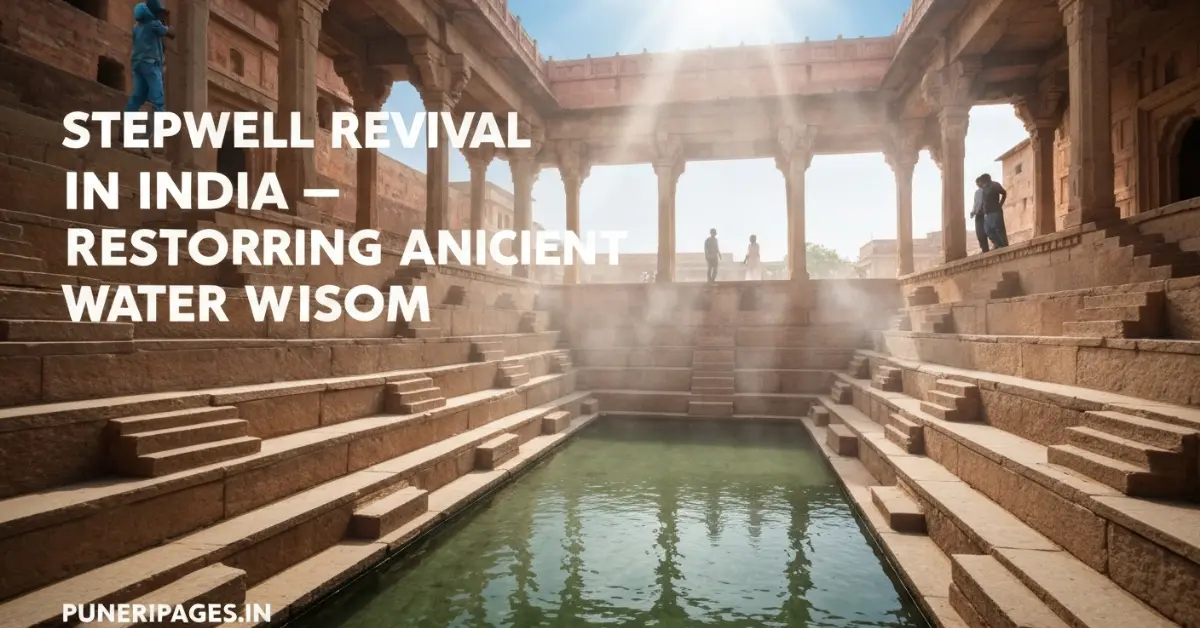
Restored stepwells are becoming vital water sources again as the Stepwell Revival in India movement blends heritage with sustainable water conservation.
By Prashant for PuneriPages.in
India is witnessing a remarkable resurgence of its ancient stepwells, known historically as baolis, vavs, or pushkarnis, as communities and governments rediscover the unmatched brilliance of traditional water architecture. With growing concerns over groundwater depletion, climate change, drought cycles, and water scarcity, the nation is turning its attention back to a time-tested solution—ancient stepwells that once sustained entire civilizations
Table of Contents
These architectural masterpieces, built centuries ago, are being revived across states like Gujarat, Rajasthan, Madhya Pradesh, Maharashtra, and Karnataka, proving that heritage can once again become a lifeline for India’s water-stressed regions.
The Historical Genius of India’s Stepwells
We acknowledge that India’s stepwells stand among the world’s most sophisticated and ecologically sound water management systems. Carved deep into the earth, often descending multiple stories, these stepwells served as community hubs, disaster-resilient water reserves, and temperature-regulated shelters. Structures like Rani ki Vav, Agrasen ki Baoli, and Adalaj ni Vav illustrate the architectural finesse and engineering mastery of ancient India.
Stepwells were designed not just for storing water but also for groundwater recharge, rainwater harvesting, temperature control, and community gathering. They represent a profound understanding of hydrogeology long before modern engineering existed.
Why India Is Reviving Stepwells Today
The revival of ancient stepwells is not just an act of heritage preservation—it is a precise response to India’s escalating water crisis. Today, more than 600 districts face groundwater stress, and major cities are predicted to run out of groundwater in the coming years.
We highlight key reasons behind the renewed focus on stepwells:
1. Climate Change and Erratic Rainfall
With unpredictable monsoons and extended dry spells, communities are turning back to structures that can naturally store and conserve water for long periods.
2. Groundwater Depletion
India is the world’s largest groundwater extractor. Stepwells help recharge aquifers, reduce evaporation, and maintain water tables even in arid zones.
3. Low-Cost, Sustainable Water Infrastructure
Unlike modern cement reservoirs, stepwells are built with natural ventilation, deep shafts, and gravity-fed systems that require minimal maintenance.
4. Cultural and Environmental Revival
Stepwells reconnect communities with their heritage while serving as ecological sanctuaries for birds, flora, and fauna.
Communities Leading the Revival Movement
Across India, we see remarkable community-led initiatives transforming abandoned, silt-filled stepwells into clean, functional water bodies again.
Rajasthan
Villages in Alwar, Udaipur, Bundi, and Jaipur have desilted centuries-old baolis, turning them into primary water sources for drinking, irrigation, and livestock.
Gujarat
The state has restored dozens of iconic vavs, integrating them into rainwater harvesting networks and tourism regeneration programs.
Madhya Pradesh
Cities like Indore and Dewas have revived countless bawadis and kunds, helping recharge groundwater and reduce water scarcity.
Karnataka & Maharashtra
Traditional temple stepwells, locally called pushkarnis, are being restored to support both religious communities and village water supply systems.
How Stepwell Revival Works: A Technical Insight
Reviving a stepwell requires a combination of traditional knowledge and modern techniques. The process typically involves:
- Desilting the Well: Removing decades of accumulated mud and debris
- Repairing Masonry: Strengthening walls using sandstone, lime, and natural materials
- Restoring Water Channels: Reconnecting ancient inlets and pathways that bring rainwater
- Clearing Aquifers: Ensuring underground streams flow into the stepwell
- Installing Filters: Adding gravel, sand, and charcoal for natural purification
- Community Participation: Encouraging locals to maintain and monitor the structure
These steps not only restore water supply but also breathe life back into the surrounding ecosystem.
Impact of Revived Stepwells on Local Communities
The outcomes of stepwell restoration have been transformative:
1. Reliable Water Supply
Villages that once struggled for water now enjoy year-round access.
2. Groundwater Recharge
Revived stepwells replenish deep aquifers, improving borewell yield and agricultural productivity.
3. Reduced Urban Heat
Stepwells act as natural coolers, lowering temperatures in cities and towns.
4. Tourism and Economic Growth
Restored heritage sites attract visitors, artists, and cultural festivals, providing livelihoods to locals.
5. Empowerment of Women
Reduced time spent fetching water improves health, education, and economic opportunities for women and girls.
Stepwells as Models for Modern Water Policy
India’s water planners increasingly view stepwells as blueprints for climate-resilient infrastructure. Policymakers emphasize:
- Integrating stepwells into Smart City missions
- Adding them to national groundwater recharge programs
- Declaring protected zones around historical stepwells
- Creating digital maps of India’s ancient water bodies
This approach merges heritage conservation with future-ready sustainability solutions.
Government Initiatives Supporting Stepwell Revival
Several state governments, along with national ministries, have launched programs to safeguard stepwells:
- Jal Shakti Abhiyan promotes desilting and restoration
- Archaeological Survey of India (ASI) funds heritage stepwell renovation
- Municipal bodies integrate stepwells into water supply networks
- NGOs like Jal Bhagirathi Foundation support rural revival efforts
These multi-level interventions highlight India’s holistic approach to blending tradition with technology.
A Cultural Renaissance Through Water Conservation
Reviving stepwells has become more than a necessity—it is a cultural renaissance. These majestic structures symbolize the wisdom of ancient India, reminding us of a time when water management was both scientific and sacred. As communities rediscover their significance, stepwells are being celebrated as living monuments that protect the future while honoring the past.
Conclusion: Ancient Wisdom Steering India’s Water Future
India’s revival of ancient stepwells represents a powerful fusion of heritage, resilience, and ecological intelligence. As water scarcity grows, these architectural marvels are emerging as sustainable solutions that modern engineering alone cannot provide. By restoring stepwells, India is reclaiming its legacy of harmony with nature—ensuring water security for generations to come.
About The Author