Apple’s next era: The race begins to decide who will replace Tim Cook at Apple as the tech giant’s future CEO.
By Prashant for PuneriPages.in
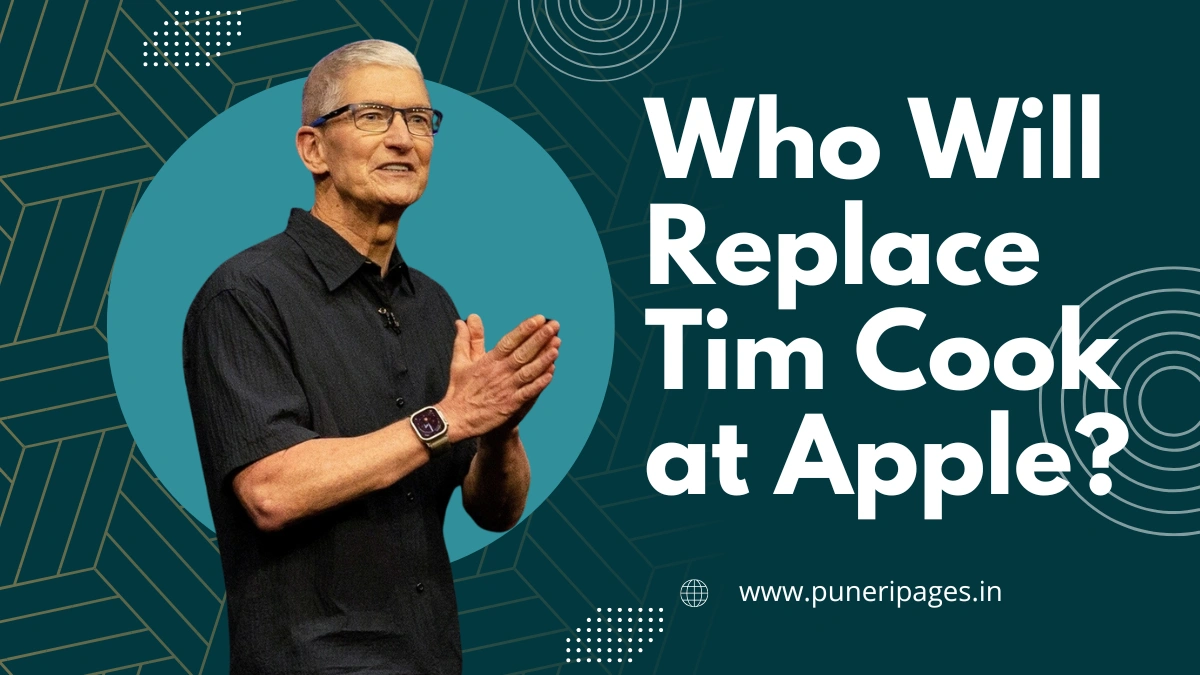
As Apple approaches a new decade of innovation, speculation is mounting over who will succeed Tim Cook as the company’s next CEO. After more than a decade of record-breaking performance, Cook’s eventual retirement is inevitable — and the world is watching to see who will take the reins of the $3-trillion tech giant.
Apple’s succession planning has always been strategic and secretive, but multiple reports and insider discussions point to a few powerful contenders within the company’s elite leadership circle. Let’s dive into the possible candidates, what makes each of them a strong fit, and what Apple’s future may look like under new leadership.
Table of Contents
Tim Cook’s Legacy: A Decade of Operational Brilliance and Strategic Expansion
Since taking over from Steve Jobs in 2011, Tim Cook has transformed Apple into a financial powerhouse. Under his leadership, Apple’s market capitalization has skyrocketed from $350 billion to over $3 trillion, making it the world’s most valuable company.
Cook’s leadership has been defined by:
- Operational excellence – Streamlined supply chains and record production efficiency.
- Strategic diversification – Expanding beyond iPhones into services like Apple TV+, Apple Music, and iCloud.
- Sustainability and inclusivity – Making Apple a leader in environmental and social responsibility.
However, with Cook approaching his mid-60s, the tech industry anticipates a planned and deliberate leadership transition — one that will shape the company’s innovation trajectory for decades.
The Leading Candidate: John Ternus – The Hardware Visionary
Why John Ternus Is the Frontrunner
According to multiple credible sources, including Bloomberg and The Times of India, John Ternus, Apple’s Senior Vice President of Hardware Engineering, is the top contender to replace Tim Cook.
John Ternus joined Apple in 2001 and currently oversees all hardware design, including the iPhone, Mac, iPad, and AirPods divisions. His deep engineering expertise, combined with two decades of internal experience, makes him a natural successor to Cook’s operational leadership style.
Ternus’ Major Achievements
- Spearheaded the transition to Apple Silicon, introducing the M1 and M2 chip families — a defining moment in Apple’s hardware evolution.
- Oversaw major redesigns of the MacBook Pro, iMac, and iPad Pro, aligning them with Apple’s sleek and sustainable design ethos.
- Managed Apple’s supply chain resilience during the COVID-19 pandemic, ensuring minimal disruption in production.
Why Apple’s Board May Favor Him
Apple’s board values stability, internal continuity, and deep technical roots, all of which Ternus embodies. Much like Cook succeeded Jobs for his operational expertise, Ternus represents the next phase of hardware excellence — leading Apple’s innovations in AR/VR, wearables, and automotive technologies.
Craig Federighi – The Software Genius and Public Face of Apple
The Case for Federighi
Known as the charismatic face behind Apple’s major product launches, Craig Federighi, Apple’s Senior Vice President of Software Engineering, is another prominent candidate.
Federighi oversees macOS, iOS, and iPadOS, making him the architect of Apple’s seamless software ecosystem. His stage presence, technical brilliance, and creative communication skills mirror the energy once associated with Steve Jobs.
Key Strengths
- Championed privacy-focused software development, setting Apple apart from data-driven rivals.
- Introduced groundbreaking software features such as FaceTime enhancements, iCloud Keychain, and on-device AI processing.
- A strong communicator, capable of connecting with developers, consumers, and investors alike.
While Federighi is beloved by the Apple community, insiders suggest that his strengths lie in product vision rather than corporate management — making him a potential Chief Product Officer under a Ternus-led Apple.
Sabih Khan – The Operational Powerhouse
Apple’s Supply Chain Architect
Appointed as Apple’s Chief Operating Officer in 2025, Sabih Khan has been instrumental in managing Apple’s global manufacturing and logistics ecosystem.
A 25-year Apple veteran, Khan has led the company’s green manufacturing initiatives, ensuring ethical sourcing and carbon-neutral goals.
Why He’s a Dark Horse Contender
- Maintains unmatched expertise in operations and product delivery — a skill set that defined Tim Cook’s success.
- Commands deep trust within Apple’s industrial and supplier networks.
- Represents diversity and global leadership, being of Indian descent — aligning with Apple’s inclusive values.
If Apple prioritizes a steady, operationally focused transition, Sabih Khan could emerge as a surprise choice.
Greg Joswiak – The Brand and Strategy Visionary
Greg “Joz” Joswiak, Apple’s Senior Vice President of Worldwide Marketing, has spent over 30 years crafting Apple’s public image and marketing philosophy.
He succeeded Phil Schiller and has since played a pivotal role in launching major products, building emotional connections between consumers and technology.
While Joswiak excels at strategy and brand leadership, he is less involved in hardware or operations, which may limit his chances of taking the CEO role — but his influence will remain vital regardless of who takes charge.
What Apple’s Board Is Looking For in a New CEO
Apple’s next CEO will need to embody a hybrid of creativity, operational excellence, and technological foresight.
Key qualities expected by the board:
- Technical mastery – To guide Apple’s innovation in AI, AR, and semiconductor design.
- Leadership continuity – Ensuring smooth execution of Apple’s decade-long product roadmap.
- Global diplomacy – Navigating regulatory pressures, especially in India, China, and the EU.
- Visionary communication – Inspiring employees, investors, and consumers alike.
Tim Cook himself has stated that Apple’s “succession plan is well underway,” hinting at an internal successor groomed for several years.
When Could the Transition Happen?
Reports suggest that Cook may retire around 2026–2027, after completing major milestones — including the expansion of Apple’s Vision Pro ecosystem, the Apple Car initiative, and deeper AI integration across devices.
Cook has expressed a desire to ensure Apple’s long-term strategy is locked in before stepping down, meaning the next CEO will inherit a clear, ambitious roadmap.
What the Next Era of Apple Could Look Like
Apple’s post-Cook era is expected to focus on:
- Artificial Intelligence and Generative Computing – Seamless integration of on-device AI with Apple’s ecosystem.
- Mixed Reality and AR Expansion – With Vision Pro as the centerpiece of spatial computing.
- Electric and Autonomous Mobility – Apple’s long-rumored car project could redefine mobility.
- Sustainability and Ethics – Continuing Apple’s commitment to carbon neutrality and circular economy.
- Emerging Market Expansion – Particularly in India, where Apple has ramped up local production and retail presence.
Final Thoughts: A New Chapter for Apple’s Future
Apple’s next CEO will inherit a company at the pinnacle of success yet facing unprecedented challenges — from AI competition to global regulatory scrutiny.
While John Ternus currently leads the race, the final decision will reflect Apple’s evolving priorities — innovation, operations, and leadership style.
Whoever succeeds Tim Cook will not merely run a company; they will define the next generation of technological progress and human interaction.
If Apple’s history teaches us anything, it’s that the next leader will not just preserve Cook’s legacy — they’ll reinvent it.
FAQ’s
1. When is Tim Cook expected to retire from Apple?
While Tim Cook has not officially announced his retirement, reports suggest he may step down around 2026 or 2027. Cook has stated that Apple’s succession planning is “well underway,” indicating that internal preparations for the next leadership phase have already begun.
2. Who is the leading candidate to replace Tim Cook as Apple’s CEO?
The most likely successor is John Ternus, Apple’s Senior Vice President of Hardware Engineering. He has been with Apple since 2001 and currently oversees the company’s hardware divisions, including the iPhone, Mac, iPad, and AirPods. His engineering expertise and deep experience make him the top contender.
3. What makes John Ternus the frontrunner for the CEO role?
John Ternus has earned credibility for leading the Apple Silicon transition and managing Apple’s supply chain resilience during the pandemic. His calm leadership, technical mastery, and long tenure at Apple align with the board’s preference for stability and internal promotion.
5. Who is Sabih Khan, and why is he being considered?
Sabih Khan, Apple’s Chief Operating Officer, has worked at Apple for over 25 years. He is responsible for Apple’s global supply chain, manufacturing, and operations. As a veteran operations leader — much like Cook before becoming CEO — Khan could be a surprise candidate if Apple seeks continuity in operations-focused leadership.
About The Author