Two Darcys. Two Legacies. Which one stole your heart? Let me know if you want a mobile-optimized version or vertical layout for Instagram or Pinterest!
By Prashant for PuneriPages.in
When it comes to Jane Austen adaptations, few debates spark as much passionate discourse as the question: Which Pride and Prejudice reigns supreme? Is it the faithful, six-hour slow-burn of the 1995 BBC series or the sweeping, cinematic elegance of the 2005 film? For longtime fans like me, this isn’t just a casual preference—it’s a full-on emotional allegiance. And let’s be honest: at the heart of this debate are not just two different productions but two wildly distinct interpretations of Austen’s beloved characters—especially the iconic duo: Elizabeth Bennet and Mr. Darcy.
This article isn’t some “where are they now?” fluff. It’s me, going full Austen nerd, breaking down the casting choices that shaped these adaptations and why, even after all these years, I still argue about Darcy in the lake vs. Darcy in the rain over coffee with friends.
Table of Contents
Mr. Darcy: Colin Firth (1995) vs. Matthew Macfadyen (2005)
The Contenders:
- Colin Firth: The Brooding Aristocrat
- Matthew Macfadyen: The Vulnerable Romantic
Firth’s Interpretation: Firth’s Darcy is all tight-lipped tension. Every glance, every clenched jaw speaks volumes. He holds back like he’s in constant internal battle with his own heart. Watching him unravel, slowly and reluctantly, is like watching the book come to life one restrained emotion at a time. I swear, his silence is a language.
Macfadyen’s Interpretation: Then there’s Macfadyen, who flips that script. His Darcy isn’t proud—he’s just awkward and shy. That stammering, heart-on-sleeve approach makes him feel incredibly real. His Darcy isn’t bottling up pride, he’s drowning in nerves. That rain-soaked confession? Pure cinematic vulnerability.
Defining Moments:
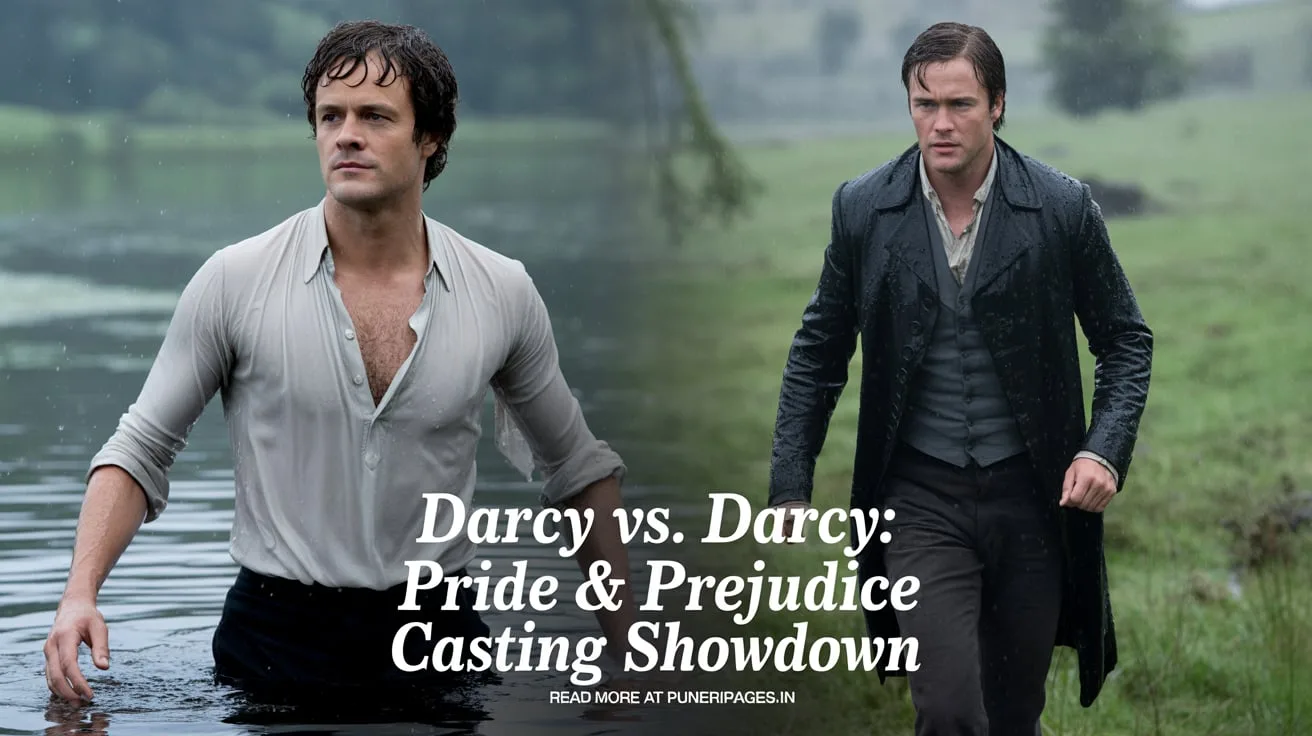
- Firth: The lake scene. You know the one. White shirt. Wet hair. Every 90s Austen fan felt that moment.
- Macfadyen: The subtle hand flex after brushing Lizzie’s fingers. So small, but it floored every hopeless romantic I know.
The Verdict: Firth is Austen’s Darcy in HD: proud, principled, eventually softened. Macfadyen is the Darcy of our emotional era: earnest, vulnerable, and aching with longing.
Elizabeth Bennet: Jennifer Ehle (1995) vs. Keira Knightley (2005)
The Contenders:
- Jennifer Ehle: The Witty Realist
- Keira Knightley: The Fiery Romantic
Ehle’s Interpretation: Jennifer Ehle gives us a Lizzie who is utterly self-possessed. She’s thoughtful, razor-sharp, and quick with a smirk. Her confidence doesn’t shout—it hums beneath every line. Watching her navigate society’s expectations with such composure is honestly a masterclass.
Knightley’s Interpretation: Keira’s Lizzie, on the other hand, is fierce. She’s younger, more impulsive, and full of spark. She glares. She stomps through the mud. She yells at Darcy. And somehow, all of that raw energy works. She doesn’t just defy expectations—she clashes with them.
Defining Moments:
- Ehle: That cool, calculated rejection of Darcy’s first proposal. No dramatics, just devastating elegance.
- Knightley: The candlelit almost-kiss in the rain. Tension so thick you could slice it with a hatpin.
The Verdict: Ehle’s Lizzie is mature, poised, and Austen-perfect. Knightley’s is emotionally fiery and rebellious. They’re both brilliant—just depending on which Lizzie you see when you read the book.
Jane Bennet: Susannah Harker (1995) vs. Rosamund Pike (2005)
The Contenders:
- Susannah Harker: The Classic Beauty
- Rosamund Pike: The Ethereal Grace
Harker’s Interpretation: Harker’s Jane is all delicacy. She’s the serene center of the Bennet family—quiet, gentle, and practically glowing with virtue. It’s subtle to the point of restraint, but that makes her emotional shifts all the more poignant.
Pike’s Interpretation: Pike’s Jane, though, feels like she stepped out of a dream. She’s heartbreakingly sincere, and her sadness hits deeper. When she cries, I cry. She gives Jane an inner life that’s gentle but still tangible.
The Verdict: Harker is the epitome of Regency grace. Pike is the more emotionally resonant sister-next-door.
Mr. Bingley: Crispin Bonham-Carter (1995) vs. Simon Woods (2005)
The Contenders:
- Crispin Bonham-Carter: The Earnest Gentleman
- Simon Woods: The Lovable Puppy
Bonham-Carter’s Interpretation: His Bingley is adorably awkward, constantly looking to Darcy for approval like a nervous best mate at a party. He’s kind, considerate, and incredibly proper.
Woods’ Interpretation: Simon Woods turns Bingley into the most endearing golden retriever of a man. He’s got all the charm, enthusiasm, and fumbling sweetness of a rom-com sidekick. And it’s impossible not to root for him.
The Verdict: Bonham-Carter is your traditional gentleman caller. Woods? He’s the boy you text your best friend about immediately after the first date.
Fan Debates: What Do These Versions Really Say About Pride and Prejudice?
The Faithful vs. Cinematic Debate
The 1995 series luxuriates in Austen’s world. Six episodes means time to savor every glance, every subplot, every barbed line of dialogue. It’s detailed, immersive, and so very British.
The 2005 film, though? It’s like diving headfirst into the emotion of the story. The music swells, the camera lingers, and suddenly you’re feeling Austen instead of just reading her. That atmosphere? Chef’s kiss.
The Smolder vs. The Stride
Firth gives us the eternal brooding gaze. Macfadyen gives us that long, sweeping stride through the misty morning. Both burned into our collective fan memory. Different energies. Same swoon factor.
Final Verdict: Two Adaptations, Two Legacies
If you’re still waiting for me to pick a side, sorry to disappoint. Because honestly?
- If you love rich detail, faithful storytelling, and a Darcy that looks like he stepped out of the original manuscript, the 1995 version is pure gold.
- But if you crave cinematic magic, emotional electricity, and a Lizzie who burns as brightly as the candles lighting her scenes, the 2005 film is unbeatable.
Both casts brought Austen’s world to life in ways that continue to resonate. One is a literary mirror. The other is a romantic echo.
And that, dear reader, is why this debate will never die.
Team Lake or Team Rain? Let me know your favorite in the comments!
About The Author