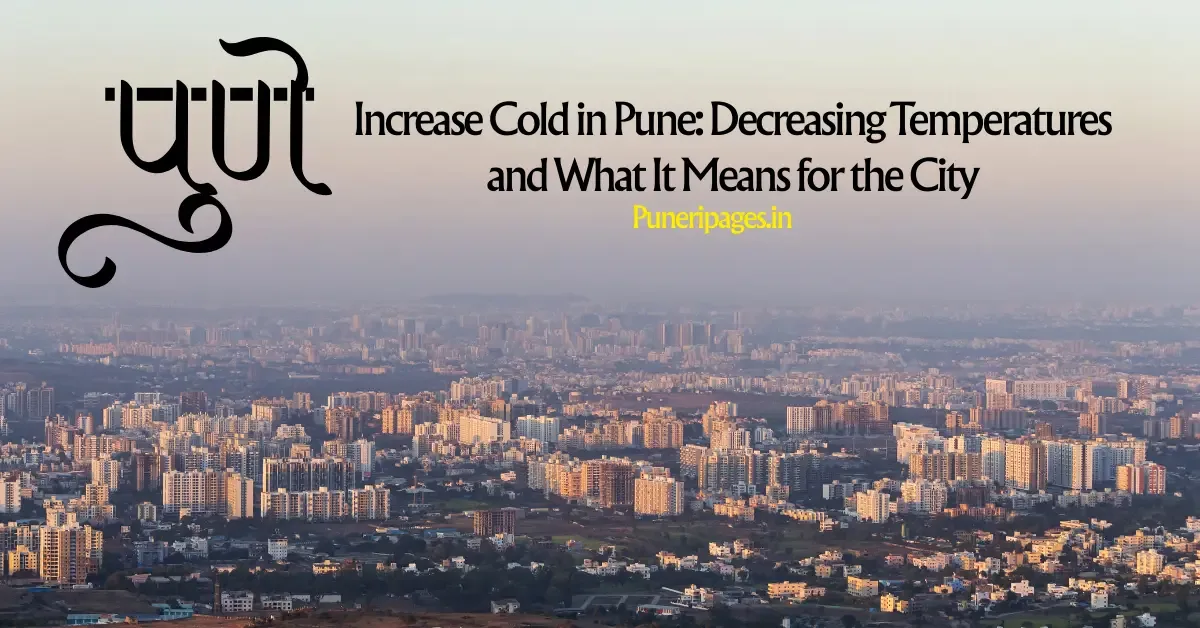
Pune witnesses an increase in cold and decreasing temperatures this November 2025.
By Prashant for PuneriPages.in
We are witnessing a sharp descent in minimum temperatures across Pune district, signalling the early onset of winter and raising concerns around health, infrastructure and air quality. With readings plunging into the single-digits and persistent dry north-westerly winds in play, it is essential to understand how this increase in cold is affecting daily life, what the underlying causes are, and how residents and authorities should respond.
Table of Contents
Rapid Temperature Drop Across Pune District
Recent data show that Pune and its environs are experiencing unusually low minimums for this time of year. In the city proper, sites like Shivajinagar logged lows of 9.4 °C — the first single-digit reading of the season. Rural and semi-urban stations near Haveli taluka were colder still, falling to 6.9 °C on one morning. Meteorologists attribute the drop to a combination of clear skies, low humidity and strong, dry north-westerly winds that enhance nocturnal heat loss.
Moreover, these values are significantly below normal for early November — in many areas 4-6 °C lower than typical. While daytime highs remain moderately comfortable, the widening gap between day and night temperatures is notable and delivering a distinct chill in the early mornings and evenings.
Key Drivers Behind the Unseasonal Chill
Dry North-Westerly Winds and Clear Skies
The dominance of dry north-westerly winds, coupled with reduced cloud cover, leads to rapid radiational cooling at night. With no cloud blanket to trap heat, the surface loses warmth quickly.
Residual Post-Monsoon Conditions
Following the retreat of the monsoon, humidity levels drop and the air becomes drier. This reduces heat retention during night, making minimum temperatures dip further.
Larger Regional Cold Spell and Anomalies
The pattern in Pune reflects a broader early-winter cold burst sweeping across central and peninsular India. The India Meteorological Department (IMD) flagged parts of Maharashtra, Madhya Pradesh and surrounding regions for below-normal minimums and isolated cold wave conditions.
The Impact of Increased Cold on Pune’s Residents
Health Risks and Respiratory Concerns
The sudden chill has been accompanied by deteriorating air quality and increased respiratory ailments in Pune. Clinics report higher incidents of asthma, allergic bronchitis, coughs and viral infections. Children, older adults and people with pre-existing conditions are particularly vulnerable as cold, dry air and pollutants combine to aggravate airways.
Infrastructure and Service Disruption Risks
Low nighttime temperatures have implications for urban infrastructure — water lines, outdoor utility assets and even transport systems may need extra vigilance. Frequent temperature swings can stress pipes, coatings and electrical systems.
Lifestyle and Daily Routine Adjustments
Residents report bundling up earlier, switching on heaters or blankets sooner, and finding that mornings and evenings are now distinctly chilly. The cooler nights may extend heater usage, change commuting rituals and raise energy demand during off-peak hours.
What’s Next? Forecast and Short-Term Outlook
Meteorological agencies suggest that while further major falls in minimum temperature are unlikely, the chilly trend will persist for a few more days. The IMD expects minimums to gradually rise by 1-2 °C as wind patterns shift and moisture levels inch upward. Updates indicate that from around 22 November, Pune may begin to see partly cloudy skies and possibly isolated light rainfall — which could moderate the cold conditions.
Still, residents should remain prepared for cold mornings, mist or fog, and modest but noticeable weather shifts for the next week.
Practical Advice for Pune Residents During the Chill
Dress Smart and Protect Yourself
Layering remains the best defence — focus on covering the head, neck, hands and feet. For children and the elderly, ensure warm bedsheets and early warming routines.
Monitor Indoor & Outdoor Air Quality
With cold nights, indoor heating might increase, but so will the risk of poor indoor air circulation or pollutant accumulation. Open windows briefly during the day and maintain air-purification if available.
Manage Commutes and Transport Carefully
Fog, lower temperatures and dewy roads can impair visibility. Limit early morning exposure, adjust travel timing and ensure vehicles are warmed up.
Protect Your Home and Infrastructure
Check for draughts, ensure insulation, wrap vulnerable pipes and monitor utility systems. If water tanks are roof-mounted, allow for slight chill-related expansion or condensation.
Why This Cold Surge Matters in a Broader Context
The increased cold and rapid dip in minimum temperatures serve as a reminder of how climate variability is impacting subtropical zones like Pune. While such early-winter drops are within natural variability, their alignment with regional patterns of wind change, dryness and low humidity make them noteworthy. As much of India readies for its winter season, Pune’s early exposure underscores the need for resilient urban planning, health safeguards and infrastructure readiness.
About The Author