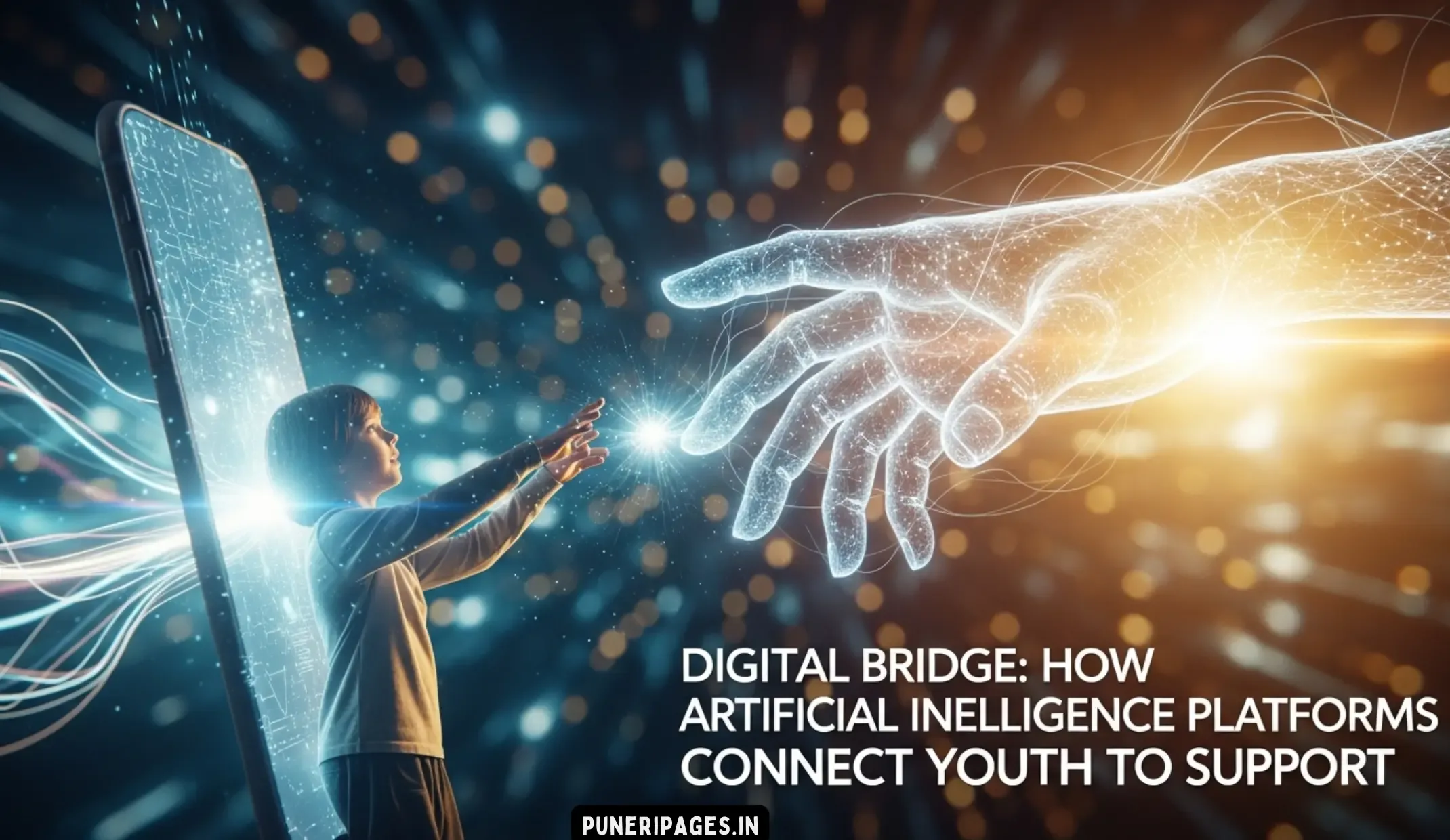
AI platforms like Wysa and Woebot are building digital bridges to connect distressed youth with counselors and real-world support systems.
By Prashant for PuneriPages.in
In an era dominated by screens, social media, and digital communication, a silent crisis brews among the world’s youth — mental health distress. From anxiety and depression to isolation and burnout, young people across the globe are struggling to cope. However, as technology often magnifies these issues, it is also emerging as a lifeline. The rise of Artificial Intelligence (AI) platforms has created a digital bridge, connecting distressed youth to immediate, personalized, and real-world mental health support.
This revolution is transforming the way society understands, detects, and responds to emotional distress — blending data-driven intelligence with human empathy.
Table of Contents
The Mental Health Crisis Among Youth
According to the World Health Organization (WHO), one in seven adolescents experiences mental health issues worldwide, with suicide ranking among the top five causes of death for individuals aged 15–29. In India alone, over 40% of urban youth report symptoms of anxiety or depression, yet only a fraction seek professional help due to stigma, lack of awareness, or accessibility challenges.
The digital age has intensified these issues. Cyberbullying, academic pressure, and the constant comparison culture on social media have contributed to a mental health epidemic. But within this digital landscape also lies an opportunity — the ability to detect patterns of distress in real time.
That’s where AI-driven mental health platforms are stepping in.
AI as a Lifeline – Early Detection and Intervention
Modern AI-powered systems use natural language processing (NLP), sentiment analysis, and behavioral data to identify signs of emotional distress. When young users type, chat, or post online, these algorithms can detect patterns in tone, language, and engagement that may indicate anxiety, hopelessness, or suicidal ideation.
For example:
- Woebot, an AI chatbot developed by Stanford researchers, engages users in cognitive-behavioral therapy (CBT)-based conversations, helping them manage anxiety and depressive thoughts.
- Wysa, an Indian mental health AI app, offers empathetic conversations and self-help exercises, supported by licensed therapists when users need human intervention.
- Replika AI provides personalized emotional companionship, analyzing user responses to understand mood fluctuations over time.
These systems create a non-judgmental, always-available environment, where youth can open up safely — often for the first time.
Building the Digital Bridge – From Online to Offline Help
The most impactful AI mental health platforms are not designed to replace therapists — they’re designed to connect users to real-world support.
When AI detects high-risk behavior, such as discussions about self-harm or suicide, the system immediately flags the concern and initiates an intervention. For instance, chatbots like Wysa and Mindstrong automatically escalate cases to live counselors or local crisis helplines, creating a seamless handoff from digital care to human assistance.
This model — often called a “digital bridge” — ensures that those in crisis do not remain trapped in virtual silence. It enables real-time coordination between AI responders, crisis counselors, and mental health professionals.
Many of these platforms now integrate with helplines such as AASRA in India, 988 Suicide & Crisis Lifeline in the U.S., and Samaritans UK, ensuring users receive immediate intervention when required.
How AI Understands Emotions: Technology Behind Empathy
The emotional intelligence of AI is not magic — it’s mathematics meeting compassion. These systems rely on a mix of machine learning and linguistic algorithms.
Here’s how it works:
- Data Collection: AI gathers data from user chats, typing speed, emoji use, and even pauses between messages.
- Sentiment Analysis: Algorithms assign emotional values to words, tone, and sentence structure.
- Context Understanding: Deep learning models analyze previous interactions to build emotional context.
- Response Generation: The AI responds empathetically, using natural conversational techniques to de-escalate distress or suggest coping strategies.
AI learns from millions of data points — from global mental health conversations, validated CBT frameworks, and anonymous user feedback — allowing it to adapt across languages and cultures.
AI Platforms Empowering Youth Globally
1. Wysa (India) – Mental Wellness for All
Born in Bengaluru, Wysa is now used in over 95 countries. The platform blends AI chatbots with professional therapists, offering tools for mindfulness, stress relief, and sleep improvement. The app has crossed 6 million users and is endorsed by the National Health Service (NHS) in the UK.
2. Woebot (USA) – Emotional Therapy Reinvented
Developed by Stanford scientists, Woebot acts as a virtual CBT coach. It engages users in brief daily conversations, helping them reframe negative thoughts. Studies show a 32% reduction in depressive symptoms among regular users within two weeks.
3. MindStrong (USA) – Real-Time Mental Health Tracking
This AI platform analyzes smartphone usage patterns — such as typing speed and scrolling behavior — to detect early signs of depression. It connects users directly with licensed therapists for immediate follow-up.
4. Youper (Global) – Personalized AI for Emotional Resilience
Youper AI provides conversational therapy tailored to user behavior, offering cognitive tools to manage stress, trauma, and panic attacks.
Together, these platforms are building digital ecosystems of care — accessible, affordable, and stigma-free.
AI Meets Humanity: Collaboration, Not Replacement
While AI provides immediate support, experts emphasize that human connection remains irreplaceable. The best digital mental health frameworks combine AI-driven triage with therapist intervention.
For instance, a distressed teenager may initially engage with a chatbot due to fear or shame. Once trust is built, the system can guide them toward licensed professionals, peer-support groups, or community-based counseling centers.
This hybrid care model — combining technology and empathy — is becoming the gold standard for youth mental health globally.
Data Privacy and Ethical Challenges
As beneficial as AI is, it raises critical ethical questions around data security, consent, and bias. Sensitive conversations about emotions, trauma, or identity require strict confidentiality.
Governments and mental health organizations are now developing AI ethics frameworks to regulate how emotional data is used.
- End-to-end encryption is becoming mandatory for mental health apps.
- Transparent algorithms ensure AI decisions are explainable and free from bias.
- User consent remains central — users must know when AI is monitoring or escalating interactions.
In India, the Digital Personal Data Protection Act (2023) has introduced new clauses specifically safeguarding health and mental well-being data.
Youth Voices: Trusting AI for Support
Interestingly, surveys reveal that Gen Z users are more comfortable opening up to AI chatbots than to humans initially. A 2024 Deloitte study found that 62% of Indian youth preferred AI-driven platforms as their first step toward seeking help.
The reasons?
- No fear of judgment.
- 24/7 availability.
- Anonymity and safety.
However, the same youth expressed a desire for human follow-up — reaffirming that AI is a gateway, not a destination, for mental health care.
The Future of AI in Youth Mental Health
As technology evolves, the next generation of AI systems will integrate emotion recognition, voice tone analysis, and wearable data from fitness trackers to create a 360° view of user well-being.
Imagine an AI system detecting elevated heart rates, reduced sleep hours, and anxious text patterns — and instantly connecting the user with a nearby counselor or a calming guided meditation.
In the near future, mental health support will be proactive, not reactive — driven by AI’s ability to predict emotional crises before they happen.
Global initiatives like UNICEF’s AI for Good and India’s National Mental Health Programme (NMHP) are already piloting such systems in collaboration with local NGOs and universities.
The Digital Bridge of Compassion
The rise of AI-driven mental health platforms represents a powerful convergence of technology and humanity. In connecting distressed youth to real-world support, these platforms don’t replace empathy — they amplify it.
They provide a safety net where silence once existed, bridging the gap between isolation and intervention, between despair and hope.
As we move forward, the challenge is not whether AI can care — but how we, as a society, can use AI to ensure every young person is heard, supported, and healed.
About The Author