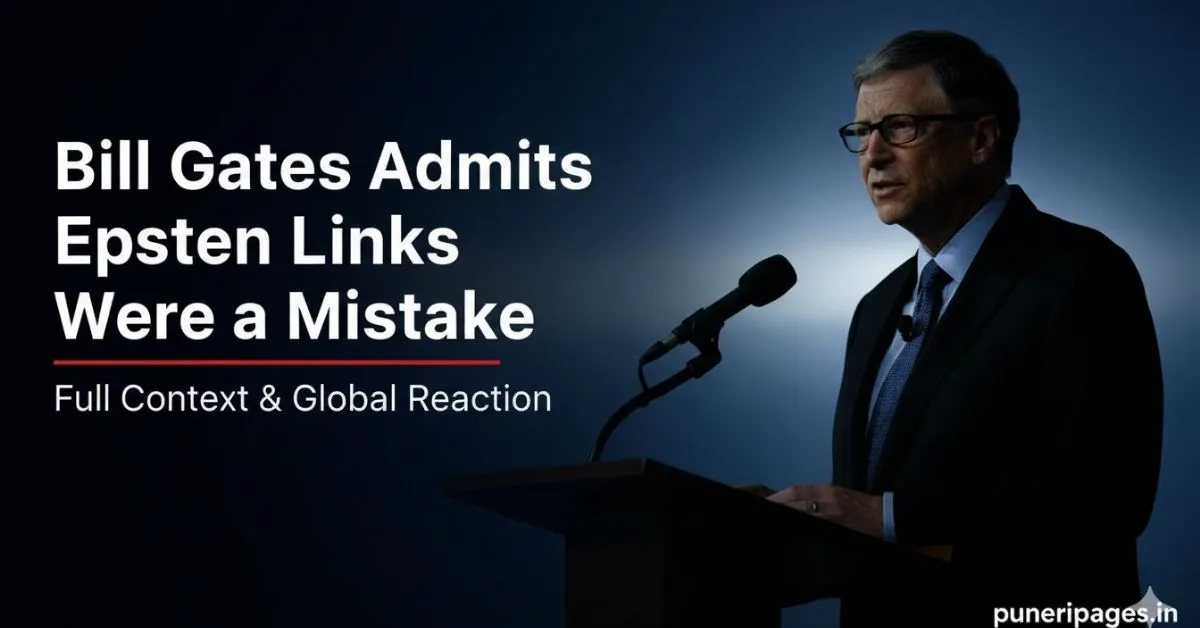
Bill Gates Admits Epstein Links Were a Mistake – Full Report by puneripages.in
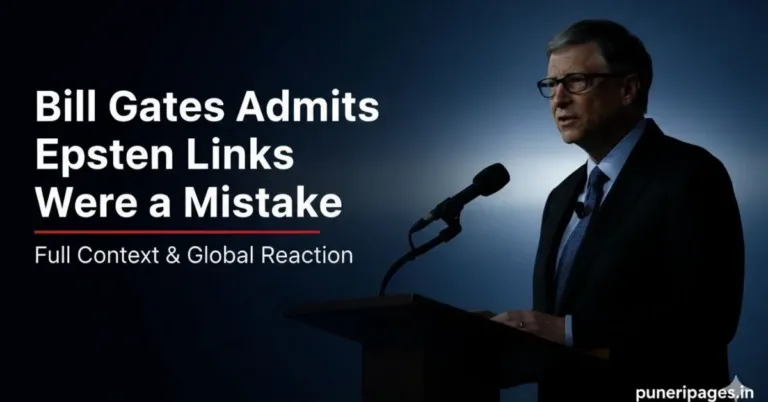
In a significant public acknowledgment that has reignited global discussion, Bill Gates admitted that his past meetings with Jeffrey Epstein were a mistake and expressed regret to staff at the Bill & Melinda Gates Foundation. The statement comes amid continued scrutiny of Gates’ interactions with Epstein, the disgraced financier who died in 2019 while facing federal charges related to sex trafficking.
We examine the timeline of events, internal foundation response, public reaction, reputational implications, and broader philanthropic impact surrounding the controversy.
Table of Contents
Timeline of Bill Gates and Jeffrey Epstein Meetings
The association between Bill Gates and Jeffrey Epstein first drew widespread attention following investigative reporting that revealed multiple meetings between the two.
Initial Meetings and Context
Reports indicate that Gates met Epstein on several occasions beginning in the early 2010s. These meetings reportedly occurred after Epstein had already pleaded guilty in 2008 to state charges related to prostitution involving a minor.
At the time, Gates was heavily engaged in global health initiatives and philanthropic expansion through the Gates Foundation. The meetings were described as discussions around philanthropy and global funding networks.
Growing Scrutiny
As public awareness of Epstein’s criminal history intensified following his 2019 arrest, questions resurfaced regarding high-profile individuals who had maintained contact with him. Gates faced renewed criticism for engaging with Epstein despite the latter’s controversial background.
Bill Gates’ Public Admission and Apology
During internal communications and interviews, Bill Gates acknowledged that meeting Epstein was a mistake. He reportedly conveyed regret to foundation staff, emphasizing that the association did not yield positive outcomes and harmed institutional credibility.
Key points from his acknowledgment include:
- Recognition that engaging with Epstein was a “serious error in judgment.”
- Admission that the meetings were inappropriate given Epstein’s background.
- Clarification that no financial partnership or philanthropic funding resulted from the association.
- Expression of regret for reputational damage caused to the foundation and its mission.
Gates has consistently stated that his meetings with Epstein were limited to discussions around philanthropy and did not involve personal or financial ties beyond those conversations.
Internal Impact on the Gates Foundation
The Bill & Melinda Gates Foundation, one of the largest philanthropic organizations in the world, operates across sectors such as global health, vaccine distribution, poverty reduction, and education reform.
Staff Response
Reports suggest that Gates addressed foundation employees directly, acknowledging the controversy and reaffirming the organization’s commitment to ethical governance and transparency.
For a foundation that works extensively with governments, NGOs, and international agencies, reputational trust is critical. Any perceived lapse in judgment at leadership levels carries significant implications.
Governance Measures
Following heightened scrutiny, the foundation strengthened internal compliance mechanisms and governance structures. Emphasis has been placed on:
- Enhanced due diligence processes
- Clearer conflict-of-interest guidelines
- Expanded oversight protocols
These measures aim to reinforce institutional integrity and stakeholder confidence.
Public and Media Reaction
The global media response to Bill Gates’ admission regarding Epstein links has been intense. The story has remained relevant due to Gates’ stature as a technology pioneer and leading philanthropist.
Criticism from Advocacy Groups
Several advocacy groups have argued that high-profile leaders should have exercised greater caution in engaging with individuals carrying criminal records involving minors.
Support from Philanthropic Circles
Others have acknowledged that Gates publicly admitting the mistake represents accountability. They argue that transparent acknowledgment is preferable to silence or denial.
Reputational Implications for Bill Gates
The controversy has had lasting reputational consequences.
Impact on Public Image
Bill Gates transitioned from Microsoft co-founder to global philanthropist over the past two decades. The Epstein association complicated that narrative and prompted public questioning of judgment.
Divorce and Broader Context
The Gates-Epstein story gained further attention during Gates’ divorce from Melinda French Gates. Reports indicated that Epstein’s presence in Gates’ network contributed to internal tensions.
While Gates has clarified that the meetings were professional in nature, public scrutiny has remained persistent.
Broader Questions About Elite Networks
The controversy also fueled broader discussions about how influential figures interact within elite philanthropic and financial circles.
Questions raised include:
- How should leaders vet individuals before engaging in professional dialogue?
- What due diligence standards apply to informal philanthropic discussions?
- How should organizations respond when leadership errors surface?
These concerns extend beyond Gates and reflect structural considerations in global philanthropy.
Legal Clarifications
It is important to distinguish between association and legal wrongdoing. Bill Gates has not been accused of criminal activity related to Jeffrey Epstein. Authorities have not alleged misconduct on Gates’ part.
His admission focuses on judgment and reputational impact rather than legal liability.
Philanthropic Work Continues
Despite controversy, the Gates Foundation remains active in major initiatives, including:
- Global vaccination programs
- Malaria eradication efforts
- Agricultural development in emerging economies
- Pandemic preparedness research
The foundation’s annual budget exceeds billions of dollars, positioning it as one of the most influential non-governmental actors in global health policy.
Gates has emphasized that the organization’s mission continues uninterrupted.
Long-Term Implications for Corporate and Philanthropic Governance
The episode reinforces the importance of:
- Ethical diligence in professional associations
- Reputation management at executive levels
- Transparent communication during crises
- Institutional resilience amid controversy
Large foundations and multinational corporations increasingly face scrutiny not only for operational decisions but also for leadership associations.
Global Perspective on Accountability
The public acknowledgment by Bill Gates underscores evolving expectations of accountability for high-profile figures. In an era of heightened media transparency, leadership decisions face immediate and global analysis.
Admitting error publicly can serve as a corrective mechanism, though it does not erase reputational impact.
Conclusion: Acknowledgment, Accountability & Ongoing Scrutiny
The admission by Bill Gates that his association with Jeffrey Epstein was a mistake marks a significant moment in the ongoing evaluation of leadership accountability within global philanthropy.
While no legal wrongdoing has been attributed to Gates, the episode has reshaped public discourse around elite networks, governance standards, and reputational responsibility.
The Gates Foundation continues its global initiatives, but scrutiny surrounding past associations remains part of the broader narrative.
The case illustrates how personal judgment decisions by global leaders can influence institutional perception and public trust for years to come.
About The Author