2025-04-27 08:21:00
Pune’s hills are facing growing threats from rapid urbanization, but citizens have rallied to defend the city’s green heritage. The Green Pune Movement (GPM), a collective of residents, environmentalists, and experts, has stepped up to lead the opposition against any dilution of the Bio-Diversity Park (BDP) reservations that protect the city’s vital hilltops and slopes.
Hills such as ARAI, Taljai, Parvati, and Dighi are not just scenic spots, they are crucial for Pune’s ecological balance. They regulate city temperatures, support rich biodiversity, recharge groundwater, and act as natural carbon sinks. Despite the existence of a 2015 policy and a 2018 government compensation mechanism for private landowners, little progress has been made to implement these protections on the ground, causing alarm among citizens and environmentalists.
Former MP and Pune mayor Vandana Chavan voiced strong criticism, questioning the government’s inaction: “Why did the government fail? The need to stop construction on hills and their slopes and to legally protect hills as natural heritage has been recognised for quite some time now. Yet, despite this policy being in place, the government has made no significant progress.”
On the ground, residents are equally concerned. “We come here every morning for walks and to enjoy the fresh air. If construction starts, we’ll lose not just the trees but also the peace and the birdsong,” said, a regular visitor to the hills.
Galvanized by the threat, the Green Pune Movement and supporting citizens have launched a multi-pronged campaign. Over 25,000 signatures have been collected through online and offline petitions, which will soon be formally submitted to the Pune Municipal Corporation (PMC) to register public opposition. Citizens are demanding immediate implementation of the BDP reservation, a complete halt to any new construction on hilltops and slopes beyond what was regularised before December 31, 2022, and the cancellation of the newly established Jha Committee, set up to study the issue anew.
Key demands also include the appointment of a dedicated monitoring squad, regular satellite mapping to prevent encroachments, and the formation of a Hill Protection Task Force with citizen participation to ensure vigilant safeguarding of these fragile ecosystems.
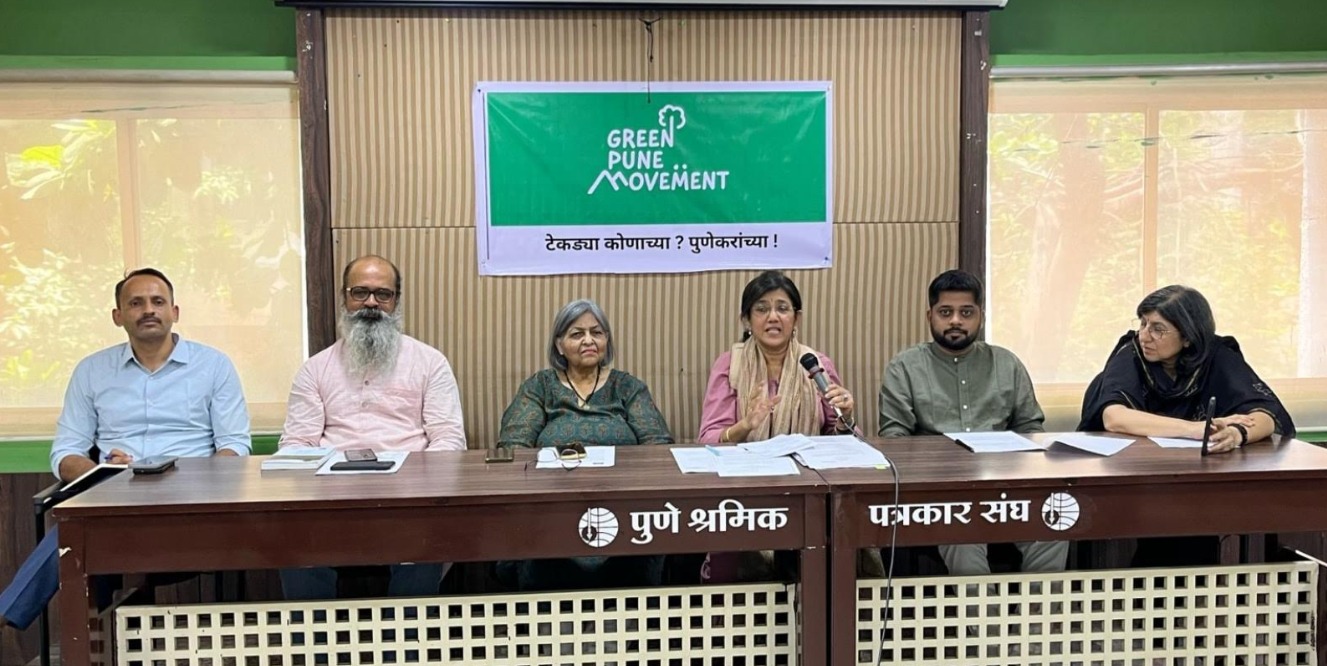
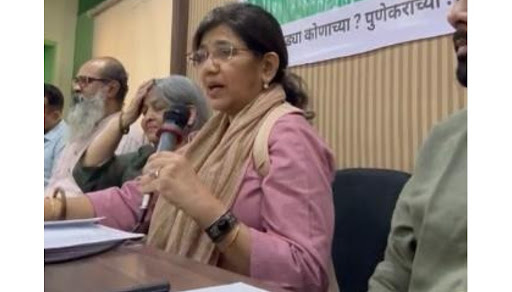
Extending their support to the areas marked for biodiversity parks, environmentalists and citizens have called on the PMC to stand firmly with them. Speaking at a recent press conference, Vandana Chavan emphasized, “Every development plan prepared by PMC highlights the conservation of hills, but their safety is in question today. We will submit a letter to the civic body to join the citizens and place a demand before the state government to ensure that the reservation of areas remains untouched. As temperatures climb year after year, natural ecosystems like those of the hills are essential for the city’s climate resilience and public health.”
The BDP reservations cover approximately 1,600 hectares of hill land, with about 958 hectares privately owned. Although a compensation mechanism was recommended by the Jain Committee and accepted by the government in 2018, its delayed implementation has fueled the current outrage.
“The government must think of ways to ensure that the city functions sustainably, where development happens, but not at the cost of the environment,” Chavan asserted.
The Green Pune Movement’s momentum sends a clear message: citizens are ready to fight for Pune’s future. They demand action, not empty committees, and they are determined to ensure that the city’s green lungs are preserved for generations to come.
About The Author